




What is a CBT For Chronic Pain Worksheet?
Pain is something that is experienced broadly and can manifest in a range of different ways that can harm an individual. When you think of pain, you probably think of things like injury or incidents that cause physical harm. However, pain can also be caused by our cognitions, including our thoughts, feelings, moods, and behaviors.
Chronic pain refers to pain that is withstanding, lasting for a minimum of 3 months. Though the severity of the pain can differ according to many influencing factors, research has demonstrated that psychosocial factors have a significant role in experiences of pain. Research has observed that emotional distress and issues with behaviors stem from maladaptive cognition, which influences chronic pain (Lim et al., 2018)—in acknowledging the role of cognition in pain management, cognitive behavioral therapy (CBT) developed evidence-based treatment and coping strategies to manage chronic pain.
CBT is a realm of psychological treatment that seeks to enhance mental health and reduce experiences of anxiety, stress, and depression. As a chronic pain management therapy, CBT techniques typically aim to reduce chronic pain through strategies that alter maladaptive behaviors, negative thoughts and feelings, and physical sensations that usually make the pain worse.
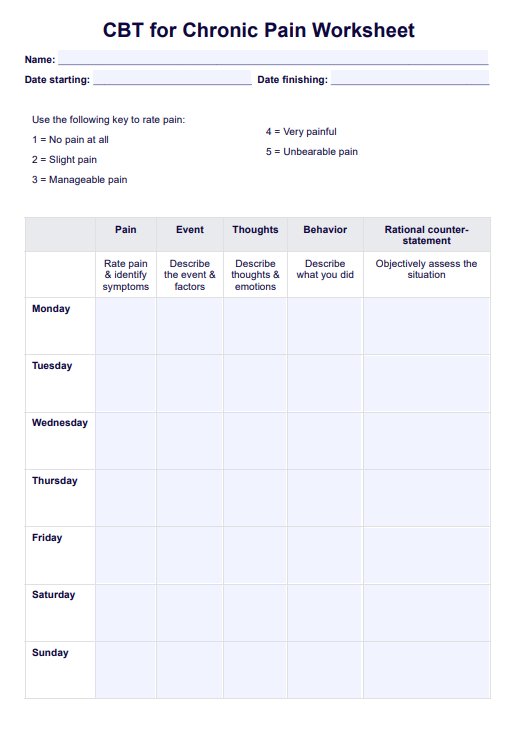
We at Carepatron have developed the CBT for Chronic Pain Worksheet to assist health practitioners involved in CBT. The worksheet involves clients providing daily information about the following:
- Their level of pain, rated on a scale from 1 to 5 (1 = no pain at all, 5 = unbearable pain)
- The event that may have triggered or worsened pain
- A description of their thoughts and feelings
- A description of their behavior in response to pain
- A rational, objective assessment of the situation
In completing the worksheet, clients are asked to reflect on their experiences and adapt their thinking for chronic pain management. It may also be used as a thought diary or to empower clients in pain management strategies.









