









What is case conceptualization?
Mental health issues can be challenging to understand, but trying to do so is essential. Each person has unique experiences and may face diverse issues influenced by factors such as family history, past traumas, and chemical imbalances. Mental health problems are multifaceted and diverse, encompassing conditions like depression, generalized anxiety disorder, bipolar disorder, and obsessive-compulsive disorder, among others.
Case conceptualization, also known as case formulation, is a cognitive process used by mental health professionals to understand the unique characteristics of their clients and how they can best be served. The goal of case conceptualization includes the following:
- To develop an understanding of the client's presenting problems by examining psychological factors, protective factors, predisposing factors, perpetuating factors, and risk factors
- Determine the reason why a client has certain coping strategies (positive or negative)
- Review relevant history and data
- Plan a course of treatment
- Monitor progress as therapy progresses
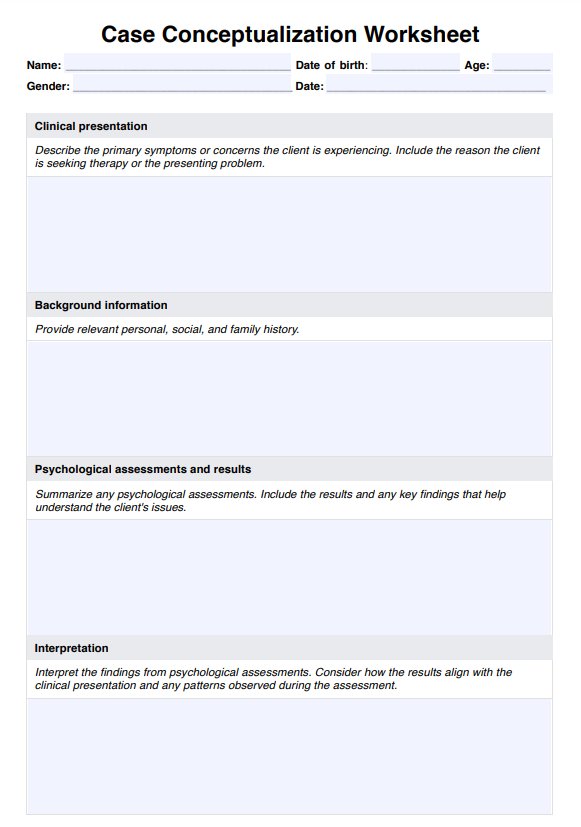
More often than not, mental health professionals use our (CBT) Case Conceptualization Worksheet to organize and structure the data they collect over time. It provides a comprehensive client overview, enabling clinicians to create an effective treatment plan to help individuals achieve their goals.









