




What is a Sleep Hygiene Checklist?
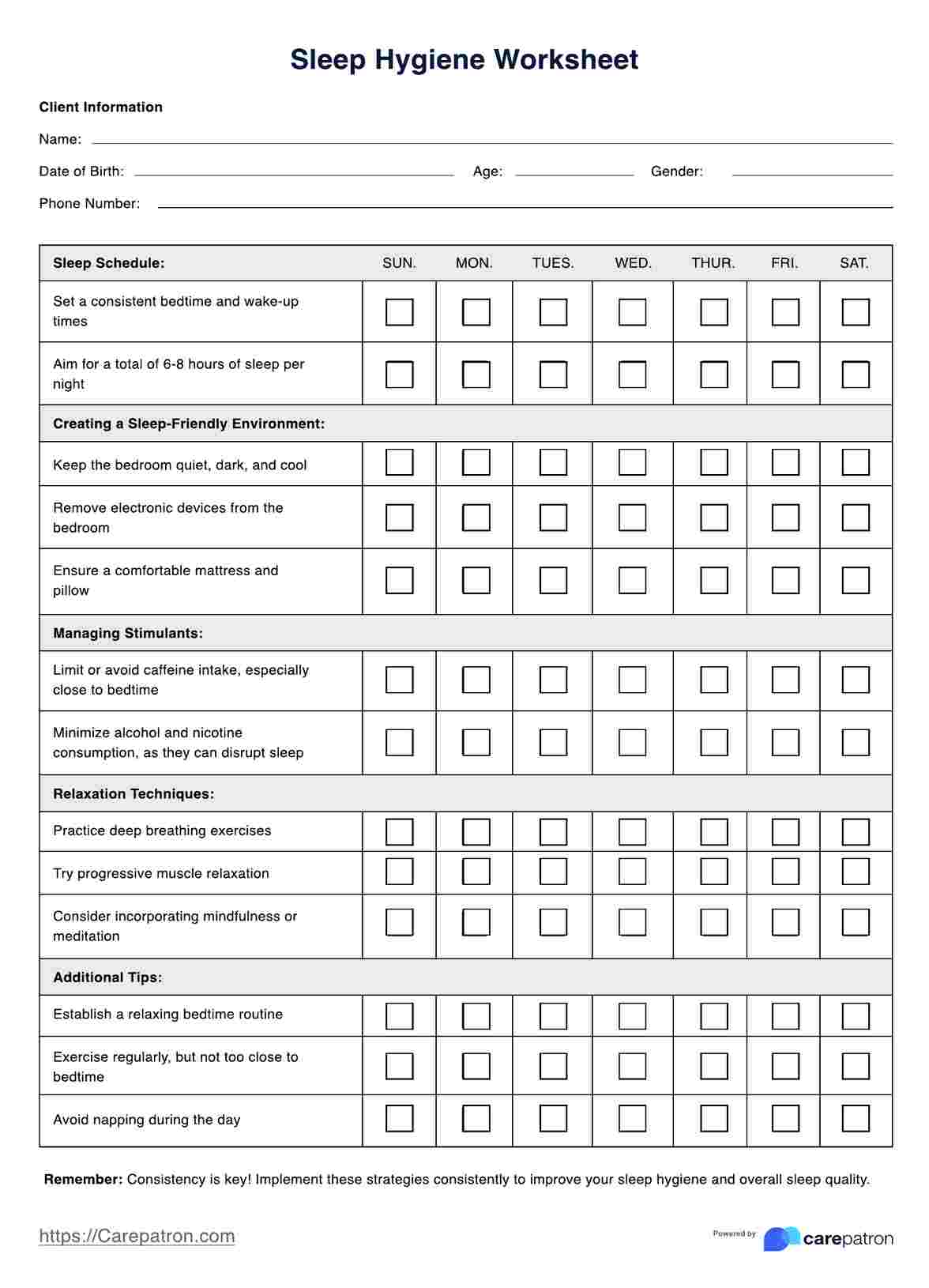
A Sleep Hygiene Checklist is a valuable resource for assessing and improving sleep habits. It is a structured list of key factors and behaviors contributing to good sleep hygiene. The checklist is a practical tool for individuals to evaluate their sleep routines, identify areas for improvement, and implement positive changes to promote better sleep quality.
Typically, a Sleep Hygiene Checklist covers various aspects of sleep hygiene, addressing both behavioral and environmental factors that can impact sleep. It often includes items related to sleep schedule, bedroom environment, lifestyle choices, and relaxation techniques.
In terms of sleep schedule, the checklist may prompt individuals to establish consistent bedtimes and wake-up times to regulate their internal body clock. It may also emphasize the importance of ensuring adequate sleep duration, typically ranging from 6 to 8 hours for adults.
Regarding the bedroom environment, the checklist may highlight the need for a quiet, dark, and cool sleeping environment. It may suggest removing electronic devices, such as smartphones or TVs, from the bedroom to minimize distractions and promote relaxation. Additionally, the checklist may emphasize the significance of a comfortable mattress and pillow to support proper sleep posture.
The Sleep Hygiene Checklist may also address lifestyle choices that can affect sleep. It might encourage individuals to limit or avoid caffeine intake, particularly close to bedtime, as caffeine is a stimulant that can disrupt sleep. It may recommend minimizing alcohol and nicotine consumption, as these substances can also interfere with sleep patterns.
Furthermore, the checklist suggests relaxation techniques to prepare the body and mind for sleep. This includes practicing deep breathing exercises, engaging in progressive muscle relaxation, or incorporating mindfulness or meditation practices into the bedtime routine.
By using a Sleep Hygiene Checklist, individuals can systematically evaluate their sleep habits, track their progress, and make targeted adjustments to improve their sleep hygiene. It is a practical resource to enhance sleep quality and promote overall well-being. However, it is important to note that individual sleep needs and preferences may vary, and consulting a healthcare professional or sleep specialist can provide personalized guidance for optimizing sleep hygiene.









