What are examples of good sleep hygiene habits?
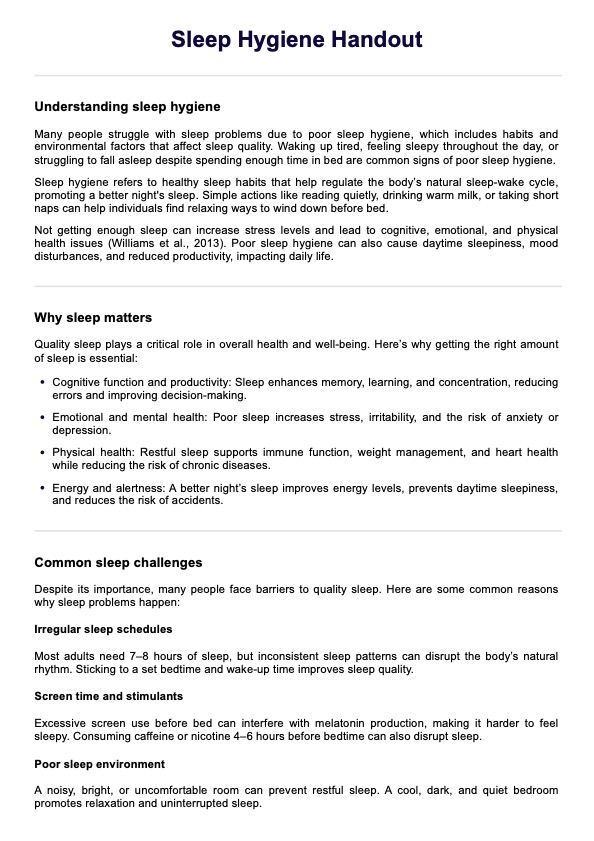
Many individuals struggle with sleep, often falling into patterns that contribute to poor rest. Guiding clients toward effective sleep hygiene habits can help them achieve the restorative sleep they need.
1. Encourage a consistent sleep schedule
Advise clients to maintain regular sleep and wake times, even on weekends, to support their body's internal clock. A stable schedule enhances sleep quality by reinforcing natural sleep-wake cycles. While 7–9 hours is generally recommended, emphasize that sleep needs vary with age and individual factors.
2. Promote a relaxing bedtime routine
Recommend calming activities before bed to help the body transition into sleep. Encourage clients to practice relaxation techniques like deep breathing, meditation, or reading. A warm bath can also promote relaxation and make them feel refreshed. Advise them to avoid stimulating activities, such as watching television or engaging in high-energy tasks, as these can make it harder to unwind.
3. Optimize the sleep environment
Encourage clients to create a sleep-friendly bedroom by keeping it dark, quiet, and at a comfortable, cool temperature. Recommend blackout curtains or earplugs to minimize disturbances from light and noise. Suggest investing in a supportive mattress and pillows to enhance comfort and spinal alignment, promoting better sleep quality.
4. Limit exposure to screens before bed
Advise clients to avoid electronic devices like smartphones, tablets, and computers at least an hour before bedtime. The blue light from screens suppresses melatonin production, making it harder to fall asleep. If screen use is necessary, recommend enabling "night mode" settings or using blue light-blocking glasses to reduce the impact on sleep.
5. Watch diet and hydration
Help clients understand how food and drink choices affect sleep. Encourage them to avoid heavy meals, caffeine, and alcohol close to bedtime, as these can disrupt sleep patterns. Recommend limiting fluid intake in the evening to prevent frequent nighttime awakenings
6. Stay active during the day
Encourage clients to engage in regular physical activity to improve sleep quality. However, advise them to avoid intense exercise close to bedtime, as it can increase alertness and make it harder to fall asleep.
7. Manage stress and anxiety
Teach clients relaxation techniques to reduce stress and promote a sense of calm before bedtime. Suggest activities like deep breathing, meditation, or journaling to help release worries and ease bedtime anxiety.
8. Seek professional help if needed
Remind clients that persistent sleep difficulties may indicate an underlying sleep disorder. Encourage them to consult a healthcare professional for a thorough evaluation and appropriate treatment. Addressing sleep problems early can prevent long-term health consequences and improve overall well-being.