





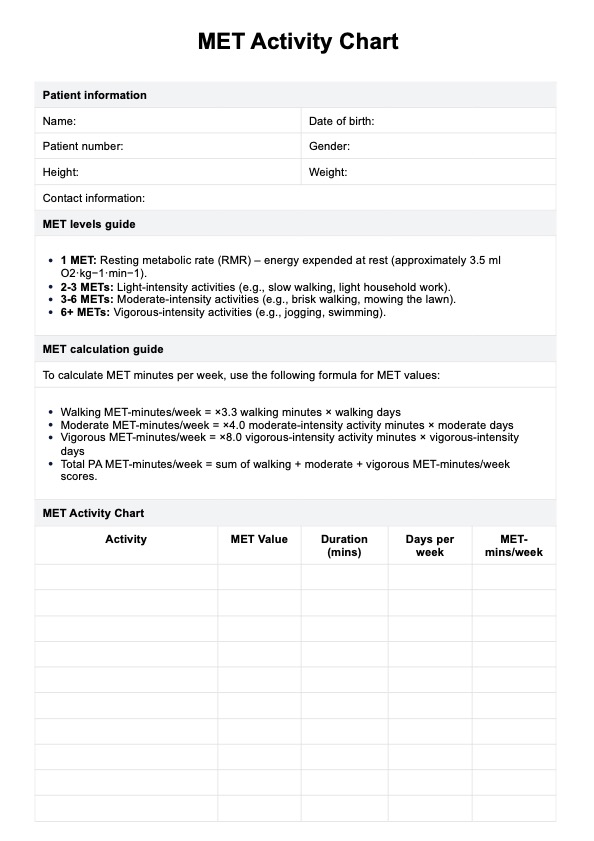




What is a MET Activity Chart?
A Metabolic Equivalent (MET) Activity Chart is a tool used in exercise testing to measure the intensity of physical activities. One MET represents the energy expenditure at rest, defined as the consumption of 3.5 mL of oxygen uptake per kilogram of body weight per minute (Jetté et al., 1990). Activities are scaled based on their metabolic equivalent, helping healthcare professionals assess exercise intensity and prescribe appropriate workouts.
The World Health Organization endorses the use of METs to quantify energy expenditure across various activities, guiding exercise prescriptions tailored to patients' fitness levels. The MET chart is essential in sport and health science, as it translates complex metabolic processes into easily understandable values, making it applicable for evaluating health outcomes and health benefits.
For example, walking at a moderate pace might require 3-4 METs, while running could exceed 8 METs. This distinction helps in determining the ideal activities for weight management, especially when factoring in lean body mass and overall body weight. Professionals can use these measurements to optimize exercise programs, targeting specific fitness goals and improving patient health.
The MET Activity Chart is a valuable reference that enhances understanding of energy expenditure and supports tailored exercise testing for better overall outcomes.









