









What is a Relapse Prevention Worksheet?
A relapse occurs when a person returns to substance use after a period of abstinence, often brought on by a combination of factors like mental relapse, emotional relapse, and negative thoughts. Even the strongest resolve can weaken when persistent urges and feelings overwhelm a person’s coping mechanisms.
Managing relapse prevention is a critical component of working with clients who are experiencing drug and/or alcohol addiction. Most individuals experience addiction and recovery in unique ways, but avoiding relapse is typically a universal strategy, as preventing relapses is one of the most important parts of a sustainable recovery.
A typical strategy to enforce relapse prevention involves the therapist and client sitting down and developing a plan. Clients are usually aware of common relapse triggers that increase the likelihood of relapsing and how these can and should be avoided. In addition to being aware of triggers, clients need to consider what the consequences will be if they relapse. For recovery to be long-lasting, clients have to be committed—and the best way to ensure commitment is to encourage clients to reflect on the impacts that substance abuse and potential relapse have on their lives.
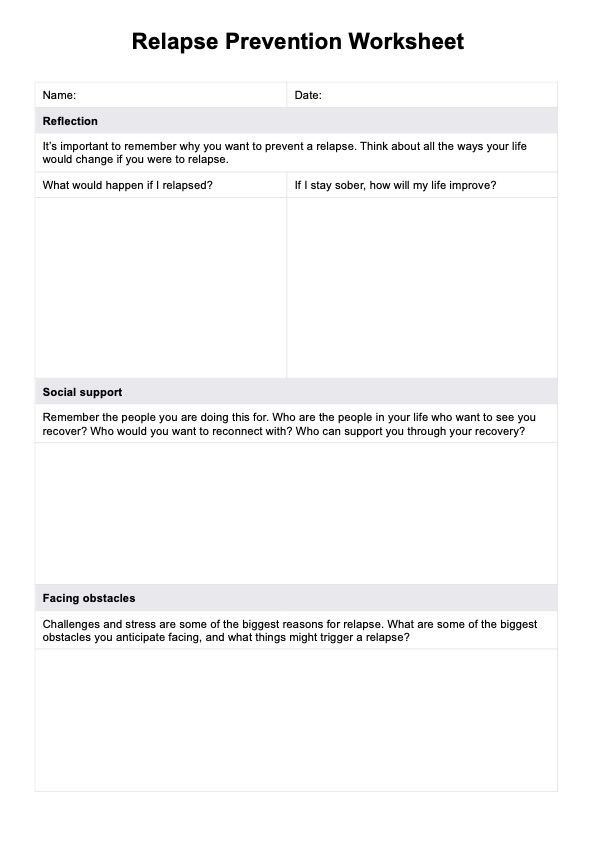
To help clients in this recovery process, we have designed a Relapse Prevention Worksheet that helps your client develop healthy coping strategies instead of returning to substance abuse. It encourages planning and reflection, enabling clients to remain vigilant and continue working toward their goals. The worksheet is intuitive and easily used and will prove greatly beneficial for mental health professionals, counselors, social workers, and nurses who are treating clients with addiction or drug abuse issues or anyone involved with forming and implementing relapse prevention plans.









