





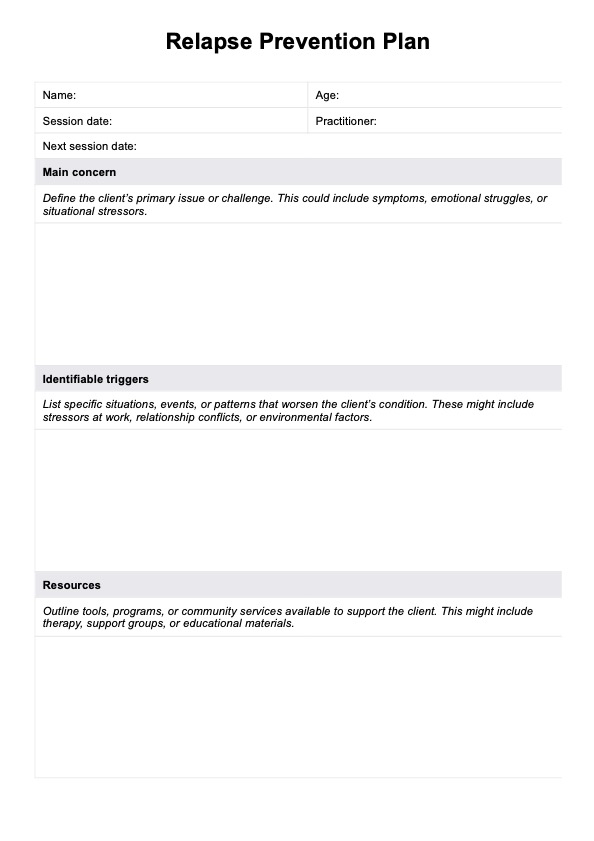




What is relapse prevention?
Addiction can be a powerful and overwhelming force in one's life. It often leads to destructive behavior, including relapsing or returning to the same substance after periods of abstinence. Relapsing is common for individuals struggling with addiction and can have physical and mental damaging consequences. According to the National Institute on Drug Abuse (2023), if individuals stop following their treatment plan, they are likely to relapse, but this does not mean they have failed.
To help patients recover, healthcare professionals use a Relapse Prevention Plan to assess the risk of relapsing and create healthy coping strategies to avoid and overcome it. For example, clients may include mindful activities such as walking or eating healthy and balanced meals to aid their recovery process. This tool is a personalized plan that outlines goals, strategies, and resources individuals can use to help them stay on track.
A Relapse Prevention Plan also addresses any potential triggers that might cause someone to relapse and provides ways of responding when relapse does occur. Additionally, it may include cognitive-behavioral therapy, group counseling, lifestyle changes, and self-care practices such as meditation and yoga.
By using this plan, healthcare professionals can help individuals stay motivated and on track to reach their recovery goals. It also gives them the tools to beat their addiction. It might not be easy, but effort and dedication can prevent or manage relapse more effectively.









