


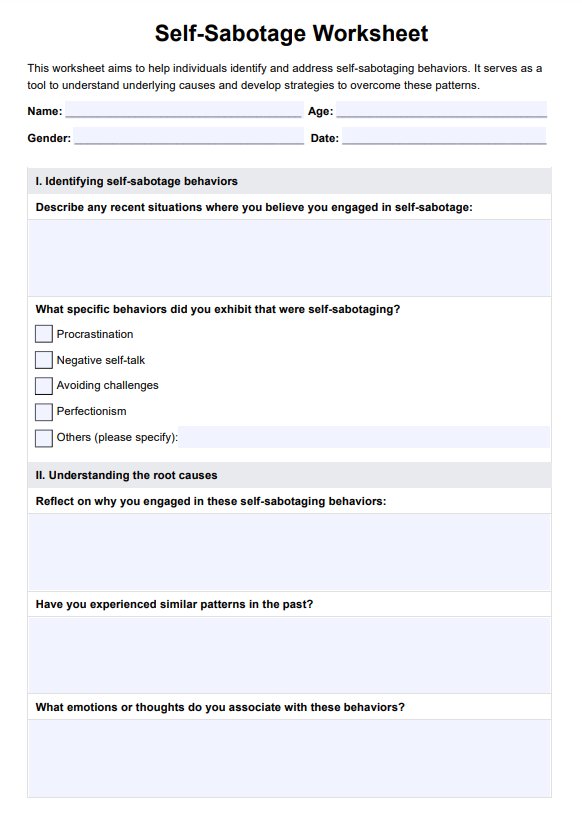




What is self-sabotage?
Self-sabotage refers to behaviors or thought patterns that hinder one's success and well-being, often subconsciously. These actions may stem from a lack of self-esteem, fear of failure, or deeply ingrained negative beliefs. Self-sabotage manifests in various forms, like procrastination, self-criticism, and avoiding challenges, which can negatively impact personal and professional growth.
Self-sabotaging behaviors are linked to factors such as childhood experiences, mental health issues, and adaptive responses to stress or trauma. Self-sabotage is often seen as a protective mechanism, shielding individuals from perceived threats like failure or rejection. However, these behaviors can become counterproductive, leading to a cycle of negativity and underachievement.
Recognizing and addressing self-sabotage is essential for breaking this cycle and fostering a healthier, more productive approach to life's challenges. It involves understanding the root causes and implementing strategies to overcome these self-defeating patterns.









