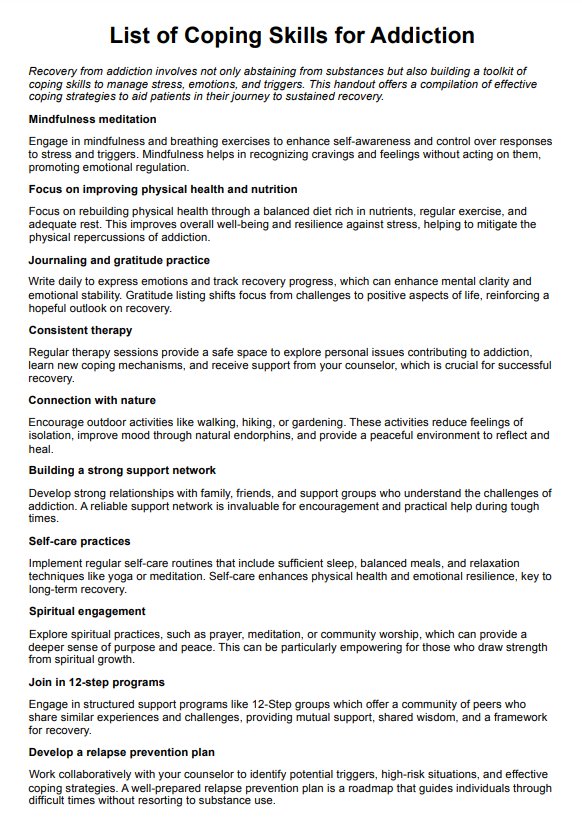
10 coping skills for addiction
In addiction treatment, it is crucial to integrate effective coping skills to manage both the physical and psychological challenges associated with recovery. The following ten strategies are foundational in building resilience, supporting sobriety, and preventing relapse in individuals coping with drug and alcohol use. These skills provide tools to replace unhealthy coping skills with robust, positive approaches. Converse with your clients to see which ones fit the best for them before suggesting one.
Mindfulness meditation
Mindfulness meditation encourages individuals to focus on the present moment, helping to alleviate negative feelings and stress (Priddy et al., 2018). Through deep breathing and mindfulness exercises, patients learn to observe their thoughts and emotions without judgment, enhancing their ability to manage internal triggers and cravings effectively. This practice is instrumental in fostering emotional regulation and can significantly relieve anxiety.
Focus on improving health and nutrition
A cornerstone of a healthy recovery process involves prioritizing physical health through balanced nutrition and regular physical activity (Smith, 2018). Encouraging patients to exercise regularly and consume a diet rich in nutrients aids in rebuilding their physical strength and well-being, which drugs and alcohol might have compromised. Such physical investment boosts resilience against stress and aids in mitigating the physical repercussions of past drug use.
Journaling and gratitude practice
Journaling is a powerful tool for patients to articulate their thoughts and monitor their recovery progress, providing a clearer picture of their mental state and emotional stability (Smith, 2018). Coupled with gratitude practice, it shifts their focus from the challenges to the positive aspects of their lives, thereby cultivating a hopeful outlook and reinforcing new habits that support recovery.
Consistent therapy
Regular group therapy sessions and individual counseling provide a safe space to explore personal issues related to addiction and mental illness (Smith, 2018). These sessions are crucial for learning new, effective coping skills and receiving ongoing support, helping individuals navigate the recovery process successfully. This is why it is important to keep reminding your clients to come back for further sessions.
Connecting with nature
Connecting with nature through activities like walking, hiking, or gardening helps reduce feelings of isolation (Smith, 2018) and boosts mood. Such outdoor activities provide a peaceful environment to reflect, heal, and practice new habits that contribute to long-term sobriety.
Building a strong support network
Developing a sober support network of family, friends, and peers who understand the complexities of addiction is invaluable. This network offers encouragement and practical help, helping to navigate through tough times and avoid falling back into old habits (Stokes et. al., 2018).
Practice self-care
Regular self-care routines, including sufficient sleep, balanced meals, and relaxation techniques like yoga, play a crucial role in enhancing both physical health and emotional resilience. These practices are essential for maintaining overall health and supporting the recovery journey.
Explore spiritual activities
For many, spiritual engagement through prayer, meditation, or community worship provides a deeper sense of purpose and peace (Stokes et. al., 2018). This can be particularly empowering for individuals seeking to draw strength from spiritual growth to manage external triggers and maintain sobriety.
Join 12-step group programs
12-step programs and related programs like Alcoholics Anonymous and Narcotics Anonymous offer a structured support system through a community of peers who share similar recovery experiences (Laudet et. al., 2002). These programs provide mutual support, shared wisdom, and a reliable framework for long-term recovery, helping individuals navigate the complexities of sobriety. Make sure to refer your client to a program like this.
Create a relapse prevention plan
Collaborating with the client to develop a relapse prevention plan is crucial. Such plans should identify potential triggers, outline strategies to handle high-risk situations and establish effective coping mechanisms to manage negative behavior and feelings. A well-crafted plan acts as a roadmap, helping individuals maintain sobriety through structured steps and continuous support.