




What is the Global Deterioration Scale?
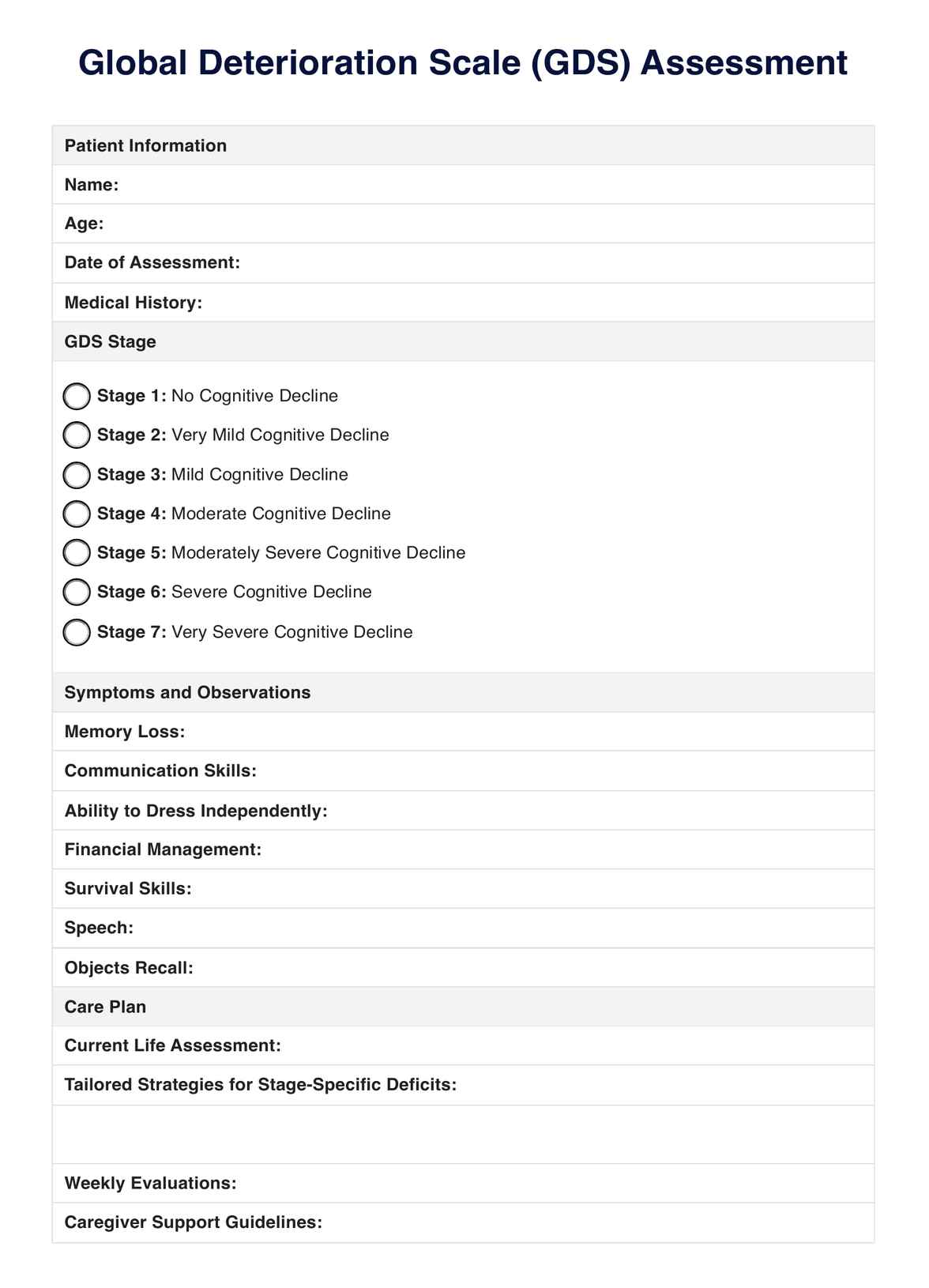
The Global Deterioration Scale (GDS) is a tool used to assess the stages of cognitive decline in individuals experiencing primary degenerative dementia, particularly Alzheimer's disease. Developed by Dr. Barry Reisberg, the GDS provides a framework for clinicians to understand and communicate the progression of dementia based on observable symptoms and functional abilities.
The scale consists of seven stages, ranging from Stage 1 (no cognitive decline) to Stage 7 (severe cognitive decline). Each stage represents a different level of impairment, with the early stages indicating mild cognitive decline and the later stages reflecting severe mental deterioration. The GDS considers various aspects such as memory, orientation, judgment, and daily functioning to assign a stage to the individual.
For instance, in the early stages (1-3), individuals may experience mild memory lapses and slight cognitive decline. As the disease progresses, more significant impairments, including difficulty with language, problem-solving, and basic self-care tasks, become evident. In the advanced stages (6-7), individuals may lose the ability to communicate and require extensive assistance with daily activities.
The GDS is valuable for clinicians in tracking and communicating the evolving cognitive status of individuals with primary degenerative dementia, aiding in developing appropriate care plans and interventions.









