## **Understanding the tooth numbering system**
Dental professionals rely on a dental numbering system to identify and describe individual human teeth with precision. This standardized method ensures accurate communication when discussing diagnoses, charting, and treatment plans. Two of the most recognized systems are the Universal Numbering System and the Palmer Notation Method.
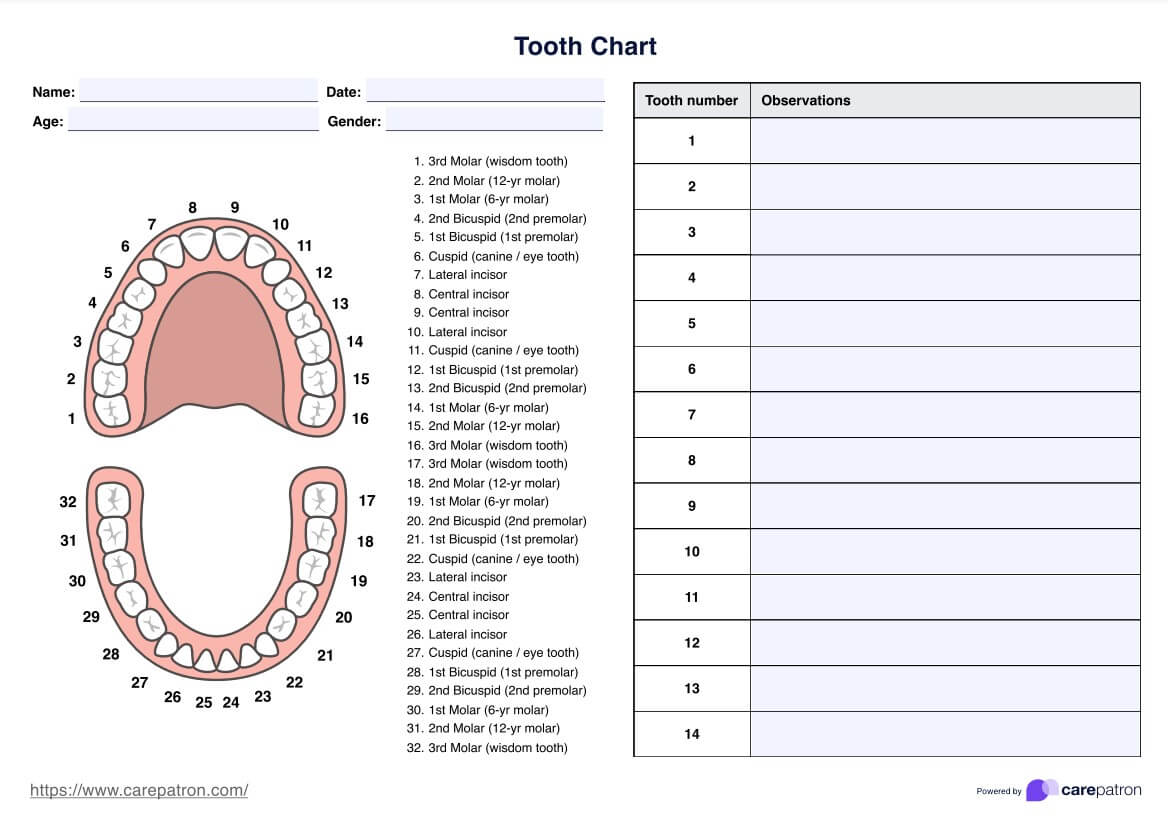
In the Universal Numbering System, the one most people in the United States are familiar with, each tooth is named differently and assigned a unique number. The numbering begins in the upper jaw, at the right side with the upper right third molar (tooth number 1), and continues along the upper teeth to the left side, ending with the upper left third molar (tooth number 16). It then moves down the lower arch, starting with the lower left third molar (tooth number 17) and proceeding in an organized clockwise manner to the lower right third molar (tooth number 32) (Sahi, 2019)
The Palmer Notation Method, on the other hand, divides the mouth into four quadrants, numbering teeth from the midline outward. Each quadrant is marked with a specific symbol, making it easy to locate the most visible teeth—such as the incisors—at a glance. This method remains popular in orthodontics and some clinical settings for its clarity and quadrant-based layout.
Understanding these numbering systems is key to ensuring proper care and accurate documentation of a patient’s oral health. Whether clinicians prefer the Universal system for its efficiency or the Palmer method for its visual orientation, both provide a reliable framework for identifying human teeth and promoting effective communication in every stage of dental care.
## **What is a Tooth Chart?**
A Tooth Chart is a visual aid for understanding dental anatomy and identifying the specific visible teeth within the mouth. Typically featuring an illustration displaying each tooth with its corresponding number and name, this chart offers a comprehensive guide to the adult set of teeth, which commonly totals 32, including the wisdom teeth - the tooth farthest to the back of the mouth.
By labeling each tooth, a dentist can efficiently record relevant information during examinations, ensuring accurate documentation of dental health. Also known as a tooth number chart, it is a practical tool for dental practitioners and students. Its utility extends to aiding in reviews and providing visual assistance for patients to comprehend the condition of their teeth more effectively.
Some ideas of when you can use this guide are:
- **To review**: The Tooth Chart can be used to review the location of specific teeth. That way, when doing a basic tooth inspection, you can effortlessly identify and write down observations on the right tooth.
- **To explain**: Sometimes, patients need a visual aid to understand a tooth's condition or a set of teeth. You can use this resource to help them identify the location of the affected tooth or teeth, explain the function of a particular set of teeth, like the premolar teeth and canine teeth, or eye-teeth, etc.
- **To document and take down notes**: Since our template has a dedicated space, you can make the most out of it by using it as a document to write notes/findings/observations, reminders for patients, or even attach results from additional tests.
Furthermore, although memorizing teeth numbers and names is necessary, using a chart will greatly assist during consultations. Here are two benefits of using such:
- Provides insight into the patient's overall health: In certain situations, one's teeth can reflect the condition of the patient's overall health or other organs. You can use the template to encourage the patient to head to a hospital or clinic for a quick check-up.
- Improves monitoring process: On the one hand, you can use the template as an educational tool to refresh yourself with information you may be familiar with. On the other hand, you can also use it to monitor any changes, especially after putting on braces, undergoing surgery, etc.
Do note that there are still limitations to using a tooth chart. It primarily stems from the potential for inaccuracy and inconsistency. Errors can occur due to misidentification of dental conditions, inaccurate recording of data, and poor legibility, especially with traditional paper charts.
To add, the lack of complete standardization across different dental practices and the complexity of various notation systems can lead to confusion and misinterpretation (Brown, 2015), potentially impacting patient care and legal record-keeping. Digital charting systems can mitigate some of these issues by improving accuracy and accessibility, but require consistent data entry and adherence to standardized protocols.
## **How does our Tooth Chart work?**
Incorporating the teeth numbers chart into your dental practice is easy. Follow these steps to get started:
### **Step 1: Download the chart**
You can start by downloading the tooth number chart PDF that uses the Universal Numbering System from our website. Familiarize yourself with the tooth numbers on the upper and lower jaw, as well as their names on the side.
### **Step 2: Use the resource**
Once you have the chart, you can use it for dental work. Whether you need it for patient consultations, educational purposes, or treatment planning for a wisdom tooth, the tooth number chart provides a visual reference for dental professionals and students.
### **Step 3: Take down notes**
A designated space for notes is provided on the chart if you prefer to document specific details or observations regarding a patient's tooth and dental condition. This optional feature lets you keep track of important information during consultations or treatment sessions, enhancing your ability to provide comprehensive care.
## **References**
Brown, L. (2015). Inadequate record keeping by dental practitioners. Australian Dental Journal, 60(4), 497–502. https://doi.org/10.1111/adj.12258
Sahi, A. (2019, January 16). News-Medical. News-Medical. https://www.news-medical.net/health/Universal-Numbering-System-for-Teeth.aspx