









What are the stages of relapse?
Relapse refers to the process of returning to substance use after a period of abstinence. It is often seen as a failure of recovery. However, it is more accurately a part of the journey, highlighting the need for ongoing support and adaptation of recovery strategies.
Relapse can be triggered by various factors, including stress, exposure to environments, and emotions associated with past use due to a drug and alcohol addiction that may have led to substance use disorders, inadequate support networks, poor self-care, and unresolved psychological issues. Recognizing these triggers is the first step in relapse prevention.
Warning signs vary but commonly include:
- Increased stress
- Skipping therapy sessions or support group meetings
- Isolation from loved ones
- Poor eating and sleeping habits
- Romanticizing past substance use
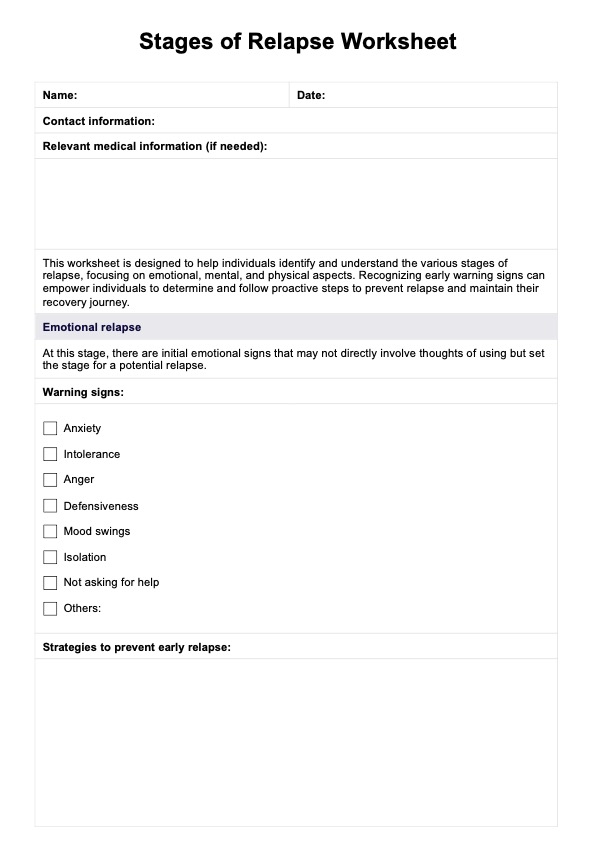
Furthermore, relapse is a gradual process, typically divided into three distinct stages, each with unique characteristics and warning signs. Recognizing these stages can empower individuals in early recovery to take proactive steps to prevent slipping back into old patterns. Here's a closer look at the stages of relapse (Melemis, 2015):
Emotional relapse stage
In the emotional stage, individuals are not actively thinking about using substances. However, their emotional state and behaviors might be unwittingly laying the foundation for a potential relapse. Common signs include feelings of anxiety, intolerance, and anger, which occur along with behaviors like mood swings, isolation, and reluctance to seek help. These symptoms indicate that emotional management is crucial to prevent progression to the next stage.
Mental relapse stage
During the mental relapse stage, individuals face a significant internal struggle between the desire to use substances and the desire to maintain sobriety. This stage is marked by cravings for drugs, reminiscing about past substance use, glamorizing past use, and planning future use while devising ways to conceal these plans. It's a critical time for intervention through therapy, support groups, and strong personal support systems to reinforce the commitment to recovery.
Physical relapse stage
The final stage is physical relapse, where the individual actively seeks out or uses substances. This stage is typically brief but directly results from emotional and mental escalation. It underscores the importance of early intervention during the emotional and mental stages to prevent the actual act of substance use.
By understanding these stages, individuals in recovery and their support networks can better recognize the warning signs and take appropriate actions to address them, ultimately maintaining the path to long-term recovery.









