When should this plan be used?
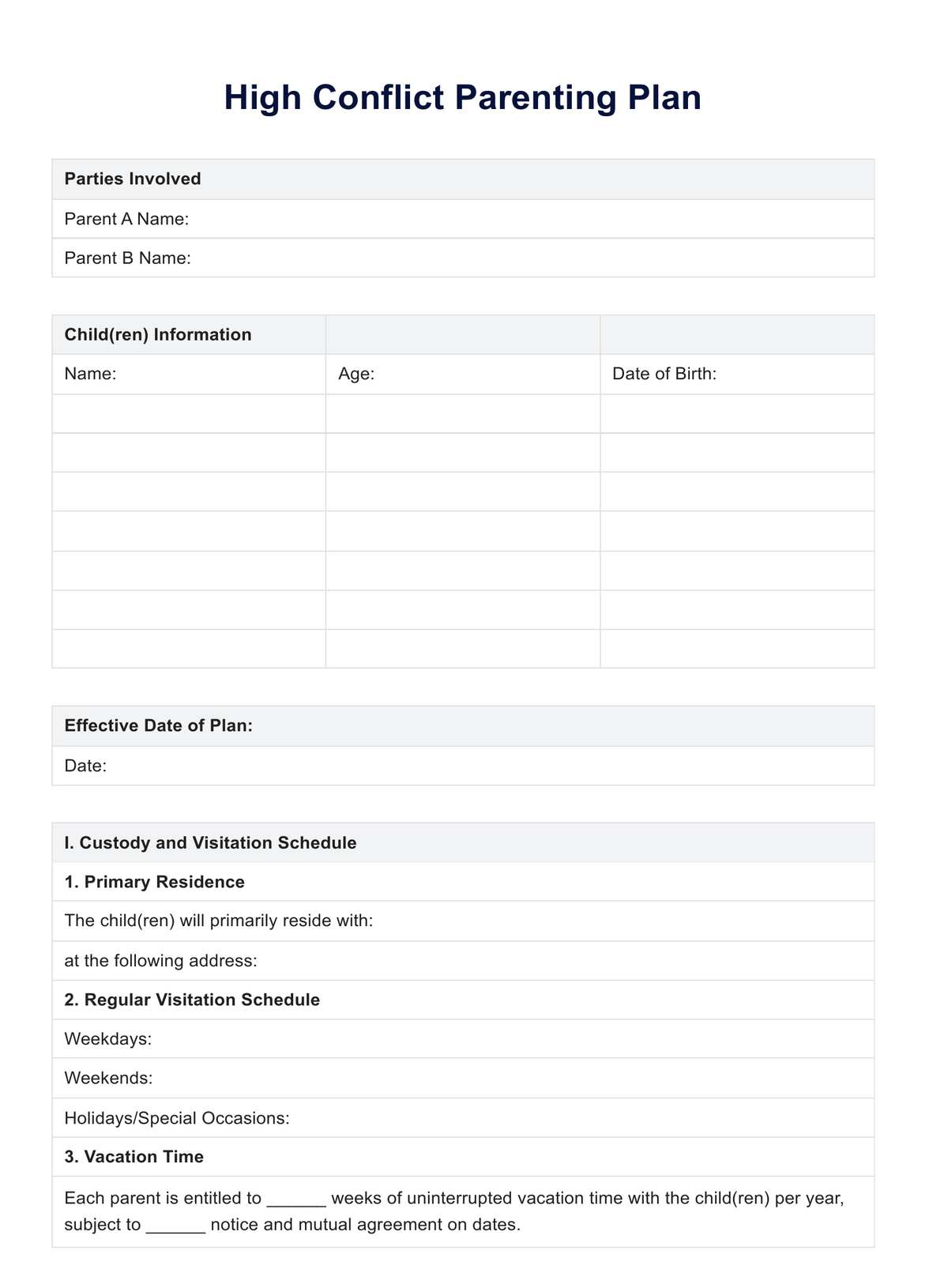
A High-Conflict Parenting Plan is critical when co-parenting dynamics are fraught with ongoing disputes and communication breakdowns. Its implementation is particularly beneficial in several scenarios:
High-conflict divorce
In divorce cases characterized by high emotional tension and frequent conflicts, a High Conflict Parenting Plan can be a lifeline. It provides a structured approach to co-parenting, helping reduce the emotional strain on the parents and the child. This plan is crucial in such scenarios as it helps establish clear boundaries and guidelines, significantly lowering the chances of disputes escalating into more serious conflicts.
In high-conflict divorce scenarios, the emotional well-being of the child can often be overlooked amidst the turmoil. A High Conflict Parenting Plan ensures that the child's needs are acknowledged and actively prioritized. It can help establish a routine for the child, giving them a sense of normalcy and stability during significant change. The plan also serves as a tool for parents to disengage from their conflicts and focus on the objective of effective parenting.
Persistent disagreements
When parents are consistently at odds over child-rearing decisions, the High Conflict Parenting Plan offers a structured framework to manage these disagreements. It helps delineate responsibilities and decision-making processes, ensuring that each parent understands their role and expectations. This clarity is essential in preventing misunderstandings and reducing the frequency of conflicts.
The plan can also include mechanisms for dispute resolution, such as mandatory mediation or counseling sessions, before escalating issues to legal interventions. This proactive approach can save both time and emotional resources for the family. It also teaches parents the skills of negotiation and compromise, which are essential for the long-term success of co-parenting.
Protecting the child's well-being
In any situation where the child's emotional or physical well-being is at risk due to ongoing parental conflict, this plan acts as a protective measure. It prioritizes the child's needs and ensures their well-being is at the forefront of all co-parenting decisions. The plan can include provisions for counseling or therapy for the child, which can be crucial in helping them cope with the changes in their family dynamics.
In addition to addressing the child's immediate emotional needs, the plan can also focus on long-term aspects like education, health care, and social interactions. It can outline how parents will handle school meetings, medical appointments, and extracurricular activities, ensuring the child's life remains unaffected by parental conflict.
Legal interventions
In cases where courts or mediators are involved in resolving custody disputes, the High Conflict Parenting Plan serves as a comprehensive guideline. It assists legal professionals in formulating a parenting arrangement that best serves the child's interests. The plan can be used as a reference in legal proceedings, ensuring that the child's welfare is the primary consideration in custody-related decisions.
The High Conflict Parenting Plan can also be a dynamic document, adaptable to the child's changing needs as they grow. This adaptability is crucial in high-conflict situations where rigid arrangements might not be sustainable in the long run. The plan can provide a framework for periodic reviews and adjustments, ensuring it remains relevant and effective.