




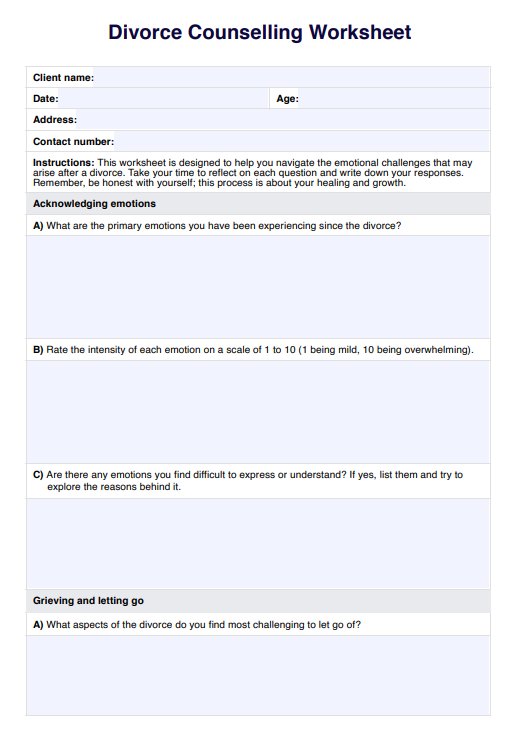




What is a Divorce Counseling Worksheet?
A Divorce Counseling Worksheet is a valuable therapeutic resource designed to aid mental health professionals in guiding individuals through the emotional complexities and adjustments that arise during and after a divorce. Divorce can be an arduous process that significantly impacts mental and emotional well-being. These worksheets offer a structured and organized approach to addressing the multifaceted challenges individuals may encounter on their journey toward healing and growth.
The worksheets typically cover various topics relevant to divorce counseling, including emotional processing, grief and loss, coping mechanisms, communication skills, and rebuilding self-esteem. Healthcare professionals can utilize these tools to facilitate meaningful discussions with their clients, encouraging them to explore their feelings, thoughts, and reactions in a safe and supportive environment.
One of the key benefits of using divorce counseling worksheets is their ability to help clients identify patterns of behavior and thoughts that may hinder their progress in moving forward. Through introspection and self-awareness exercises, individuals can gain valuable insights into their emotions and learn healthier ways of managing them. These worksheets often include practical exercises and action plans to foster resilience and empower clients to make positive life and family changes.
Divorce counseling worksheets are not a one-size-fits-all solution; healthcare professionals should tailor their use to each client's unique needs. As a dynamic resource, they can be adapted to suit various therapeutic approaches, whether cognitive-behavioral therapy, psychodynamic therapy, or solution-focused therapy.
Finally, divorce counseling worksheets are a vital tool in the toolbox of medical experts who assist people in navigating the difficulties of divorce. These worksheets serve a significant role in improving emotional well-being and directing people towards a better future after divorce by encouraging fruitful self-reflection, providing clients with evidence-based techniques, and giving clients the power to take control of their healing process.









