





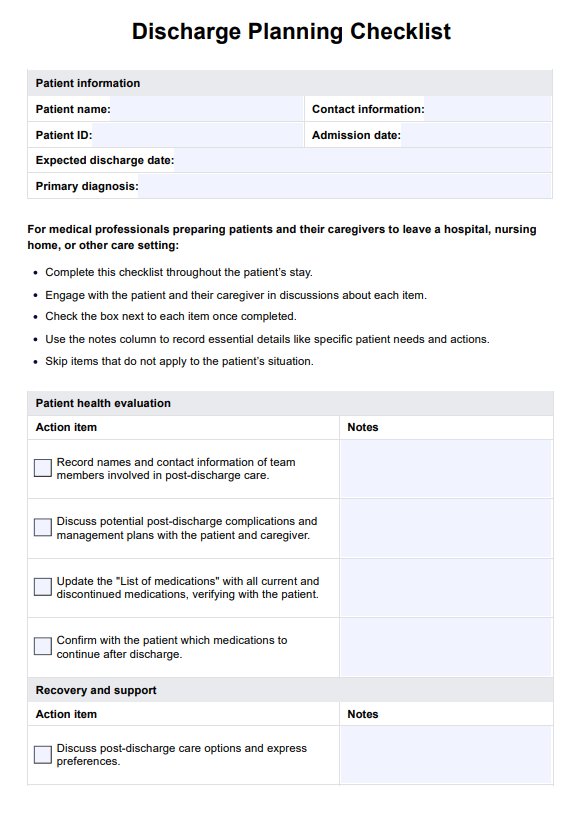




What is discharge planning?
Discharge planning is a critical process where hospital staff develops a personalized plan assessing a patient's health and social needs prior to their hospital discharge (Gonçalves-Bradley et al., 2022). This plan ensures a smooth transition from the hospital to home or another care setting, facilitating the continuation of care and preventing complications. Effective discharge planning involves a comprehensive evaluation by healthcare providers, including the attending physician, to ensure the patient can safely leave the hospital.
Discharge planning may include arranging follow-up care such as physical therapy, wound care, and medical appointments. It may also require coordinating skilled nursing services or other personal care resources and ensuring the patient has the necessary medical equipment (Patel & Bechmann, 2023). Discharge instructions typically cover medication management, potential complications, and necessary lifestyle adjustments.
Discharge planning aims to support health and recovery and reduce the likelihood of hospital readmissions, which can incur financial penalties for healthcare institutions. A well-communicated discharge plan is essential for continuity of care and helps ensure that patients and their caregivers understand how to effectively manage their care at home.









