





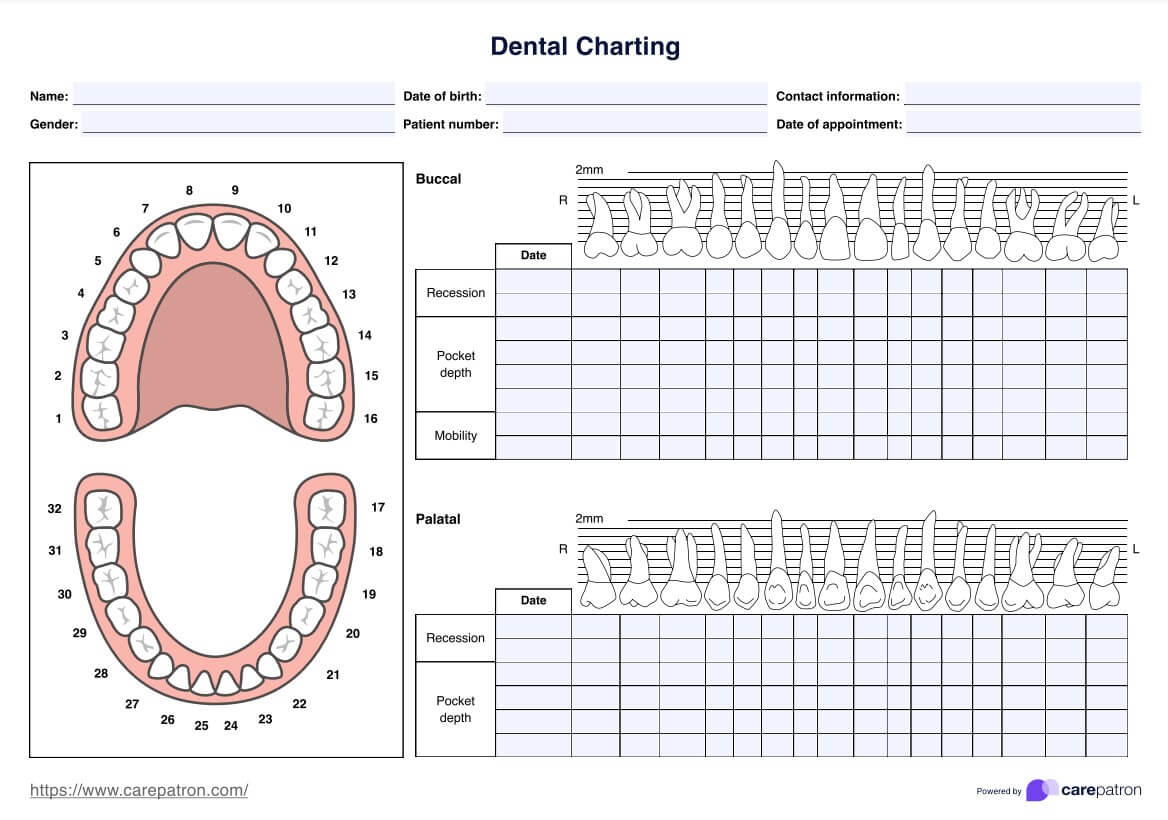




What is a Dental Charting Template?
A Dental Charting Template is a systematic tool used in dental offices to document a patient's oral health status. It involves complete dental charting, which records every detail of a patient's oral condition during a dental checkup. The dental charting process is essential for maintaining accurate dental charting, as it provides a comprehensive overview of the patient's dental health, including any existing dental health issues such as cavities, missing teeth, or gum disease.
Periodontal charting is integral to this template, helping assess the gums' health and supporting structures. A dental assistant commonly fills out the chart, often guided by the dentist, based on the medical and dental history provided by the patient. This helps in understanding the patient's oral health and planning appropriate treatments. Regular dental appointments using these templates aid in maintaining healthy teeth and preventing oral diseases. By tracking the patient's oral health over time, dental professionals can make informed decisions, ensuring optimal care and better patient outcomes. For a complete assessment, the template must include information that reflects the patient's oral health, helping maintain a high standard of care.
Understanding the Dental Charting Template
Our Dental Charting Template follows a systematic illustration and layout that allows healthcare professionals to document key aspects of a patient's oral health during a dental appointment. This chart utilizes the universal numbering system adopted by the American Dental Association (ADA), which is efficient and highly recognizable in the U.S. dental community. This system identifies all the teeth by assigning each one a specific number, simplifying documentation and communication among dental professionals.
The dental chart is divided into quadrants representing the oral cavity's maxillary (upper) and mandibular (lower) arches. Each tooth has a designated number within the universal numbering system, which starts with tooth #1, the upper right third molar, and concludes with tooth #32, the lower right third molar. This graphic method provides an intuitive, clear representation of the oral cavity. For instance, when charting, the dentist records tooth conditions, such as fillings, crowns, or decay, next to the corresponding tooth number.
For each dental appointment, the healthcare provider starts by assessing the state of the patient’s gum pockets and dental health, including the number assigned to each tooth. The numbers 1 to 16 refer to the upper arch from the patient's right to left, and the numbers 17 to 32 refer to the lower arch from left to right. This system helps maintain an accurate record of dental issues and subsequent treatment plans.
The chart's visual representation is crucial for showing restorations, missing teeth, or potential future interventions. The graphic method may use symbols or shading on the relevant tooth number to indicate various dental statuses. This enhances clarity, especially when sharing charts with other healthcare providers.
Recording comprehensive dental charting data, including the patient's use of an electric toothbrush or other hygiene habits, can inform future treatment plans. Evaluating gum pockets can highlight early signs of periodontal disease, which is essential for maintaining long-term oral health.









