








What is a Dental Business Plan?
A is a roadmap that outlines a dental practice's goals, strategies, and financial projections. It helps practitioners and stakeholders understand the business's direction and potential outcomes.
Typically created by dentists, entrepreneurs, or dental professionals looking to start their practices or expand existing ones, a well-structured and solid business plan covers a range of essential aspects:
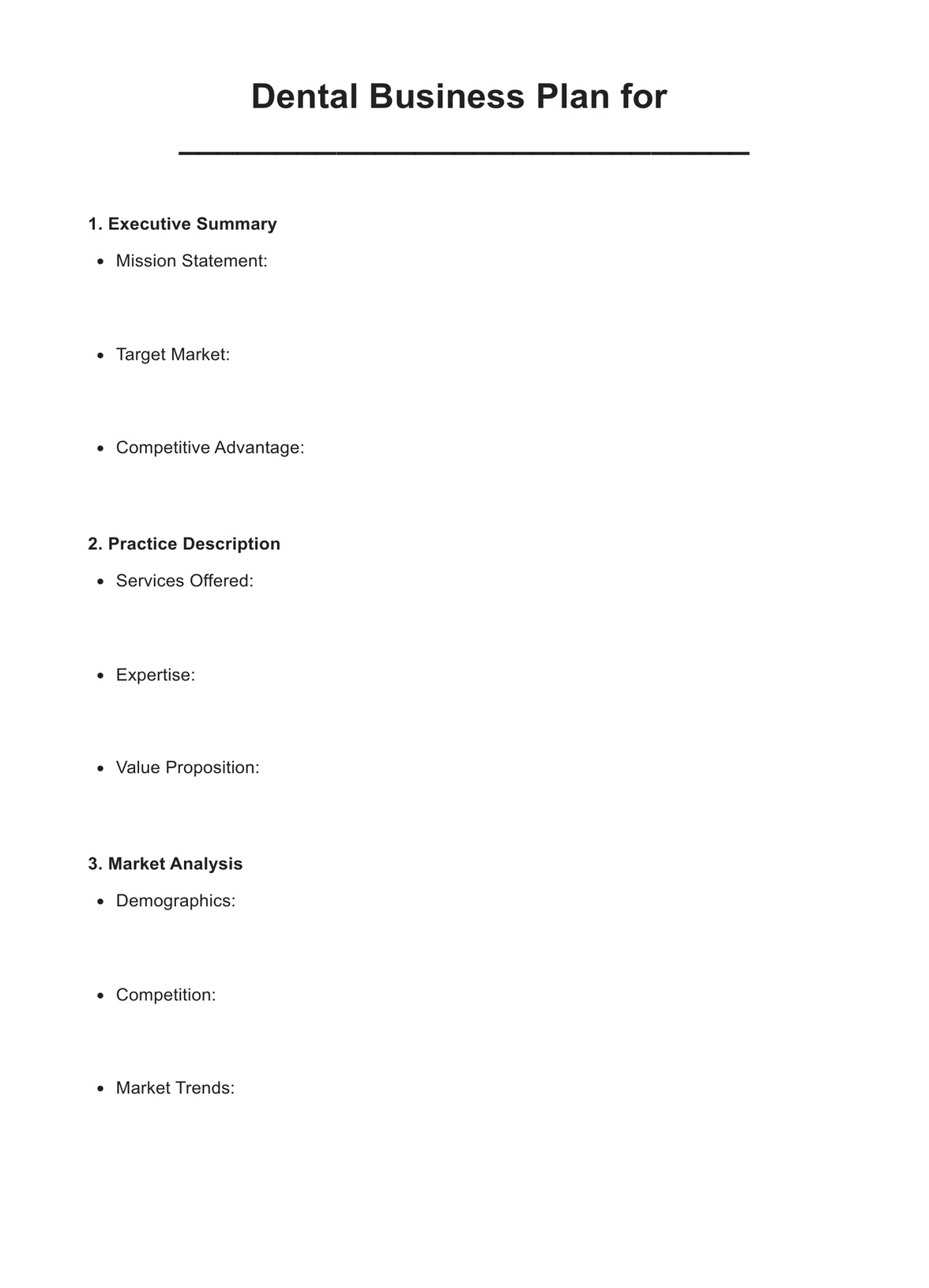
- Executive summary: A concise plan overview highlighting key points such as the practice's mission, target market, competitive advantage, and financial projections.
- Practice description: Detailed information about the dental services offered, the dental team's qualifications, and the unique value proposition that sets the practice apart from competitors.
- Market analysis: An assessment of the local dental market, including demographics, competition analysis, and market trends, to identify opportunities and challenges.
- Sales and marketing strategy: Plans for attracting and retaining patients, outlining approaches for online and offline marketing, patient engagement, and referral programs.
- Operational plan: Details about the practice's day-to-day operations, including staffing, office layout, equipment, technology integration, and appointment scheduling.
- Financial projections: Forecasts of revenue, expenses, and profitability over a defined period, along with assessing startup costs and potential financing sources.
- Legal and regulatory considerations: Ensuring compliance with dental regulations, licensing, insurance, and other legal obligations.
- Risk assessment: Identify potential risks and strategies to mitigate them, ensuring a proactive approach to possible challenges.
- Exit strategy: Plans for the future, whether growing the practice, selling it, or passing it on to another practitioner.
Creating a dental practice business plan requires careful research, analysis, and strategic thinking. It provides clarity to stakeholders and potential investors about the practice's viability and long-term prospects. By following a well-crafted business structure, dental practitioners can optimize their chances of success in the competitive dental industry.









