






What is a Costoclavicular Test?
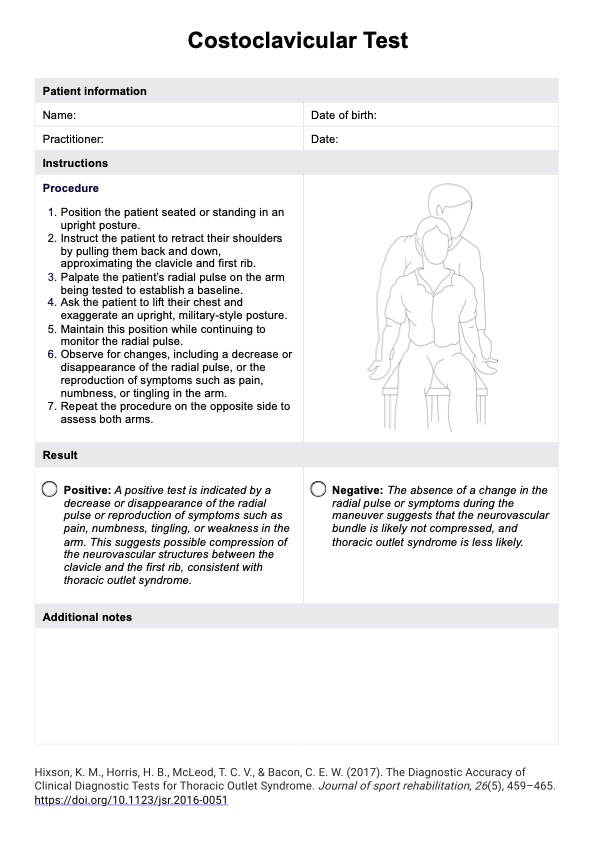
The Costoclavicular Test is a clinical assessment used to evaluate for thoracic outlet syndrome (TOS), a condition where the neurovascular bundle (subclavian artery, subclavian vein, or brachial plexus) becomes compressed between the clavicle and the first rib. Also called the Eden' test or militart brace test, this is particularly useful for determining whether this compression leads to symptoms such as pain, numbness, tingling, or a diminished radial pulse.
The Eden orthopedic test is indicated for patients who present with symptoms consistent with thoracic outlet syndrome, such as arm or hand pain, numbness or tingling in the arm or fingers, weakness in the arm or hand, swelling or discoloration of the hand, or a sensation of heaviness in the arm during activity. It works by positioning the patient to narrow the costoclavicular space, which may reproduce symptoms or alter blood flow through the subclavian artery. A positive result is indicated by a diminished or absent radial pulse or by the reproduction of symptoms during the test.
The purpose of the Costoclavicular Test is to help identify whether thoracic outlet syndrome is caused by compression of the subclavian artery or vein (vascular TOS) or the brachial plexus (neurogenic TOS). However, this test alone is not definitive and should be used alongside other clinical evaluations, imaging studies, or diagnostic tests to confirm a diagnosis of thoracic outlet syndrome.









