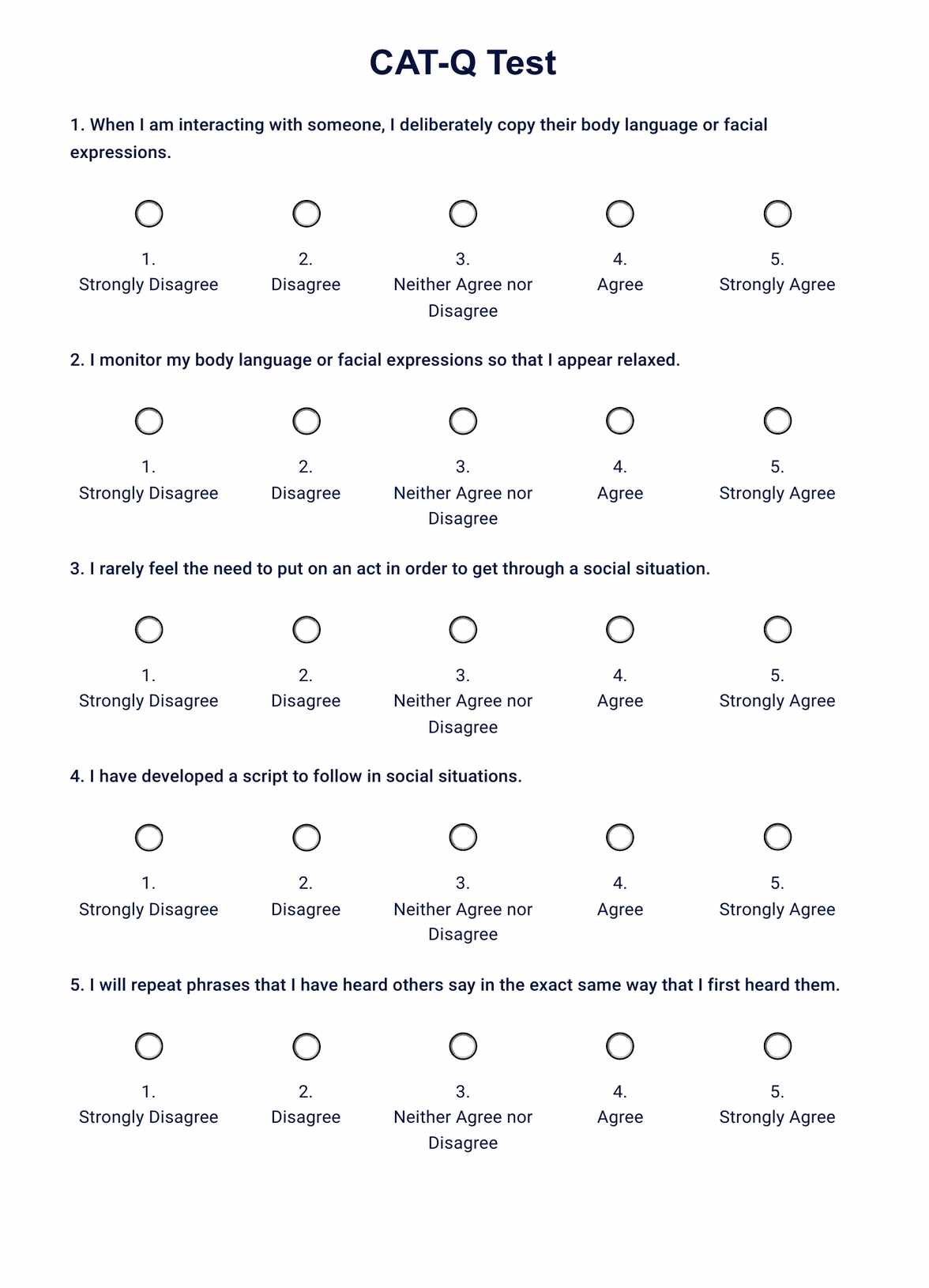




What is the camouflaging autistic traits questionnaire?
The Camouflaging Autistic Traits Questionnaire (CAT-Q) is a self-report measure designed to assess the extent to which individuals, particularly those on the autism spectrum, engage in camouflaging behaviors to hide autistic traits in social situations. Camouflaging involves actively compensating for autistic characteristics, such as challenges in social interactions, by masking or assimilating into social norms. The questionnaire addresses various aspects, including social camouflaging behaviors, masking and assimilation factors, and the use of compensatory strategies for those with autism spectrum disorder.
Developed to measure both autistic and non-autistic individuals, the CAT-Q explores how people navigate social situations, covering areas like eye contact, copying body language, and forcing interactions. The questionnaire provides valuable insights into gender differences, social anxiety, and the impact of camouflaging on mental health. It also assesses factors like impression management, learning social cues, and the total CAT-Q score, offering a comprehensive understanding of camouflaging strategies.
With robust psychometric support, the CAT-Q contributes to the assessment of autism spectrum disorders by evaluating the ways individuals meet diagnostic criteria and the differences between autistic and non-autistic personas. It sheds light on the complex dynamics of social interactions, offering a valuable tool for researchers, clinicians, and individuals seeking to understand and navigate the social challenges associated with autism.