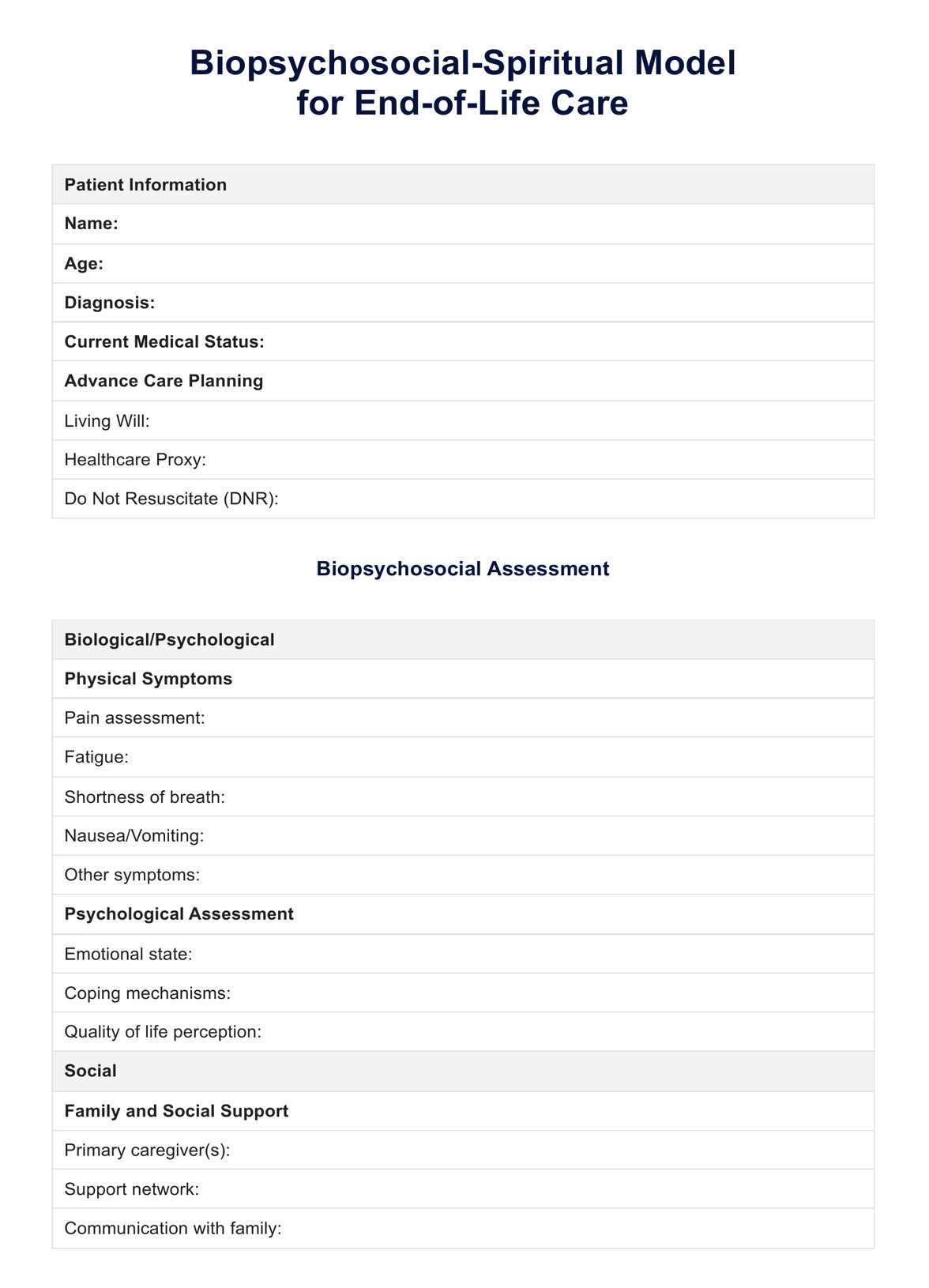




What is the Biopsychosocial Spiritual Model for end-of-life care?
The Biopsychosocial-Spiritual Model for end-of-life care is a holistic approach that acknowledges the interaction between physical, psychological, social, and spiritual aspects of patient care and well-being.
This model is significant for patients at the end of life, as addressing their spiritual concerns can significantly impact their well-being and moral decision-making. Key aspects of this model include:
- Biological, psychological, social, and spiritual domains: The model recognizes the importance of considering the patient as a whole person, including their physical, psychological, social, and spiritual needs.
- Spiritual concerns: Addressing spiritual concerns is crucial for many patients, especially at the end of life. These concerns can influence the patient's sense of well-being and moral decision-making.
- Measuring spirituality: The model includes various instruments and frameworks for measuring different aspects of spirituality, such as religiosity, religious coping and support, spiritual well-being, and spiritual need.
- Interdisciplinary approach: The biopsychosocial-spiritual model encourages collaboration among healthcare professionals from various disciplines to provide comprehensive care for patients and their families.
- Cultural and religious sensitivity: The model acknowledges the potential impact of spiritual and religious variables in mediating the biological and psychological aspects of patient care. Clinicians need to understand key differences in the conceptualizations of pain and suffering across various cultural and religious perspectives.
The Biopsychosocial-Spiritual Model for end-of-life care emphasizes the importance of addressing patients' spiritual needs and incorporating a patient-centered approach to their care. This model has been widely used in clinical settings, particularly in caring for patients with terminal illness.