








Importance of annual checkups
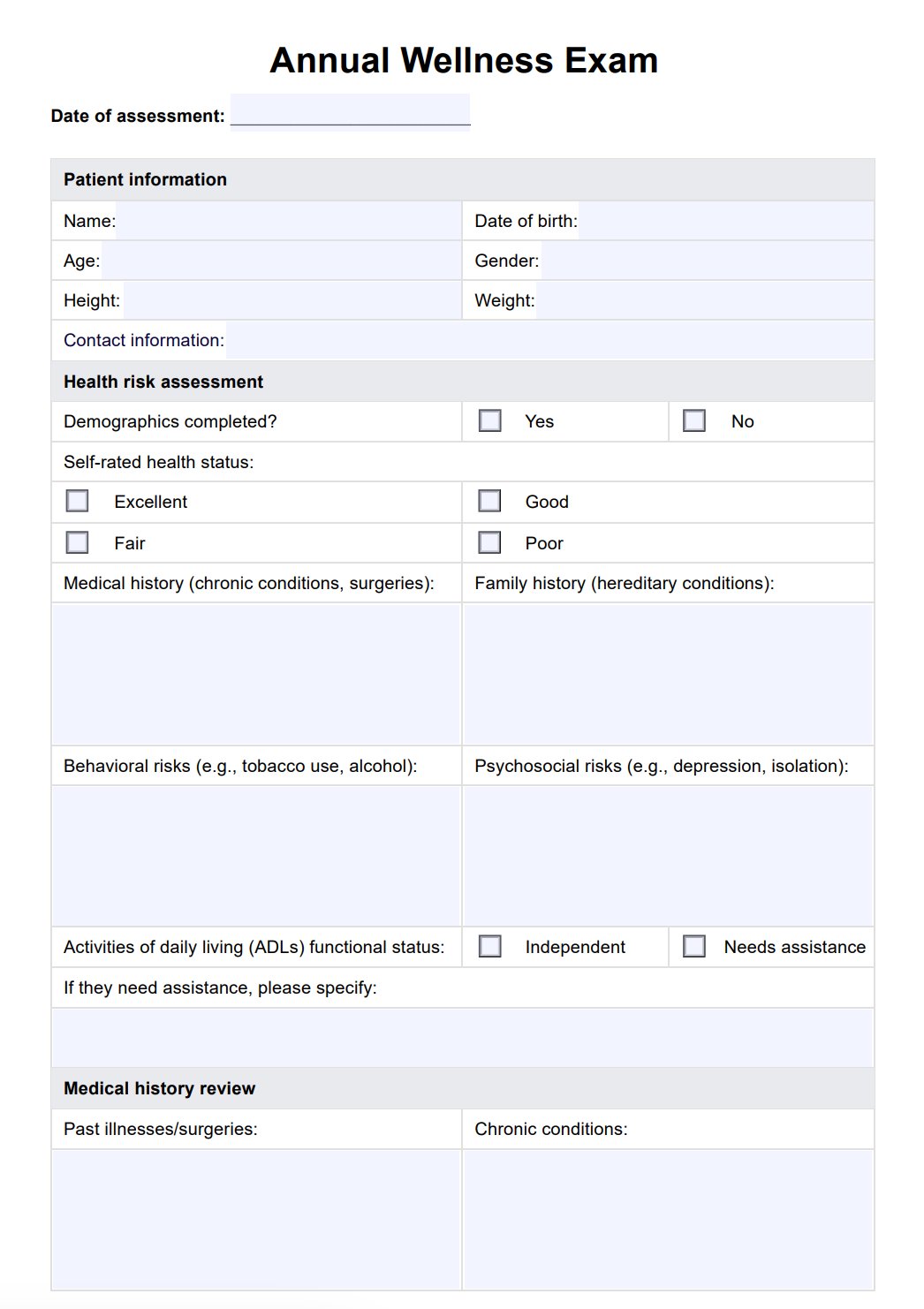
Annual checkups are a critical component of preventive care and long-term health management. Annual wellness visits enable healthcare providers to perform a comprehensive health risk assessment, identify emerging health risks, and establish a baseline for tracking chronic or progressive conditions (American Academy of Family Physicians, 2020a). These visits are not limited to symptom-based evaluations. They focus on proactive screening and assessment, including a review of medical and family history, vitals, lab results, and functional status.
Through an annual wellness visit (AWV), practitioners can deliver personalized health advice and recommend evidence-based interventions tailored to individual risk factors. They also provide a platform to discuss advance care planning, ensuring patients’ future care preferences are documented and respected. The visit includes a medication review, lifestyle assessment, and opportunities to address immunization gaps.
These encounters may include or follow the Initial Preventive Physical Examination (IPPE) for new Medicare beneficiaries (American Academy of Family Physicians, 2020b) but differ in their focus on long-term risk reduction. Incorporating advanced care planning into these assessments strengthens patient-centered care while aligning with preventive guidelines. Ultimately, annual checkups support early detection, risk mitigation, and improved health outcomes through structured and consistent evaluation.









