
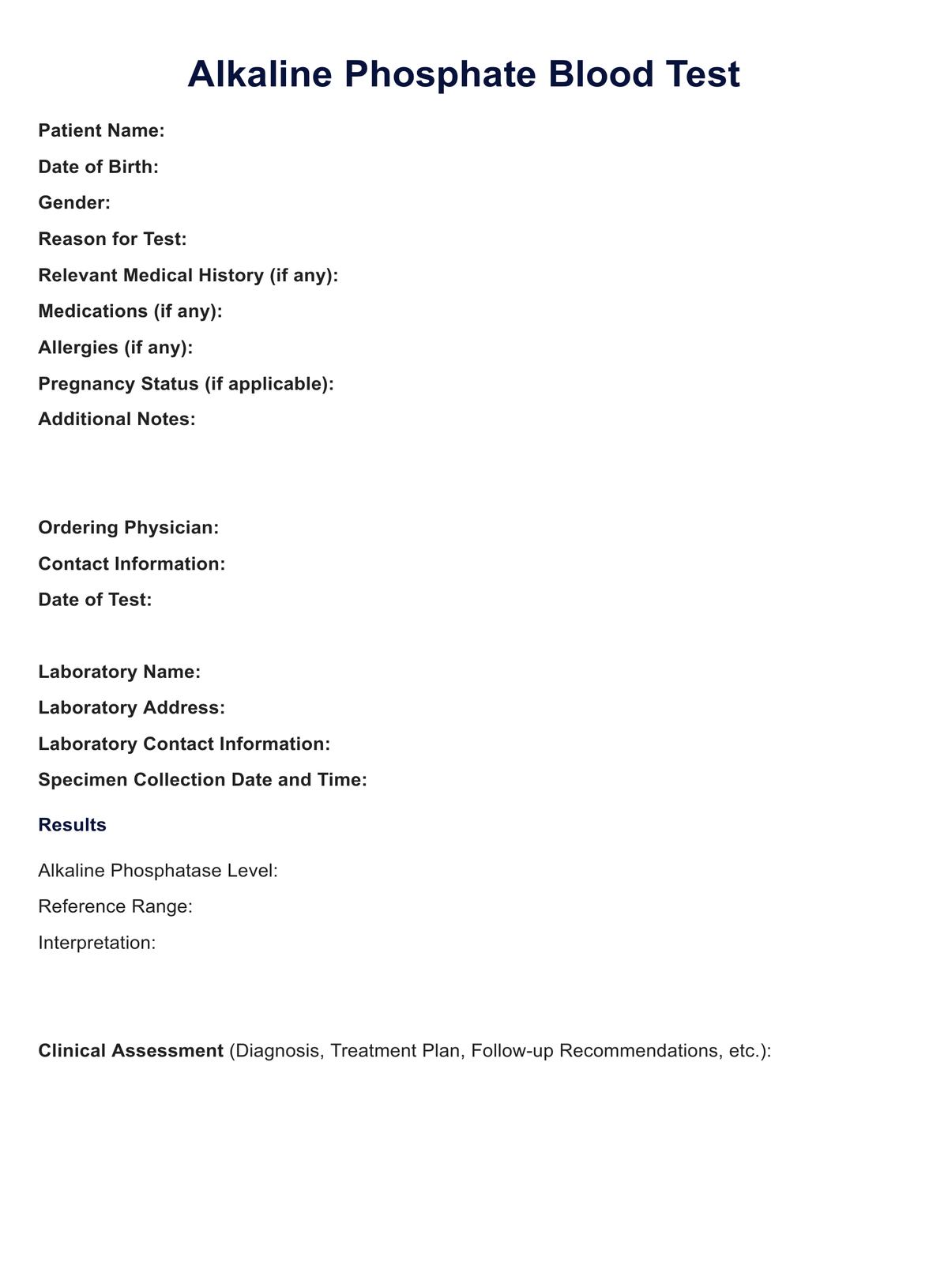




What is an ALK Phos Blood Test?
The ALP or ALK Phos blood test, which is short for Alkaline Phosphatase test, is a crucial medical test and diagnostic tool that's used to measure the concentration of the alkaline phosphatase enzyme in a patient's blood. This test exists because of the importance of alkaline phosphatase, an enzyme that can be found in various tissues in the body, with particularly high levels in the bones, liver, kidneys, and intestines. The enzyme's role is to help with bone growth, digestion, and liver function.
To conduct the ALK Phos blood test, a healthcare practitioner typically obtains a blood sample from the patient using a standard venipuncture procedure. Afterward, the collected blood specimen is sent to a clinical laboratory for thorough analysis. The results are then quantified and reported in units per liter or U/L.
Generally, the test serves multiple functions in the field of clinical medicine, such as evaluating liver function, assessing bone health, assessing bone health, and identifying biliary obstruction. More specifically, with the results, the alkaline phosphatase blood test can help the practitioner diagnose conditions such as hepatitis, cirrhosis, Paget's disease, osteoporosis, gallstones, etc.
Do note that though researchers have studied alkaline phosphatase, they have not pinpointed the exact function of the enzyme. However, any results showing abnormal levels of it are still useful to assess tissue damage or normal body process disruption.