








What Is a 12-Panel Drug Test?
A 12-panel drug test is a comprehensive method of drug screening designed to detect the presence of twelve specific drug classes in a person’s system. It serves as a vital tool to monitor and assess individuals for potential drug dependence or misuse. The test can be administered using various sample types. Examples are saliva, sweat, blood, hair follicles, and urine. Urine samples are the most commonly employed for rapid results.
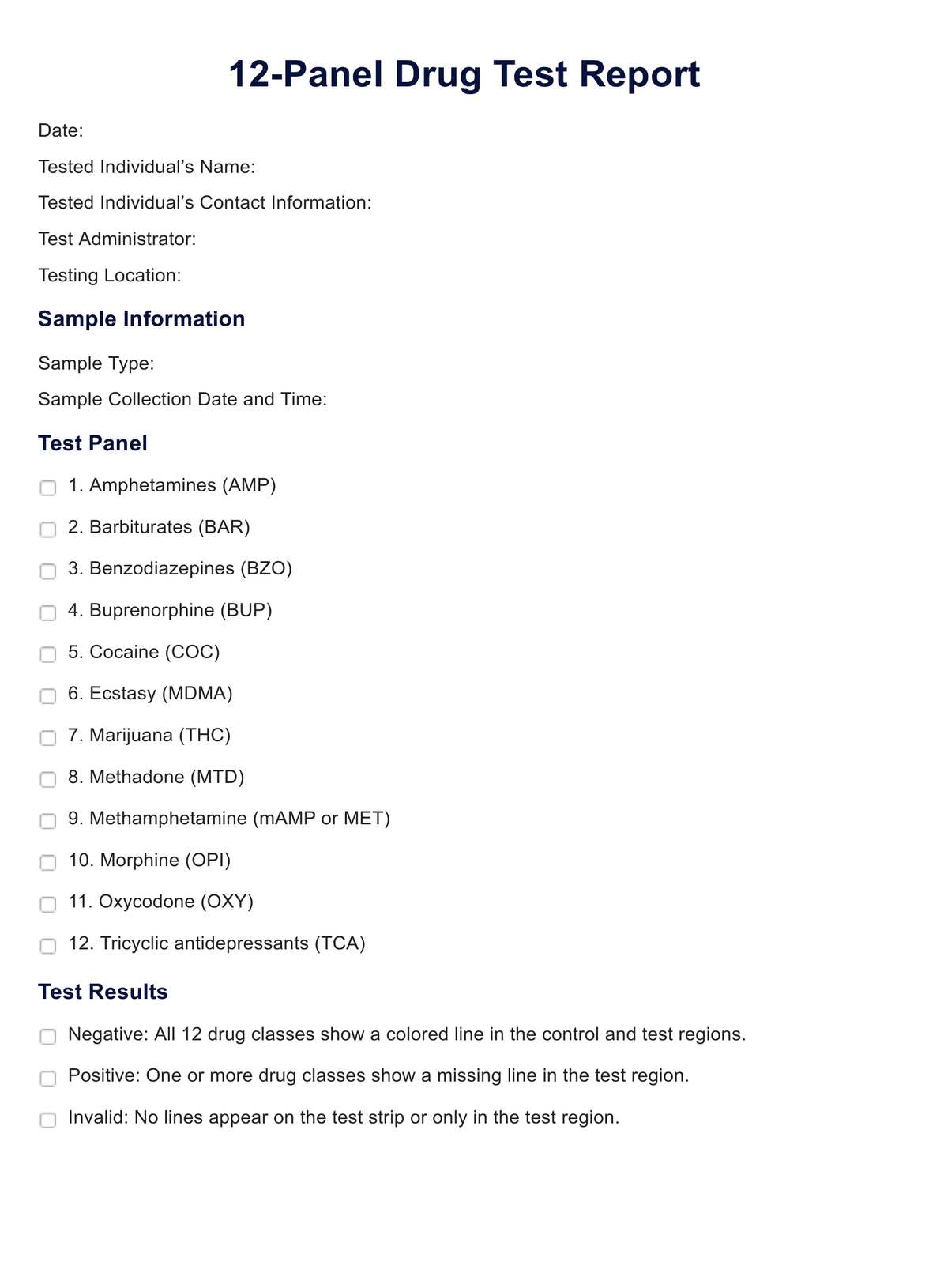
Here’s a list of the 12 specific drug classes that a 12-panel drug test is capable of identifying:
- Amphetamines (AMP)
- Barbiturates (BAR)
- Benzodiazepines (BZO)
- Buprenorphine (BUP)
- Cocaine (COC)
- Ecstasy (MDMA)
- Marijuana (THC)
- Methadone (MTD)
- Methamphetamine (mAMP or MET)
- Morphine (OPI)
- Oxycodone (OXY)
- Tricyclic antidepressants (TCA)
Typically, 12-panel drug tests are frequently employed in a variety of settings like reinstatement of driver’s licenses, employment screening, patient intervention, and monitoring potential substance abuse within their families. The one requesting the test may request that the tester have it conducted at a laboratory or any other place convenient for them, given that currently, home kits exist.
Currently, the test results can be sufficient records of proof whether or not one takes said drugs. However, if you need a document to record the results for future reference, you can utilize templates such as our 12-panel drug test template.









