
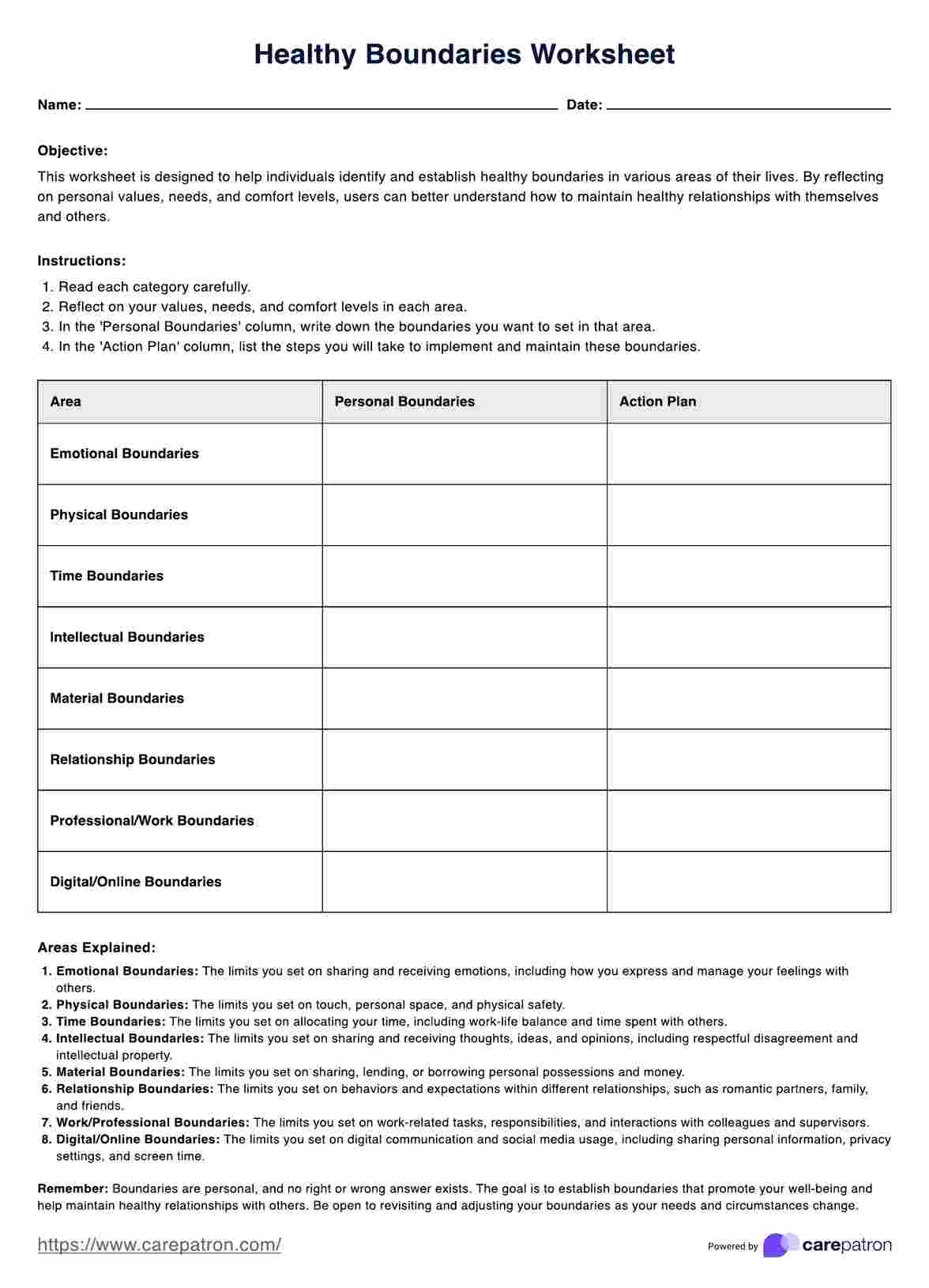




What are boundaries?
Boundaries are essentially guidelines. They are invisible lines we draw that define how we want to be treated by others. These guidelines can encompass various aspects of our lives, influencing our physical space, emotions, time, energy, and even possessions. They act as a marker of a safe space—of what is acceptable and unacceptable behavior toward us, helping to establish healthy boundaries and appropriate behavior in different contexts.
Boundaries can be physical, emotional, or psychological. They also help define personal space, privacy, and the level of intimacy or closeness individuals are comfortable with in different situations and relationships. In fact, setting boundaries is a form of self-care. Understanding and maintaining personal boundaries is crucial to building a healthy relationship with others, whether that's a romantic relationship, within a family dynamic, or in clients’ professional lives.
People with violated boundaries may experience various issues, such as feelings of resentment, anger, or victimization. On the other hand, those with rigid or overly strict boundaries may struggle with intimacy or forming meaningful connections with others.









