






What is Cognitive Behavioral Therapy?
The interaction between thoughts, feelings, and behaviors is the main focus of CBT, a widely used and incredibly effective type of psychotherapy. It is based on the knowledge that our ideas and perspectives about events directly impact how we experience emotions and respond to situations. The goal of CBT, which is structured and goal-oriented, is to assist people in recognizing and changing the negative thought patterns and behaviors that cause emotional distress and impair functioning.
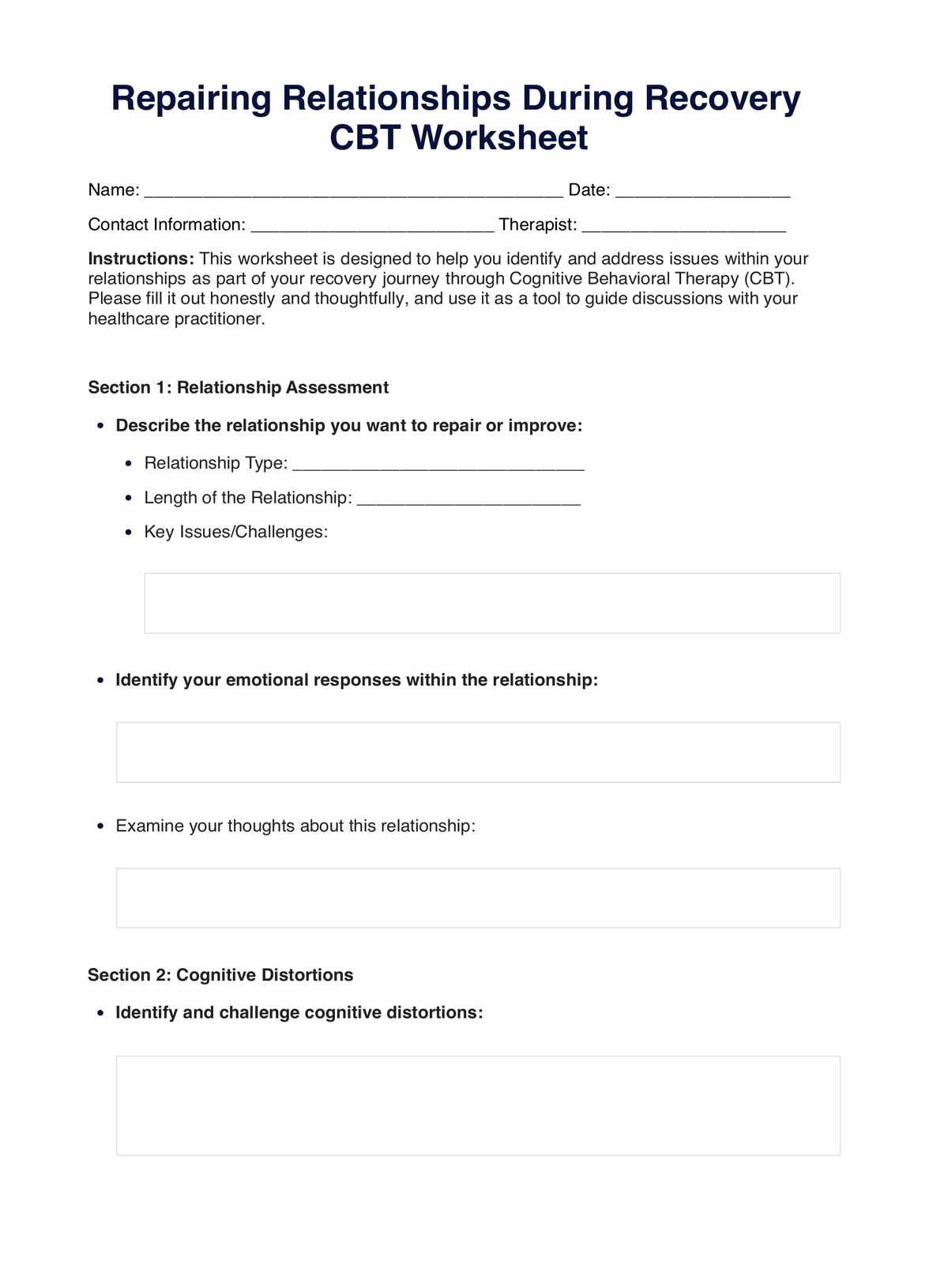
In the context of repairing relationships, CBT can be an invaluable tool. Our perceptions, interpretations, and reactions to the behaviors and words of others profoundly influence relationships. Often, individuals may have distorted beliefs or negative thought patterns about themselves, their partners, or their relationships, contributing to conflicts, resentment, and emotional distance.
CBT assists individuals in recognizing these dysfunctional thought patterns, known as cognitive distortions, and replacing them with more realistic and balanced perspectives. For instance, someone struggling with trust issues might have a cognitive distortion that makes them believe their partner is always untrustworthy. CBT teaches them to challenge and reframe these thoughts, considering alternative explanations and evidence that support a more accurate and constructive view of the relationship.
Additionally, CBT equips individuals with effective coping strategies and communication skills. They learn to express their needs and concerns assertively and respectfully, improving their ability to navigate conflicts and misunderstandings within the relationship. This enhanced communication fosters empathy, understanding, and a stronger emotional connection between partners.
CBT is often structured in a collaborative, time-limited format, allowing individuals to work with a trained therapist to develop tailored strategies for repairing and improving relationships. Through self-reflection, challenging maladaptive thought patterns, and implementing new coping mechanisms, individuals undergoing CBT can experience significant positive shifts in their relationships, promoting healing and growth within recovery.









