





What is a Psychoeducational Group Worksheet?
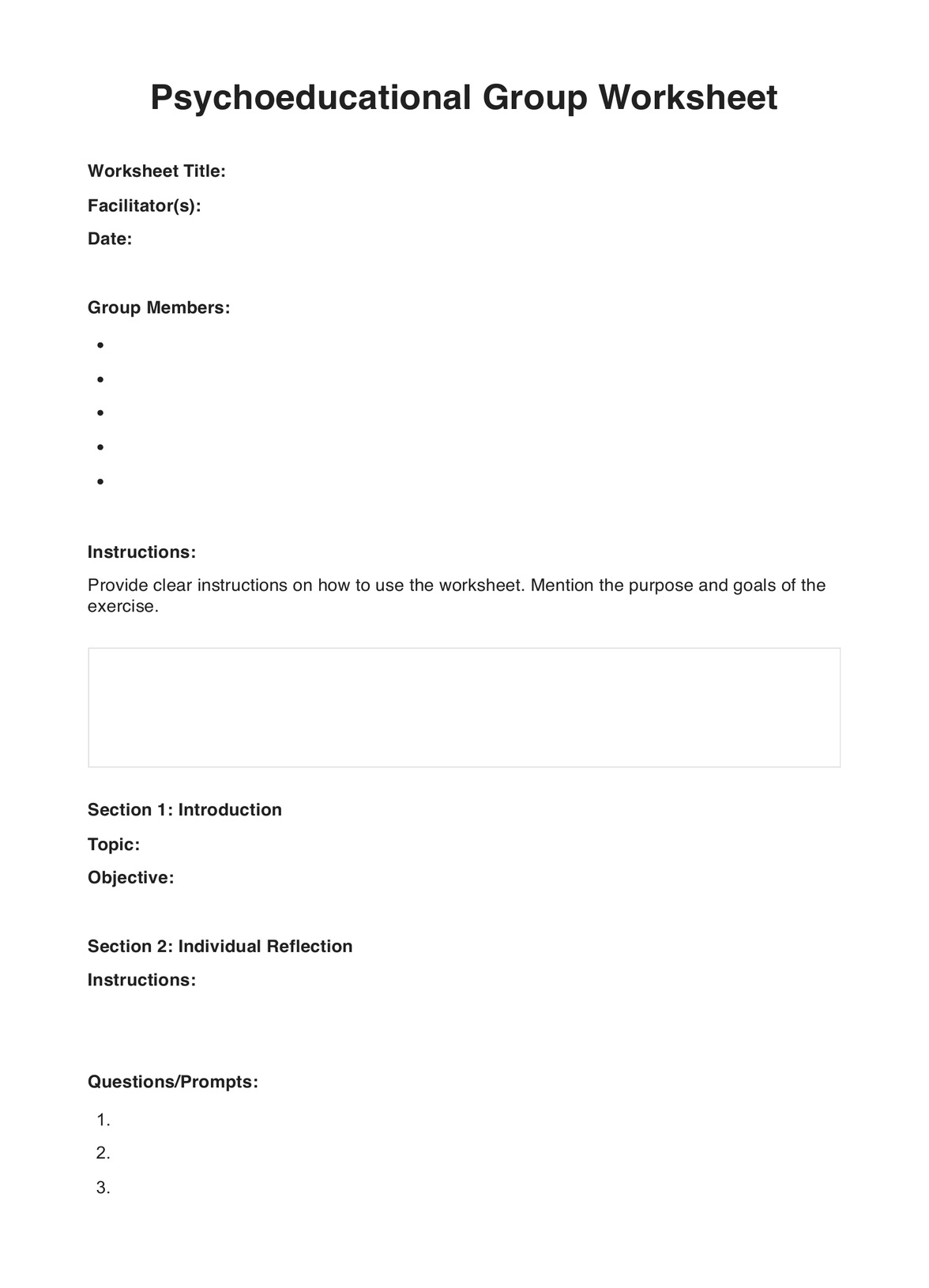
A Psychoeducational Group Worksheet is a valuable resource used in psychology and mental health to facilitate group therapy sessions and psychoeducation programs. These mental health worksheets are designed to assist mental health professionals in providing structured and educational content to individuals or groups dealing with various psychological, emotional, or behavioral issues.
Typically, these worksheets are created by licensed therapists, counselors, or psychologists and are intended to guide participants through various topics and activities that promote self-awareness, emotional regulation, and the development of coping skills during group discussions in therapy. These resources can be integral to therapeutic interventions, as they offer a structured format for discussions and exercises that encourage personal insight and growth.
The content of these worksheets may cover a wide range of subjects, including but not limited to:
- Coping strategies: Teaching individuals effective techniques to manage stress, anxiety, or depression so they don't fall victim to negative self-talk and other unhelpful activities or behaviors.
- Communication skills: Improving interpersonal relationships by enhancing communication and conflict resolution skills.
- Emotional regulation: Helping participants recognize and manage their emotions in healthy ways.
- Self-esteem and self-awareness: Promoting a positive self-image and understanding one's thoughts and feelings.
- Goal setting: Assisting individuals in setting and achieving personal and therapeutic goals based on their own ideas and insights gained from other members of the group.
- Psychoeducation: Providing information about specific mental health conditions, symptoms, and treatment options.
These worksheets often include fill-in-the-blank exercises, reflection prompts, and structured activities that encourage participants to engage actively in learning. They serve as a tool for therapists and clients to track progress, identify areas for improvement, and foster a deeper understanding of the therapeutic concepts discussed during group sessions, all of which can lead to improved mental well-being for those attending such sessions.









