
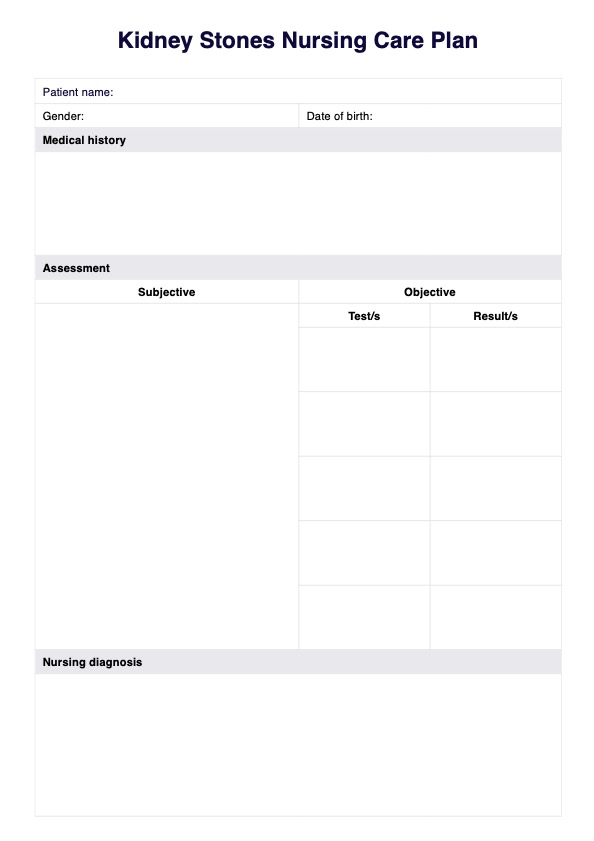



Kidney Stones Nursing Care Plan
Improve nursing documentation and care process with our Kidney Stones Nursing Care Plan template.

Use Template
## **What are kidney stones?**
Kidney stones, or renal calculi, are hard mineral and salt deposits inside the kidneys. These stones are composed primarily of calcium oxalate, calcium phosphate, and uric acid, and they can affect various parts of the urinary tract, from the kidneys to the bladder. As renal stones move through the urinary system, they often cause severe pain, commonly referred to as renal colic. This pain can be exacerbated if a stone obstructs the bladder, neck, or ureter, leading to urinary retention and acute pain.
The passage of kidney stones is also associated with symptoms such as urinary urgency, urinary stasis, decreased urine output, and blood in the urine. These associated symptoms necessitate comprehensive nursing interventions to assess kidney function, manage excruciating pain, prevent infection, and facilitate stone passage.
Monitoring the patient's urine output, encouraging increased fluid intake, and administering pain relief are essential components of the care plan. Additionally, nursing diagnosis for kidney stones focuses on assessing the patient's kidney function and managing complications like urinary tract infections and impaired urinary elimination. Interventions are also essential to maintain adequate renal functioning.
### **Types of kidney stones**
Kidney stones vary in type based on their chemical composition, each with distinct causes and implications for treatment and prevention:
- **Calcium stones**: These are the most prevalent type of kidney stones, usually in the form of calcium oxalate, but can also be calcium phosphate.
- **Uric acid stones**: These form when the urine is consistently too acidic. A diet rich in purines—substances found in animal proteins such as meats, fish, and shellfish—can increase uric acid in urine.
- **Struvite stones**: These stones form in response to an infection, such as a urinary tract infection. They can grow quickly and become quite large, sometimes with few symptoms, until they cause a blockage or are passed.
- **Cystine stones**: The least common type of kidney stone, cystine stones result from a hereditary disorder called cystinuria, which affects the amount of the amino acid cystine excreted in the urine.
- **Other stones**: Rare types include those made of xanthine and those associated with certain medications or diseases, such as indinavir stones in HIV patients treated with indinavir or triamterene in patients using certain diuretics.
Understanding the type of stone involved is crucial for effective treatment and prevention strategies. For instance, modifying diet can help reduce the risk of certain types of stones, such as limiting oxalate-rich foods for calcium oxalate stones or purine-rich foods for uric acid stones.
### **Causes of kidney stones**
Kidney stones develop when the balance of water, minerals, and salts in the urine changes, leading to the crystallization and formation of kidney stones. Several factors can disrupt this balance and increase the risk of developing kidney stones:
- **Dehydration**: Insufficient water intake reduces urine volume, leading to higher concentrations of minerals that can precipitate and form stones. This is particularly common in warmer climates or among individuals who do not consume adequate fluids.
- **Dietary factors**: Diets high in protein, sodium, and sugar can increase the risk of some types of kidney stones. For instance, high sodium intake increases the amount of calcium in the urine, promoting calcium stone formation.
- **Medical conditions**: Certain conditions, such as hyperparathyroidism, inflammatory bowel disease, and urinary tract infections, can contribute to kidney stone formation.
- **Genetic factors**: A family history of kidney stones can increase an individual's risk, suggesting a genetic predisposition to stone formation.
- **Specific supplements and medications**: The overuse of vitamin C supplements, excessive vitamin D supplementation, and certain medications, such as diuretics and calcium-based antacids, can increase the risk of stone formation by altering the urinary concentrations of specific minerals.
- **Obesity**: Higher body mass index (BMI), large waist size, and weight gain have been linked to an increased risk of kidney stones. Obesity may alter the acid levels in the urine, contributing to the formation of stones.
Understanding these risk factors helps healthcare providers recommend changes in lifestyle and diet that can significantly reduce the likelihood of developing kidney stones or manage existing conditions more effectively.
Kidney Stones Nursing Care Plan Template
## **How do nurses assess and diagnose kidney stones?**
Assessing and diagnosing kidney stones is a critical role that nurses play in the healthcare setting, helping to manage and alleviate the painful symptoms that these stones can cause. Here's how nurses typically proceed with the assessment and diagnosis of kidney stones:
### **Assessing symptoms**
Nurses begin by assessing the patient's symptoms, typically severe back or side pain, blood in the urine, and nausea or vomiting.
### **Diagnosing tests**
Diagnostic tests, such as urinalysis, blood tests, and imaging procedures (like ultrasounds or CT scans), are conducted to confirm the presence of stones and assess kidney and renal function.
### **Risk factor evaluation**
Nurses assess lifestyle and dietary factors, including fluid intake and dietary habits, that may contribute to the formation of additional stones.
### **Next steps**
Following a nursing diagnosis for kidney stones, nurses develop a care plan focusing on pain management, a treatment regimen preventing further stone formation, and aiding stone passage.
## **How to use our Kidney Stones Nursing Care Plan template?**
Our printable Kidney Stones Nursing Care Plan template provides a structured approach to managing kidney stones, from initial assessment to intervention and evaluation. Here's how you can use it:
### **Step 1: Download our template**
Download our Kidney Stones Nursing Care Plan template. This template offers a structured approach to effectively managing kidney stones. It guides healthcare providers from the initial assessment through interventions and evaluations.
### **Step 2: Structured approach**
The template helps ensure that every essential step in managing kidney stones is methodically addressed. It starts with fields where you can document relevant patient information and history.
### **Step 3: Assessment and diagnosis**
Document subjective and objective information gathered during consultations, along with the nursing diagnosis.
### **Step 4: Tailor goals and interventions**
Customize care goals and interventions to address each patient's needs. It's also important to include the rationale for these treatment strategies. For example, this could include managing acute pain, which is often a significant issue with kidney stones, and implementing dietary and lifestyle changes to prevent future episodes.
### **Step 5: Evaluation and follow-up**
Regular evaluations are incorporated into the care plan to assess the effectiveness of the interventions and make necessary adjustments. This ongoing assessment ensures the care plan aligns with the patient's health status and progress.
By following these steps with our care plan template, healthcare providers can deliver a comprehensive and effective management plan for patients with kidney stones, thereby improving outcomes and patient satisfaction.
## **Common nursing interventions for kidney stones**
Managing kidney stones effectively requires a comprehensive approach tailored to each patient's specific needs. Some popular interventions for kidney stone diagnosis are:
- **Pain management**: Administer prescribed analgesics and provide guidance on positioning for optimal comfort.
- **Fluid intake management**: To facilitate stone passage, encourage the intake of at least 2-3 liters of water per day.
- **Dietary modifications**: Advising on dietary changes to prevent the formation of specific types of stones, such as reducing sodium or animal protein intake for calcium stones or limiting foods high in oxalate for oxalate stones.
By managing pain, promoting hydration, and advising on dietary adjustments, nurses can significantly impact the patient's recovery and quality of life. Implementing these strategies not only helps resolve the current episode but also aids in preventing future stone formation, ensuring long-term health benefits for patients.
Commonly asked questions
The main types of kidney stones include calcium oxalate, uric acid, struvite, and cystine stones.
Nurses can assist patients experiencing pain through effective pain management strategies, hydration, and dietary advice.
A crucial part of the nursing care plan for kidney stones is managing acute pain and preventing the formation of new stones through patient education and lifestyle modifications.










EHR and practice management software
Get started for free
*No credit card required
Free
$0/usd
Unlimited clients
Telehealth
1GB of storage
Client portal text
Automated billing and online payments