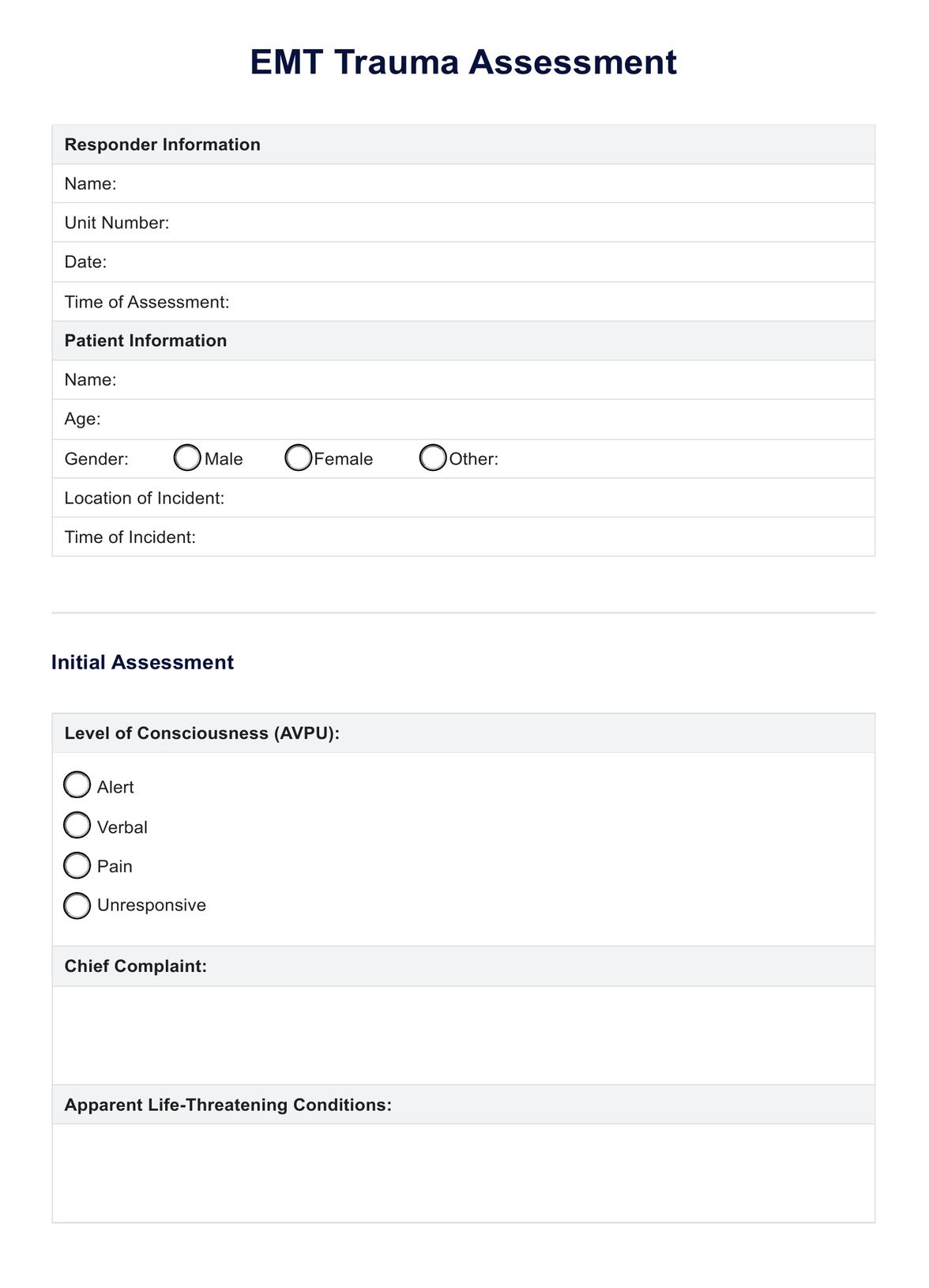
What do EMT assessments include?
EMT assessments are comprehensive evaluations that include several critical components to ensure a thorough examination of the trauma patient. These assessments are designed to be systematic and efficient, enabling EMTs to identify all potential injuries and provide appropriate care.
Rapid trauma assessment
This is the initial evaluation conducted to identify any obvious or life-threatening injuries. It is a quick, systematic process that begins with assessing the patient's consciousness level and then scanning for major bleeding, deformities, or other signs of injury. This assessment is particularly crucial in situations with a significant mechanism of injury, such as a fall from a height or a high-speed vehicle collision, where the likelihood of multiple injuries is high.
Extremity trauma
EMTs pay special attention to extremity trauma, which includes injuries to the arms and legs. These injuries can range from fractures and dislocations to amputations and can significantly impact the patient's mobility and overall condition. Assessment involves checking upper extremities for deformities, swelling, and bruising and assessing circulation, sensation, and movement in each extremity. Proper management of extremity injuries is crucial to prevent further harm and to ensure optimal recovery.
Obvious injury
Identifying obvious injuries is a key component of the EMT assessment. This includes visible wounds such as lacerations, burns, and penetrating injuries. EMTs assess these injuries for severity, potential for blood loss, and risk of infection. Immediate management may involve controlling bleeding, protecting the wound, and preparing for rapid transport to a medical facility.
Spinal precautions
If the mechanism of injury suggests a potential spinal injury, EMTs take spinal precautions. This involves immobilizing the patient's spine to prevent further injury. Spinal injuries can be particularly dangerous and may lead to permanent paralysis or other severe complications if not properly managed.
Patient's airway
Ensuring the patient's airway is clear and protected is a top priority. This involves checking for obstructions, such as blood, vomit, or foreign bodies present, and ensuring the airway remains open. Techniques such as jaw thrust or chin lift may be used, and in more severe cases, advanced airway management techniques may be necessary.
Mechanism of injury
Understanding the mechanism of injury is crucial as it provides valuable clues about potential internal injuries. For example, a patient who has fallen from a significant height may have internal injuries even if there are no obvious external signs of trauma. EMTs use this information to guide their assessment and prioritize treatment.
EMT assessments are multifaceted and require high skill and attention to detail. They are essential in providing immediate and effective care to trauma patients, ultimately improving patient outcomes and saving lives.