







Do-Not-Resuscitate (DNR) FormsAI Template IconToolbar IconShare Icon

Do-Not-Resuscitate (DNR) Forms

Download our free DNR form PDF and learn what a Do-Not-Resuscitate order is, how to use it, and ensure your medical care preferences are respected.

Olivia Sayson avatar

By Olivia Sayson on Aug 2, 2025.

Fact Checked by Ericka Pingol.

Use Template

What is a do-not-resuscitate order?

A do-not-resuscitate (DNR) order is a legal document that instructs healthcare providers at the hospital not to perform cardiopulmonary resuscitation (CPR) if a person experiences cardiac arrest or stops breathing. It is typically used for individuals with terminal illnesses, poor prognosis, or those who prioritize natural death over life-sustaining treatment. The decision to have a DNR order is personal and based on the individual’s medical condition, quality of life, and preferences.

This order is documented in the individual’s medical records, with clear communication between the patient, physician, and healthcare professionals to ensure everyone understands the decision. A DNR may be included in other medical records or advance directives to ensure it’s legally valid and honored in emergencies. Family members, legal representatives, and emergency medical services (EMS) should also know the DNR order to respect the patient's wishes during medical emergencies. Additionally, a DNR form may address other medical interventions, including artificial nutrition or mouth-to-mouth breathing, to clarify the scope of the order.

Do-Not-Resuscitate (DNR) Forms Template

Download PDF Template

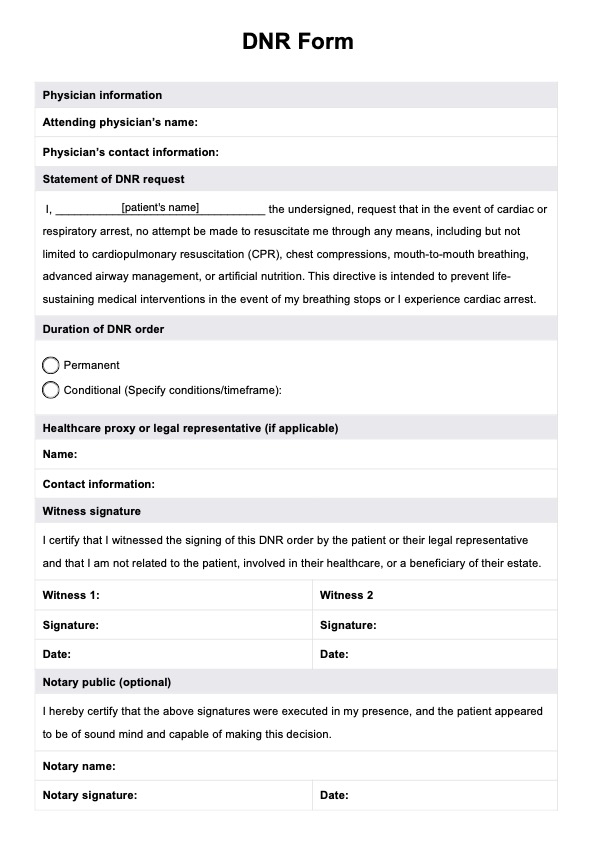
How to use Carepatron's DNR Form

Follow the steps below to complete a do-not-resuscitate order. This living will form allows individuals to make their wishes known regarding resuscitation efforts in the event of cardiac or respiratory arrest.

Step 1: Download the template

Begin by downloading the Do-Not-Resuscitate order template. This form is essential to outline the individual’s wishes regarding resuscitation efforts.

Step 2:  Fill in patient and physician details

Enter the patient’s full name, date of birth, and address. Also, include the attending physician's name and contact information to verify and communicate the order.

Step 3: State the DNR request

Clearly state the individual’s wish not to resuscitate and not receive CPR or other life-sustaining measures in the event of cardiac or respiratory arrest. Specify any medical interventions to be avoided, such as chest compressions or artificial nutrition.

Step 4: Add a healthcare proxy or legal representative

If applicable, include the name and contact details of a designated healthcare proxy or legal representative to make healthcare decisions on the individual’s behalf.

Step 5: Witness signatures

Ensure the form is signed by at least two witnesses not involved in the individual’s healthcare or estate. These signatures validate the form’s authenticity.

Step 6: Distribute copies and store the original

After the form is completed and signed, make copies for relevant healthcare providers, emergency medical services (EMS), and the healthcare proxy. Store the original document with the individual’s medical records for easy access in a medical emergency.

When to use this form?

A DNR Form should be used when an individual explicitly wishes not to receive life-sustaining treatment or medical interventions in the event of a medical emergency, such as cardiac arrest or respiratory failure. Key instances include:

  • Terminal illness or poor prognosis: A DNR order is often appropriate for individuals with terminal conditions where recovery is unlikely.
  • Personal wishes: Individuals may decide to forgo CPR and other aggressive measures, based on their values and preferences.
  • Quality of life considerations: When the burden of resuscitation outweighs the potential benefits, a DNR ensures that the individual’s wishes are respected.
  • Informed decision-making: Establishing a DNR should involve clear communication with healthcare providers, ensuring the patient fully understands the implications of their choice.
  • Advance directives: DNR orders may be documented in advance directives or other medical orders, ensuring legal validity and guiding future healthcare decisions.
  • Healthcare professionals' guidance: Physicians and physician assistants may recommend a DNR order based on the patient’s health status and prognosis.
  • EMS awareness: It’s essential that EMS providers are informed of the DNR order so they can respect the patient’s wishes during a medical emergency.
  • Healthcare agents: If the patient has designated a healthcare agent, this individual may make medical decisions, including establishing a DNR order.

How to write a DNR Form

A do-not-resuscitate form is a legal document outlining an individual’s wish not to receive cardiopulmonary resuscitation or other life-sustaining measures, such as chest compressions, in the event of cardiac or respiratory arrest.

This document ensures that healthcare professionals, including physicians and medical staff, understand and respect the patient’s wishes regarding life-saving measures. The process of creating a DNR form may differ by jurisdiction, so consulting with a healthcare provider or legal expert is crucial to ensure compliance with local laws.

Here are the general steps to write a DNR form:

  1. Identify the document: Title the form clearly as “Do-Not-Resuscitate Order” or “DNR Directive.”
  2. Personal information: Include the individual's full legal name, date of birth, address, and other identifying information.
  3. Healthcare proxy or legal representative: If applicable, name the person designated as the healthcare proxy or legal representative and provide their contact details.
  4. Physician information: Include the attending physician's name, contact details, and signature, as they are the ones issuing the DNR order based on physician-patient discussions.
  5. Statement of DNR request: Clearly state the individual's desire to avoid resuscitation efforts such as CPR, artificial ventilation, chest compressions, and other treatments like artificial nutrition if breathing stops. Be specific about the medical interventions covered by the DNR.
  6. Duration of DNR order: Specify whether the DNR is permanent or if there are particular conditions or an effective date for its implementation.
  7. Witness signatures: Have the form signed by at least two witnesses who are not involved in the patient’s healthcare and have no financial interest in the patient’s estate. These witnesses must acknowledge the document's signing in the patient's presence.
  8. Notary public (Optional): In some regions, it’s advisable to have the DNR form notarized by a notary public for additional legal validity.
  9. Copies and distribution: Make copies of the signed and witnessed form and distribute them to the patient’s healthcare providers, including the physician, primary care physician, and emergency medical services (EMS). Keep a copy in a visible location for easy access in a medical emergency.
  10. Review and renewal: Review the DNR order periodically, especially if the patient’s condition or preferences change. Ensure that any changes are documented and signed by the necessary parties.
  11. Document retrieval: Ensure that the DNR form is easily accessible to medical staff, first responders, and healthcare providers to avoid confusion during a medical emergency.

Commonly asked questions

The do-not-resuscitate (DNR) form must be signed by at least two witnesses not involved in the patient’s medical care. This ensures that the patient’s wishes are legally recognized. These witnesses are crucial to the signing requirements and help confirm the order's validity.

Yes, a DNR order can be part of a living will. A living will outlines an individual's medical care preferences, including their wishes regarding life-sustaining treatments. It provides clarity on how the person wants to be treated in medical emergencies.

Yes, a doctor’s signature is required for the DNR to be legally valid. The physician must verify the order and ensure it aligns with the patient's wishes, particularly for comfort care and avoiding unnecessary medical interventions.

EHR and practice management software

Get started for free

*No credit card required

Free

$0/usd

Unlimited clients

Telehealth

1GB of storage

Client portal text

Automated billing and online payments







