





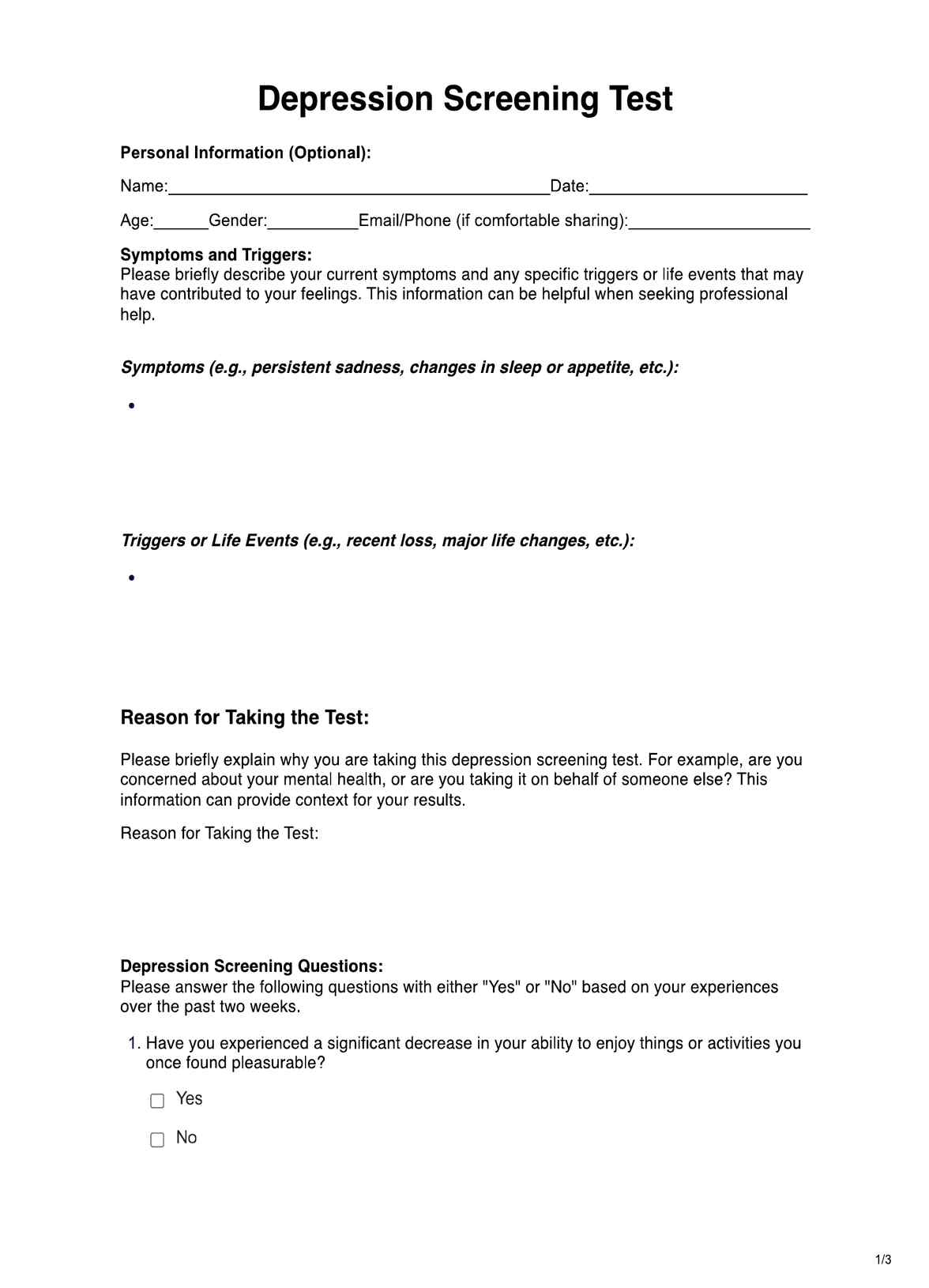




What is a Depression Screening Test?
A Depression Screening Test is a structured questionnaire or assessment designed to help individuals evaluate their mental and emotional well-being, specifically regarding depressive symptoms. It serves as an initial and informal tool for self-assessment, allowing individuals to gauge whether they might be experiencing signs of depression.
Here are some key points to understand about a Depression Screening Test:
- Self-Assessment Tool: It is primarily a self-assessment tool, which means individuals can use it independently to reflect on their emotional state and experiences.
- Structured Questions: These tests typically consist of a series of structured questions. Respondents are asked to answer these questions based on their feelings and experiences over a specific time frame, usually the past two weeks.
- Standardized: Many Depression Screening Tests are standardized, meaning they have been developed and validated through research to ensure reliability and consistency in assessing depressive symptoms.
- Not a Diagnosis: It's essential to emphasize that a Depression Screening Test is not a diagnostic tool. Instead, it provides an indication or snapshot of a person's mental state at a particular moment. A high score on such a test does not confirm a diagnosis of depression but suggests the need for further evaluation by a mental health professional.
- Early Awareness: One of the primary purposes of a Depression Screening Test is to raise awareness. It can help individuals recognize potential signs of depression they may not have been aware of, fostering early intervention and support-seeking behavior.
- Confidentiality: Most Depression Screening Tests prioritize user confidentiality, ensuring that the results and personal information are secure.
Overall, a Depression Screening Test is valuable in initiating conversations about mental health, encouraging individuals to seek professional help when needed, and promoting early intervention to address depressive symptoms effectively. However, it should always be followed by a comprehensive assessment by a qualified mental health professional for an accurate diagnosis and appropriate treatment recommendations if required.









