





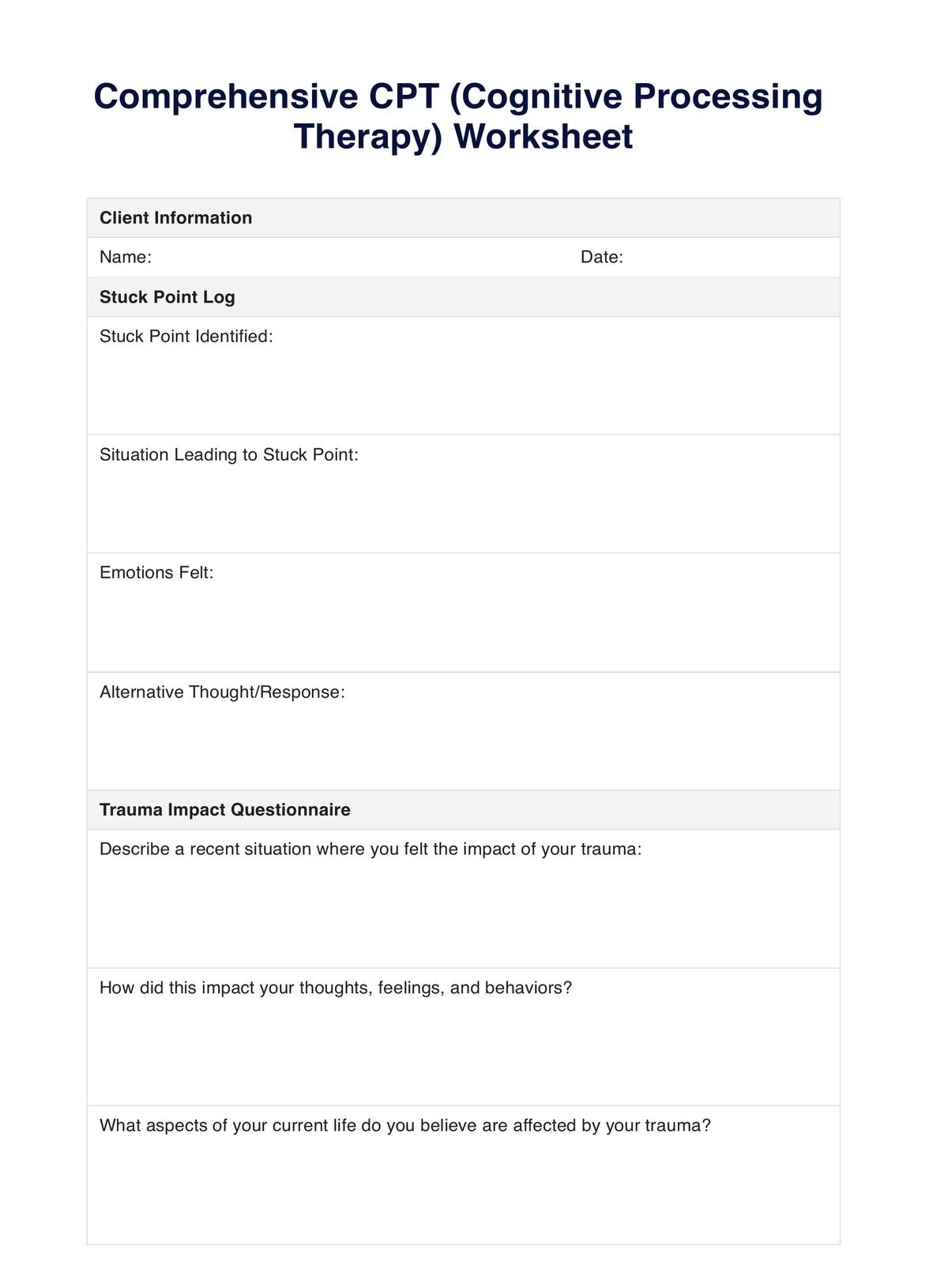




What is cognitive processing therapy?
Cognitive processing therapy (CPT) is a specialized type of cognitive-behavioral therapy aimed at helping individuals recover from post-traumatic stress disorder (PTSD) and related conditions. It is a type of evidence-based treatment that focuses on how a traumatic event is interpreted and remembered by the individual and how these patterns of thinking affect their emotional and mental health.
Cognitive processing therapy sessions guide individuals through a series of cognitive processing therapy exercises that teach cognitive skills designed to address and alleviate mental health disorders, mental health symptoms, and mental health concerns that those who have experienced trauma are dealing with. The goal is to help individuals understand and reinterpret their trauma, reducing the impact of mental health distress.
What are the core principles and theories that inform this therapy?
CPT is deeply rooted in cognitive-behavioral principles, focusing on the intricate link between thoughts, emotions, and behaviors. Central to CPT is the understanding that PTSD and related mental health challenges often arise from maladaptive interpretations and beliefs about traumatic experiences. The therapy is designed to address these core issues through several key principles:
- Interconnection of thoughts and emotions: CPT emphasizes the significant impact of thoughts on emotional responses, teaching clients to recognize and modify thought patterns that lead to distress.
- Challenging trauma-related beliefs: Clients are guided to critically evaluate and challenge their beliefs about the trauma, including feelings of guilt, shame, and responsibility.
- Reconstructing trauma narratives: A crucial aspect of CPT involves helping clients construct a new, healthier understanding of their traumatic event, facilitating a shift in perspective that can alleviate emotional pain.
These foundational principles of CPT not only aid in the alleviation of PTSD symptoms but also empower clients to reclaim control over their thoughts and emotions, leading to lasting changes in their mental health and overall outlook on life.
Why would a person take CPT therapy?
Choosing CPT therapy can be a pivotal step for individuals struggling with the aftermath of trauma. This therapeutic approach is particularly appealing for several reasons:
- Persistent PTSD symptoms: For those battling ongoing symptoms such as flashbacks, nightmares, and severe anxiety, CPT offers a structured and evidence-based path toward relief.
- Seeking alternative therapies: Individuals with limited success with other treatment modalities may find CPT's structured and focused approach more effective in addressing their specific needs.
- Direct address of trauma: CPT is uniquely designed to confront and process trauma-related concerns head-on, making it an ideal choice for those ready to tackle their trauma in a supportive and structured environment.
What problems can CPT address?
CPT's versatility as a therapeutic approach allows it to address a broad spectrum of trauma-related challenges effectively:
- Beyond PTSD: While primarily known for its effectiveness in treating chronic PTSD, CPT is also adept at addressing anxiety disorders, depression, and emotional dysregulation.
- Emotional and cognitive struggles: It offers crucial support for individuals dealing with self-blame, guilt, or shame as a result of their trauma, providing strategies to challenge and redefine these harmful beliefs.
- Comprehensive trauma recovery: By focusing on both the emotional and cognitive components of trauma recovery, CPT facilitates a more holistic healing process, helping individuals to navigate the complexities of their experiences and emerge with a stronger, healthier mindset.









