





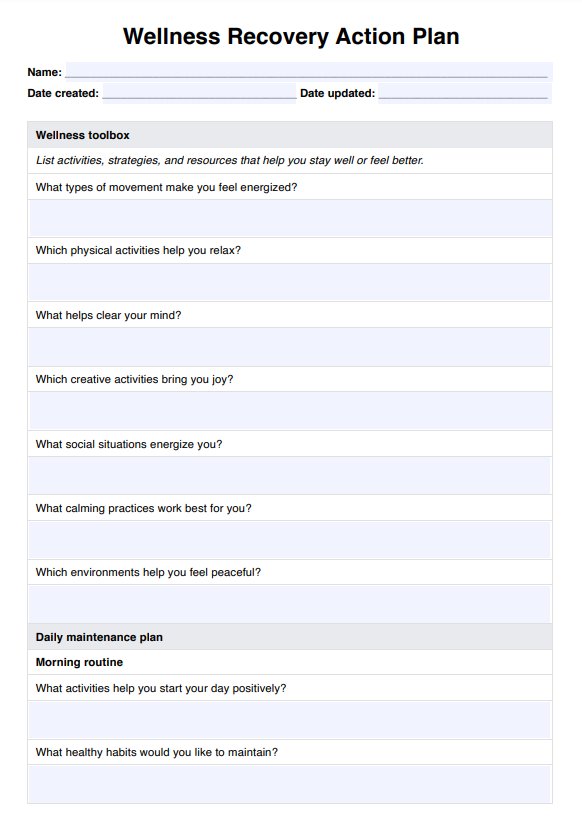




What is a Wellness Recovery Action Plan Template?
A Wellness Recovery Action Plan (WRAP) Template is a structured tool designed to help individuals develop a personalized plan for managing their mental health and well-being. Created by mental health advocate and author Mary Ellen Copeland, this is used a helpful resource with wellness tools. It is often integrated into mental health services and support programs, especially for individual with mental health difficulties.
The WRAP template typically consists of several key components:
- Wellness toolbox: This section encourages mental health service users to identify and compile a list of strategies and activities that promote their mental health and well-being. It may include activities for physical health, coping mechanisms, relaxation techniques, and activities that bring joy and fulfillment.
- Daily maintenance plan: In this part of the template, individuals outline specific actions they can take daily to maintain wellness. These could include routines, habits, and practices that contribute to overall well-being.
- Triggers and early warning signs: Participants identify factors or situations that may act as triggers for their mental health challenges. They also list early warning signs that indicate their mental health may be deteriorating. Recognizing these signs can help individuals proactively prevent a crisis.
- Crisis plan: This section outlines a step-by-step plan for dealing with a mental health crisis. It includes details such as emergency contacts, healthcare preferences, and strategies for coping during times of heightened distress.
- Post-Crisis Plan: Individuals also consider and document their preferences for personal wellness and support after a crisis. This may involve identifying resources, activities, or individuals who can offer assistance and comfort.
The WRAP template is a personalized and collaborative tool that empowers individuals to actively participate in their mental health recovery. It can be adapted to unique needs, preferences, and situations and used in consultation with mental health professionals, friends, and family members.









