





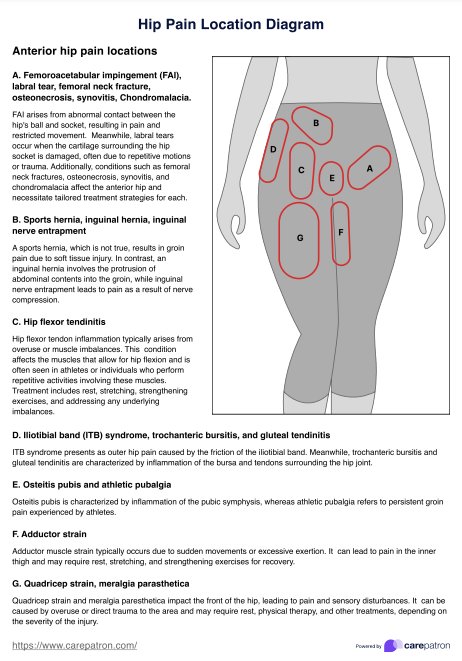




An overview of the hip joint and its function
The hip joint is one of the most essential and complex joints in the human body, which is crucial for many movements and functions.
Formed where the thigh bone, or femur, meets the pelvis, it's a ball-and-socket type joint that offers a wide range of motion. The ball is the femoral head—a part of the femur—and the socket is an indentation in the pelvic bone, specifically the acetabulum (Gold, Munjal, & Varacallo, 2023).
This joint is designed to withstand repetitive motion and a fair amount of wear and tear. It's enveloped by muscles and tendons, providing strength and stability to the joint. The hip joint is also surrounded by the synovial membrane, which is rich in blood vessels (Glenister & Sharma, 2023). This enhances the blood flow and nutrition to the joint structures. The membrane's fluid is also needed for smooth movements as it reduces friction among the moving parts of the joint.
Apart from facilitating movement—such as walking, running, and jumping—the hip joint is also vital in maintaining balance. Its strategic location is integral to the body's stability (Glenister & Sharma, 2023).









