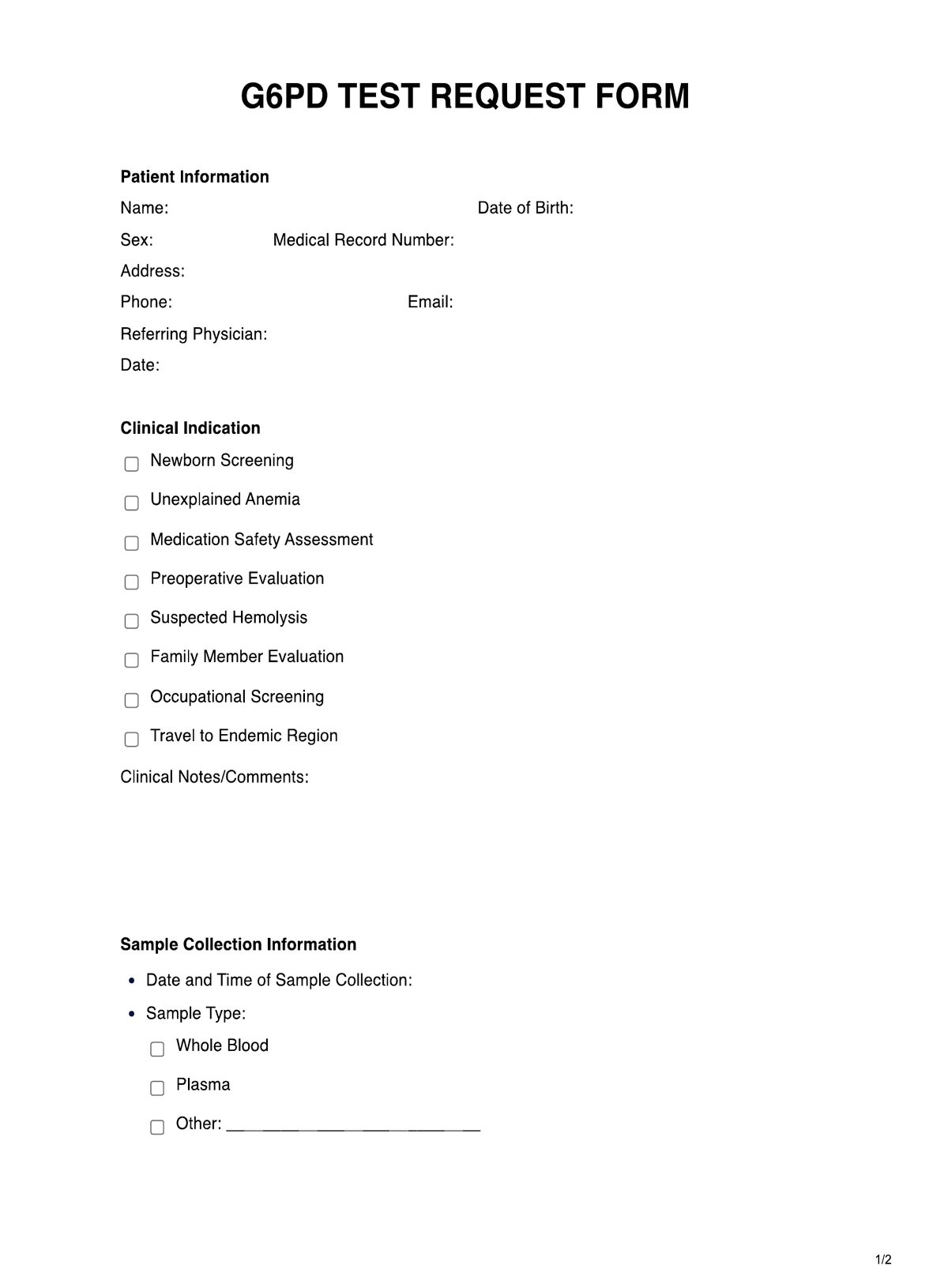




What is a G6PD Test?
A G6PD test, or Glucose-6-Phosphate Dehydrogenase test, is a medical diagnostic test used to determine the activity levels of the Glucose-6-Phosphate Dehydrogenase enzyme in an individual's red blood cells. This enzyme plays a crucial role in protecting red blood cells from oxidative damage, and a deficiency in G6PD can lead to a condition known as G6PD deficiency, also called favism or hemolytic anemia.
G6PD deficiency is a genetic condition primarily affecting males, though females can be carriers. When individuals with this deficiency are exposed to specific triggers, such as certain foods (like fava beans), infections, or particular medications (like some antimalarial drugs or certain antibiotics), their red blood cells become more susceptible to premature destruction, leading to hemolysis.
This test is crucial in identifying individuals with this deficiency, as it helps healthcare professionals make informed decisions regarding their medical care. For example, individuals with a deficiency should avoid specific medications and foods that can trigger hemolysis.
The test is typically performed on a blood sample, and the results are expressed in terms of G6PD enzyme activity, usually categorized as normal, intermediate, or deficient. The information obtained from this test is invaluable for managing patients' health, especially when considering specific medical treatments or advising dietary modifications to avoid potential complications associated with deficiency.