
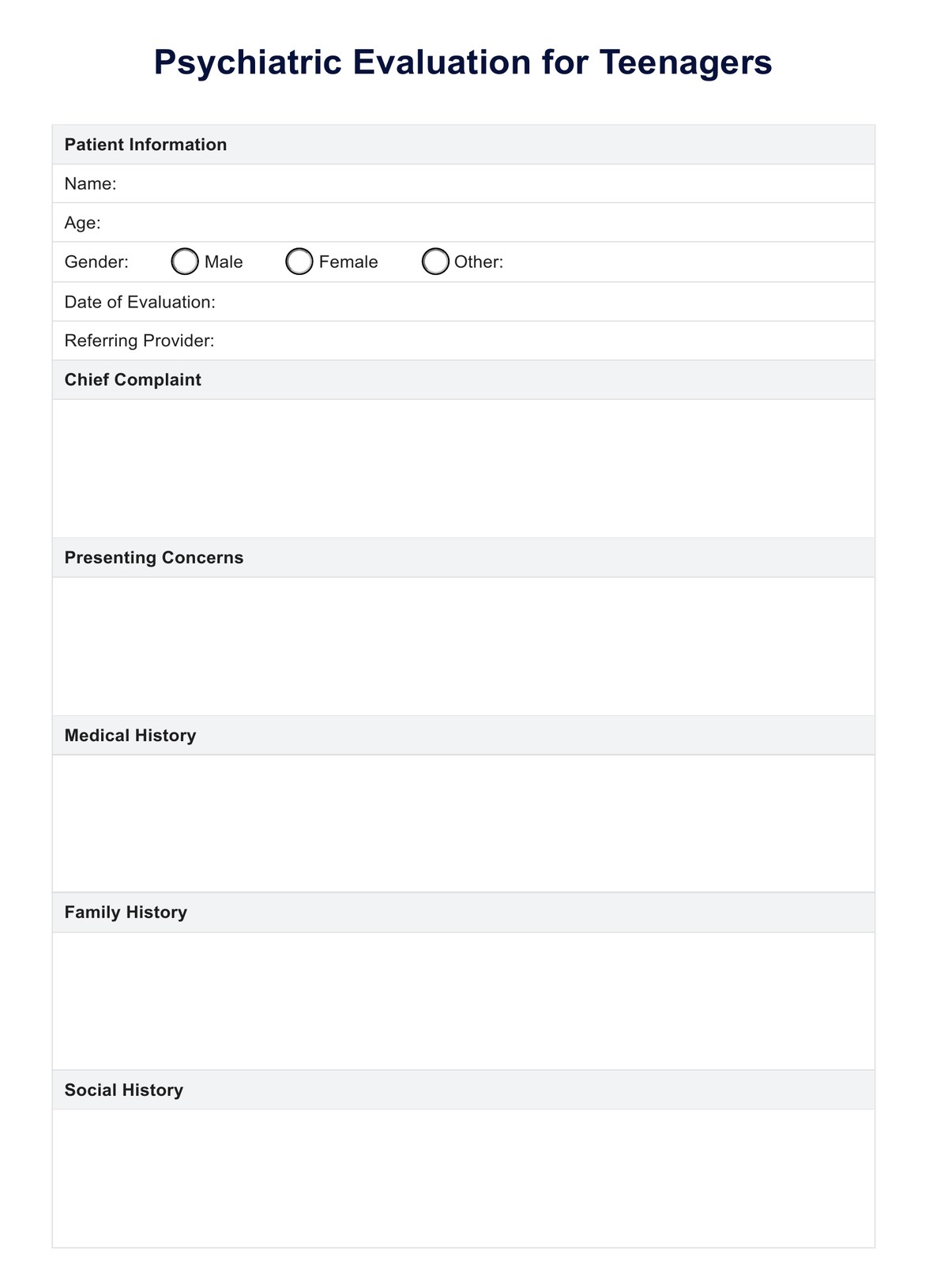




What is a Psychiatric Evaluation for Teenagers?
A psychiatric evaluation for teenagers is a comprehensive assessment conducted by a mental health professional to diagnose and address mental health disorders and issues. This evaluation involves gathering information about the teenager's mental health symptoms, behaviors, and emotional well-being, as well as their underlying medical condition and history, family involvement, and any substance abuse or developmental disorders present.
During the evaluation process, the mental health professional may conduct various assessments and lab tests, including psychological evaluations, blood tests, and radiology studies, to rule out underlying medical conditions and substance use. Family history and involvement are essential factors in understanding the teenager's condition.
The evaluation aims to determine the presence of any psychiatric symptoms or conditions, such as anxiety, depression, or bipolar disorder. It involves assessing the teenager's daily life, relationships, behaviors, and how these physical and psychiatric symptoms affect their daily functioning.
The evaluation helps establish short-term and long-term treatment goals and options by identifying the teenager's symptoms, needs, and concerns. It provides reassurance to both the teenager and their parents or caregivers, as untreated mental health issues can have significant impacts on well-being and development.
Family involvement is crucial in the evaluation process, as it helps the mental health professional understand the dynamics within the family and how they may contribute to the teenager or child's symptoms themselves.









