






What is a Personal Training Business Plan?
A Personal Training Business Plan is a comprehensive document outlining the strategies, goals, and operational details of establishing and running a successful personal training business. This plan serves as a roadmap for individuals looking to enter the fitness industry as entrepreneurs. It outlines their approach to attracting clients, delivering effective training programs, managing finances, and achieving long-term growth.
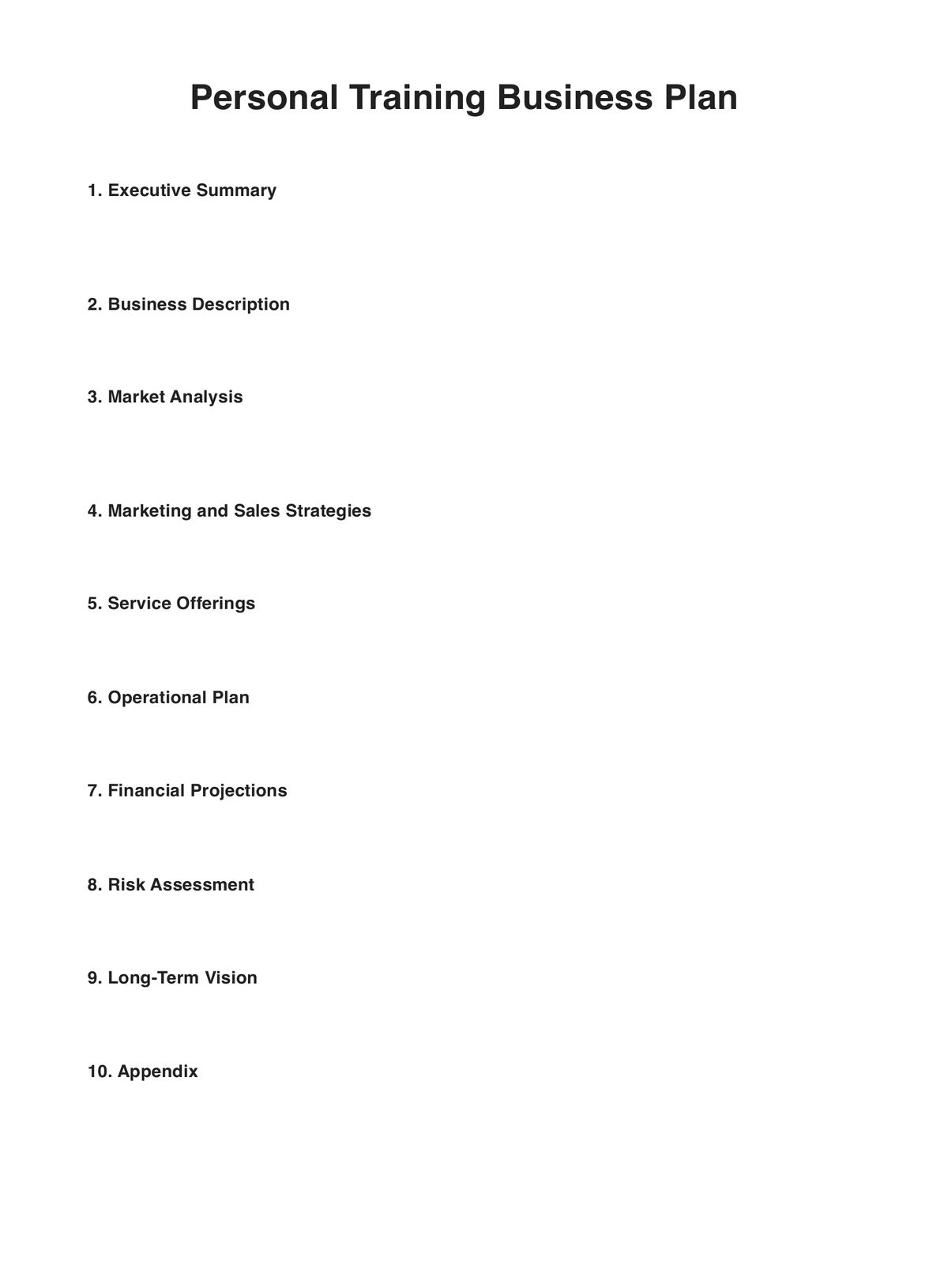
A well-structured business plan typically includes several key components:
- Executive Summary: A concise overview of the business idea, its mission, and the main objectives of the personal training business.
- Business Description: A detailed explanation of the services offered, target clientele, and the unique value proposition of the personal training business in the competitive fitness market.
- Market Analysis: An examination of the local fitness industry, target market demographics, and competition, along with potential opportunities and challenges.
- Marketing and Sales Strategies: A plan to attract and retain clients, including branding, pricing, advertising, and social media strategies.
- Service Offerings: A description of the types of training programs offered, whether it's one-on-one coaching, group classes, online training, or a combination.
- Operational Plan: Details about the day-to-day operations, including scheduling, location, equipment, and staffing needs.
- Financial Projections: A projection of revenue and expenses, including start-up costs, ongoing expenses, and potential income, over a specified period (often three to five years).
- Risk Assessment: Identify potential risks and challenges the business might face, along with contingency plans to mitigate these risks.
- Long-Term Vision: An outline of the business's long-term goals, expansion plans, and strategies for sustained growth.
Creating a is essential for various reasons. It helps entrepreneurs clarify their business concept, secure funding from investors or lenders, and maintain focus on their objectives. Additionally, it offers a structured approach to navigating challenges and adapting to changes in the fitness industry.









