


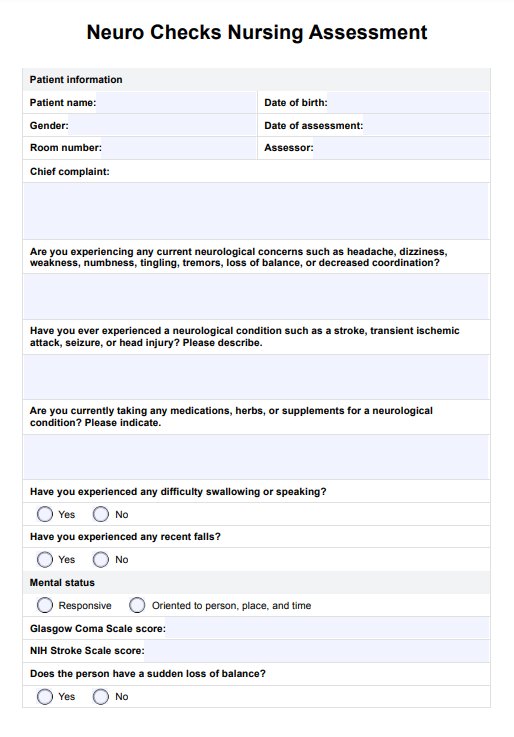




What is a Neuro Checks Nursing?
Neuro checks in nursing are routine neurological assessments used to monitor a patient’s neurological status, focusing on vital functions such as mental status, cranial nerve function, motor response, and sensory function. These neuro assessments are especially crucial for patients with neurological conditions, traumatic brain injury, stroke, or spinal cord injury.
The neuro check process typically involves evaluating the patient’s level of consciousness, mental status, and orientation, often using the Glasgow Coma Scale to assess verbal response and motor function. Nurses perform a cranial nerve assessment, testing specific cranial nerves like the olfactory nerve (cranial nerve I), optic nerve (cranial nerve II), facial nerve (cranial nerve VII), and the spinal accessory (cranial nerve XI) to identify any sensory deficits or motor deficits. These checks may include asking the patient to perform tasks that involve cranial nerves, such as testing the gag reflex (vagus nerve) or assessing smell (olfactory nerve), which can reveal underlying issues in the nervous system.
Motor function checks, such as testing upper extremity strength, deep tendon reflexes, and assessing gait, are also fundamental for identifying deficits in muscle tone and coordination. Sensory function is evaluated to detect sensory deficits, often through tactile assessments. Additional tests, like the finger-to-nose test, heel-to-shin test, and positive Romberg test, assess cerebellar functioning and balance.
Routine Neuro Checks Nursing assessments allow healthcare professionals to recognize unexpected findings early and facilitate timely intervention. By documenting each neuro exam and using standardized clinical methods, nurses support advanced practice and contribute to comprehensive neurological exams, which are essential for guiding appropriate care, managing neurological injuries, and improving patient outcomes.









