









What are the stages of grief?
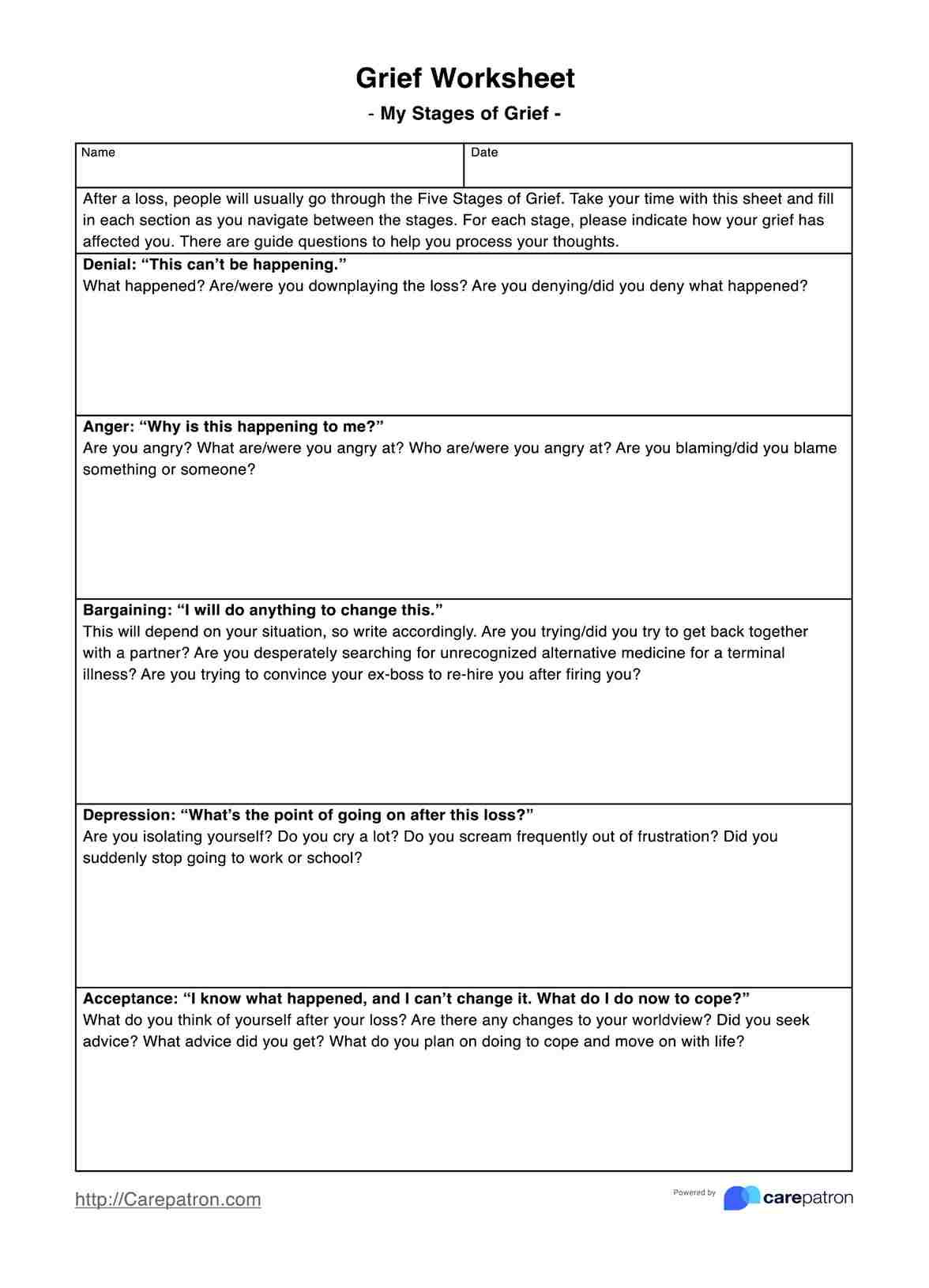
The five stages of grief, developed by Dr. Elisabeth Kübler-Ross in her book On Death and Dying, include how an individual typically responds to loss. Kübler-Ross developed the model based on her work with terminally ill patients (Tyrrell et al., 2023). However, it is important to note that every individual can go through these stages differently and in a non-linear fashion. The grieving process is unique for everyone and should be treated as such.
- Denial: The first stage is denial, where individuals may feel numb to the loss and deny its occurrence. It focuses on feelings of avoidance.
- Anger: In this stage, individuals will likely experience frustration, irritation, and anger at the loss. They may perceive life as unfair and prejudiced.
- Bargaining: Individuals may make promises to themselves to improve their situations. It is characterized by false hope and negotiations.
- Depression: In this stage, individuals may feel sadness constantly and may feel the need to isolate from others. Individuals can be withdrawn and find difficulty in completing most tasks. This stage can be exceptionally long-lasting and present throughout the grieving process.
- Acceptance: At the final stage, individuals will accept the loss and begin to deal with their new reality. They can start rebuilding their lives and receive enjoyment again as they work through healing.









