
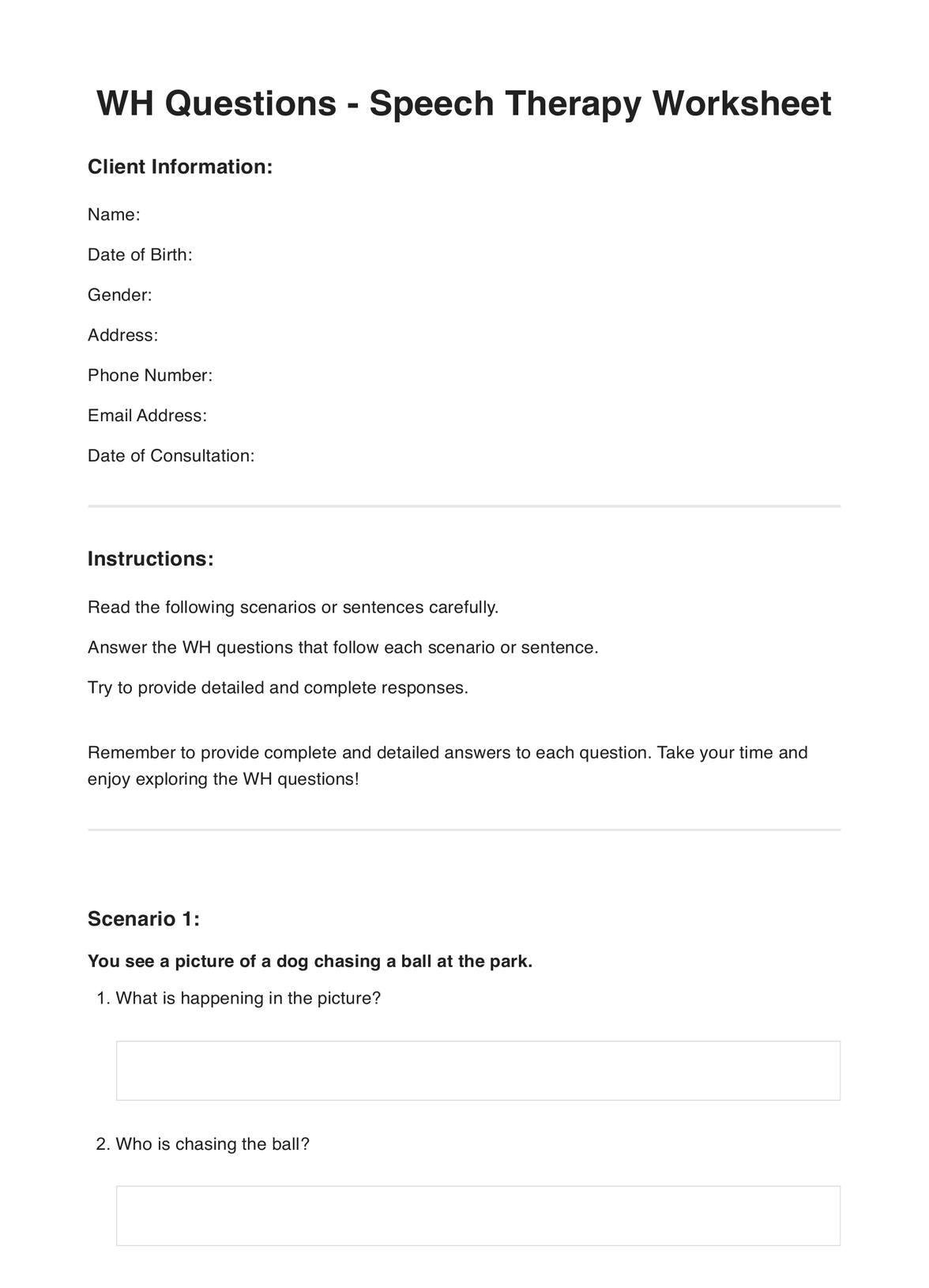




What is a WH Questions Worksheet?
A WH Questions Worksheet is a valuable resource used in therapy sessions to enhance communication skills, particularly in the areas of language development, comprehension, and critical thinking. This resource provides a structured framework for individuals to practice and master asking and answering WH questions.
WH questions, or "open-ended questions," are designed to elicit detailed responses and encourage individuals to think critically and express their thoughts effectively. These questions typically begin with words like "who," "what," "where," "when," "why," and "how." By using WH Questions Worksheets, therapists can facilitate targeted exercises focusing on specific question types or areas of difficulty.
The worksheets are thoughtfully designed with various activities and prompts that cater to different learning styles and abilities. They often include engaging visuals, scenarios, and real-life situations to make learning more relatable and practical. Each worksheet usually covers a specific theme or topic, such as daily routines, hobbies, occupations, or social scenarios, ensuring that individuals receive a comprehensive range of question types from practicing.
The benefits of using WH Questions Worksheets in therapy are manifold. These resources help individuals develop their language and communication skills by encouraging active listening, comprehension, and expression. They promote critical thinking and problem-solving abilities, as individuals need to analyze information, make connections, and provide relevant and coherent responses. WH Questions Worksheets also enhance vocabulary development, expand general knowledge, and improve sentence structure and grammar.
Therapists and educators can tailor these worksheets to meet each individual's needs and goals. They can be used in one-on-one therapy sessions, small group settings, or take-home assignments to reinforce learning outside therapy. The worksheets also provide a visual record of progress, allowing therapists to track improvements and modify intervention strategies accordingly.









