





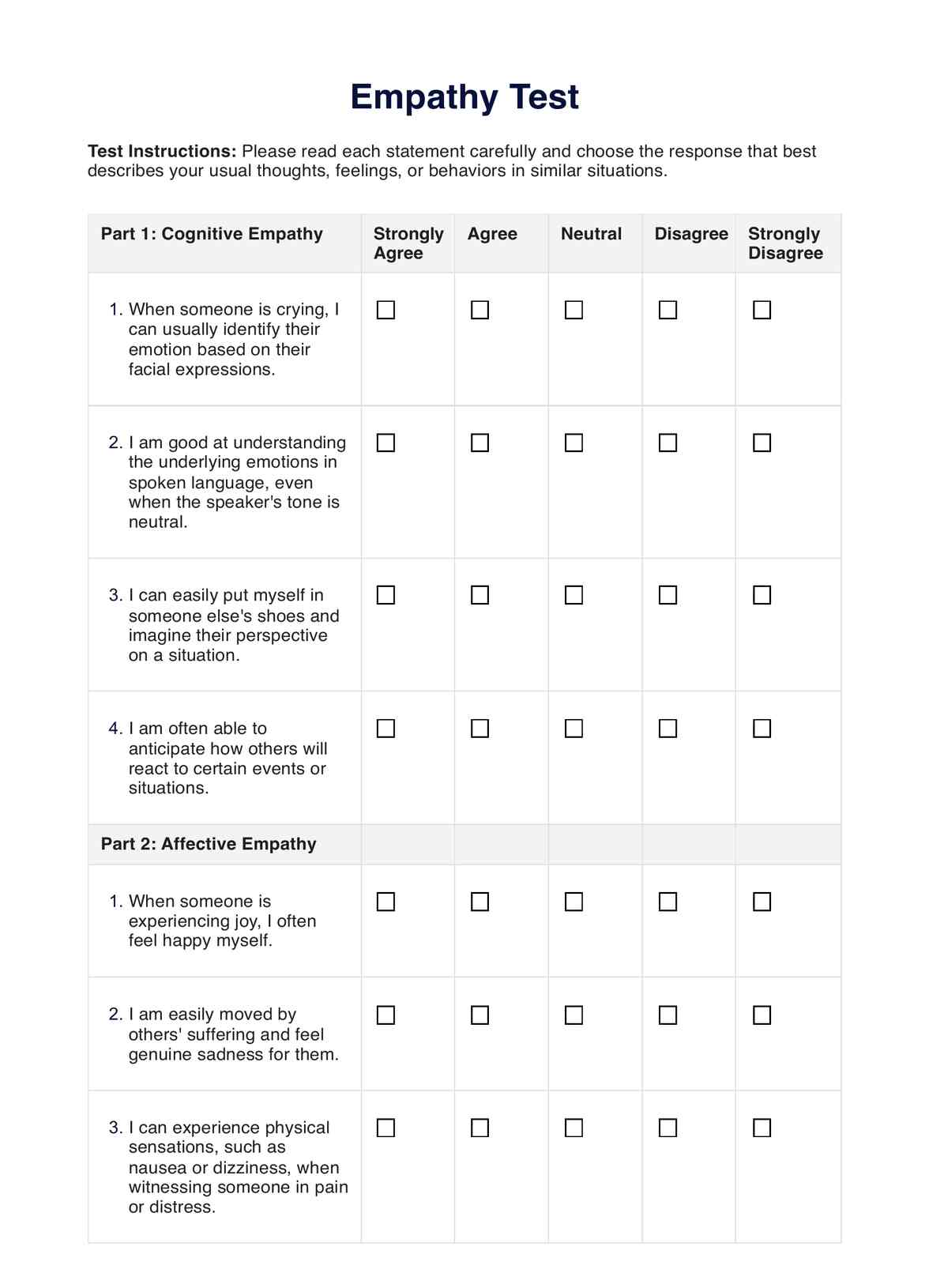




What is an empathy test?
An empathy test serves as an organized and structured evaluation designed to gauge an individual's capacity for understanding, sharing, and responding to the emotions and perspectives of others. These assessments typically employ a range of questions or scenarios that delve into various dimensions of empathy, including cognitive empathy, emotional empathy, and compassionate empathy.
Cognitive empathy, for instance, involves comprehending and appreciating another person's point of view. In contrast, emotional empathy pertains to the person whose capacity to share someone else's emotions and resonate with the emotions experienced by others. Compassionate empathy goes further, assessing an individual's inclination to express concern and feelings for others in times of need.
The questions within an empathy test cover diverse aspects, spanning interpersonal relationships, reactions to practical jokes, preferences regarding animals, and the aptitude to maintain emotional detachment in specific situations. The test aims to provide a nuanced understanding of an individual's empathetic capabilities by exploring these facets.
Additionally, empathy tests often consider factors such as verbal humor, the ability to see one's problems and other people from another person's viewpoint, emotions, and feelings, step into someone else's shoes, and respond to day-to-day life scenarios. The Toronto Empathy Questionnaire and the empathy spectrum further contribute to the comprehensive evaluation, offering insights into specific empathetic categories.
An empathy test is valuable for assessing and enhancing an individual's emotional intelligence and interpersonal communication skills. By offering a detailed examination of empathy levels across various dimensions, these tests contribute to personal growth and provide actionable insights for individuals seeking to develop and strengthen their capacity to connect with and understand the emotions of those around them.









