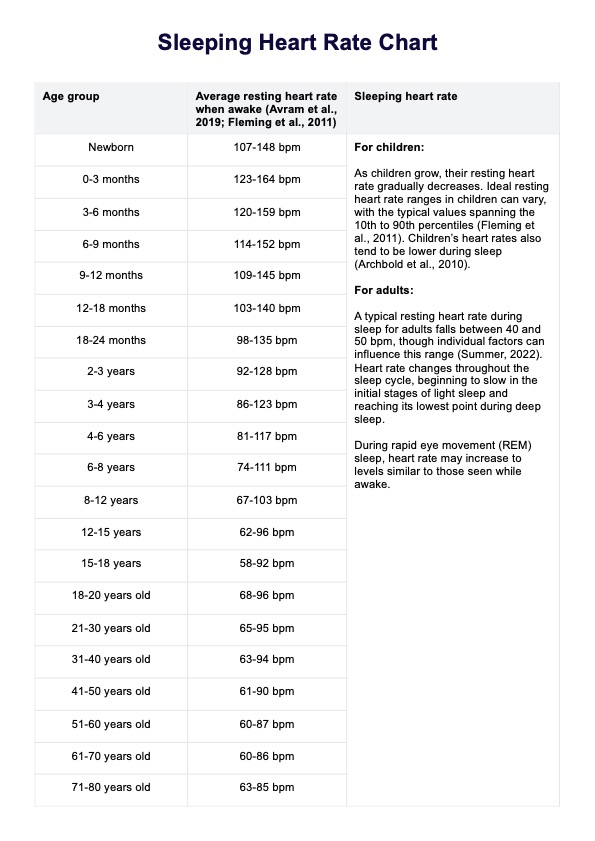
Factors affecting sleeping heart rate
A typical resting heart rate during sleep for adults falls between 40 and 50 bpm, though individual factors can influence this range (Summer, 2022). For children, normal sleeping heart rate also tends to be lower during sleep (Archbold et al., 2010). Here are some factors that affect these rates:
Physical activity levels
Individuals who engage in regular physical activity often have a lower average resting heart rate, which extends to their normal sleeping heart rate as well. This is due to improved cardiovascular efficiency, allowing the heart to pump blood more effectively. As a result, individuals with higher fitness levels tend to have lower sleeping heart rates, indicating better cardiovascular health and recovery during sleep.
Sleep stages
Heart rate varies across the different sleep stages. During deep sleep (slow-wave sleep), the heart rate typically reaches its lowest point, reflecting a calm and restorative state. However, in REM sleep, where vivid dreaming occurs, heart rate may briefly increase. The transition through these sleep stages naturally influences heart rate patterns, contributing to an average resting heart rate that changes throughout the night.
Presence of a sleep disorder
Sleep disorders like sleep apnea can disrupt normal sleeping heart rates by causing sudden spikes due to breathing interruptions. These disturbances prevent the heart from maintaining a steady rate, resulting in fluctuations that can stress the cardiovascular system. Tracking heart rate in individuals with sleep disorders can reveal patterns that might warrant further evaluation and treatment.
Age and health status
Age and general health status can also affect normal sleeping heart rates. While children naturally have slightly higher heart rates, their rates lower during sleep due to their rapid growth and metabolic activity. For adults, age-related health conditions, such as high-blood pressure, cardiovascular disease/heart disease or metabolic disorders, can lead to higher sleeping heart rates compared to younger, healthier individuals.
Stress and lifestyle factors
Stress, caffeine intake, and other lifestyle factors can influence heart rate during sleep. Chronic stress, for instance, can lead to higher-than-normal sleeping heart rates as the body remains in a heightened state of alert, even during rest. Limiting stimulants and adopting relaxation techniques before bed can help lower heart rate and improve sleep quality.