








What is a Hip Fracture Nursing Care Plan?
Hip fractures are common in older adults and typically occur due to falls or direct trauma. These fractures, which affect the proximal or upper third of the femur, can be classified as intracapsular or extracapsular. Intracapsular fractures, often caused by minor trauma and conditions like osteoporosis, occur within the hip joint capsule. Extracapsular fractures result from more severe trauma and can lead to significant complications, including muscle spasms, pain, and impaired physical mobility.
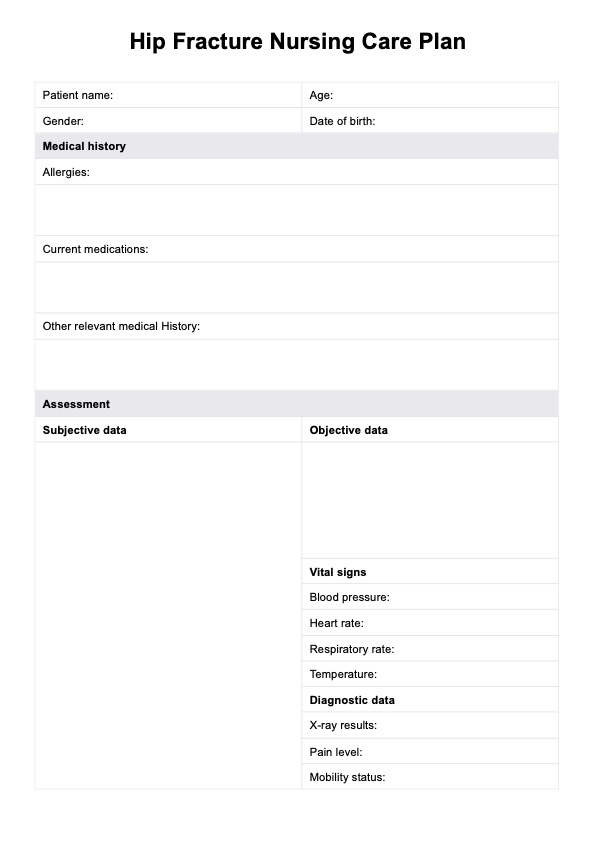
A Hip Fracture Nursing Care Plan is a structured guide designed to help healthcare professionals deliver safe, efficient, patient-centered care for individuals with hip fractures. It provides a systematic approach to address the immediate needs, manage complications, and support recovery for patients.
This care plan often includes subjective data, such as patient-reported pain levels or limitations in mobility, and objective data, like vital signs, imaging results, and physical assessments of the fracture site. Based on the gathered information, a nursing diagnosis is formulated to address critical issues, such as impaired physical mobility or acute pain.
Short-term goals focus on stabilizing the patient, managing pain, and preventing complications like infection or deep vein thrombosis (DVT). Long-term goals aim to restore mobility, improve strength, and educate the patient on fall prevention and recovery strategies.
The plan outlines specific nursing interventions with rationales, such as providing pain relief, ensuring proper positioning to promote healing, and encouraging early mobilization to prevent complications. Interventions may also include monitoring for signs of complications, such as infections or circulation issues, and collaborating with other healthcare professionals for comprehensive care.









