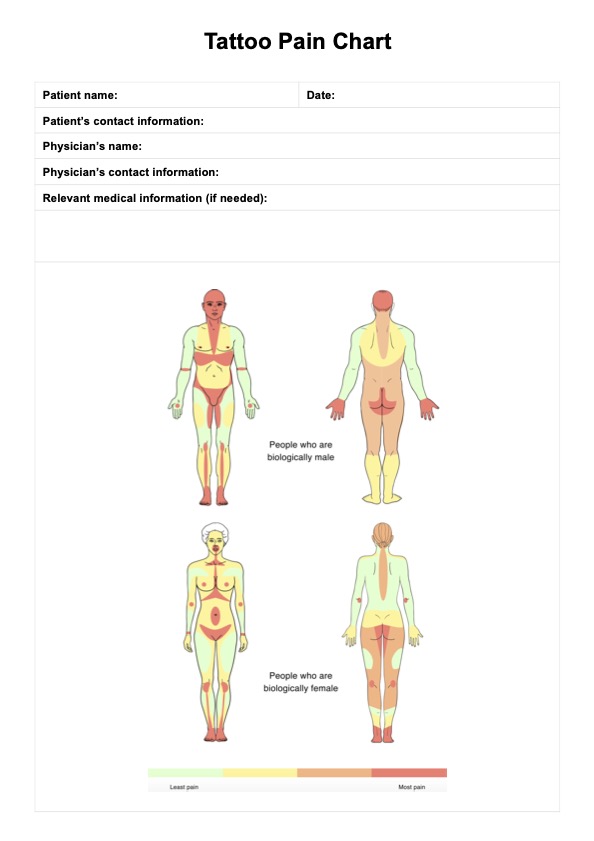
How to use the Tattoo Pain Chart
You can use our Tattoo Pain Chart as a visual tattoo pain map. However, if you want to make the most of our template, follow these steps.
Step 1: Access and download the template
Access and download a digital and printable copy of the “Tattoo Pain Charts” template by doing either of the following:
- Clicking the “Use template” and “Download template” button
- Searching “Tattoo Pain Chart” in Carepatron's template library's search bar on the app or website
Step 2: Talk to or examine the patient
Patients may visit before or after their tattoo appointment with their tattoo artist. If they visit before, it is important to discuss what may increase and affect tattoo pain, like skin damage due to eczema, and how much pain they might expect in different areas of the body during tattooing, even if they are told that they will only experience small, sharp or stinging pain due to the tattoo needle.
In either scenario, you may use the template to advise before they get a tattoo or write down the patient’s symptoms and your observations upon examination in the space provided below.
Step 3: Fill out the template
Make the most out of the template using the space at the bottom.
Your client can write down your tattoo location recommendation below so they don't forget. For example, if they are biologically male and have low pain tolerance, they can expect that their rib cage tattoo pain, stomach tattoo pain, and inner bicep tattoo pain are less than their inner thigh tattoo pain. Therefore, it's recommended that they get their tattoos in the former areas rather than the latter.
Alternatively, you can write down examination results of the patient's skin should they express concerns about a possible infection.
Step 4: Security store the template
Don't forget to securely store the template in a secure location or on Carepatron for access by relevant parties, especially if the notes section has sensitive information on the patient.
Step 5: Proceed with the next steps
Proceeding with the following steps may be wishing your patient well during their tattoo appointment or prescribing a treatment plan if they have an infection.