
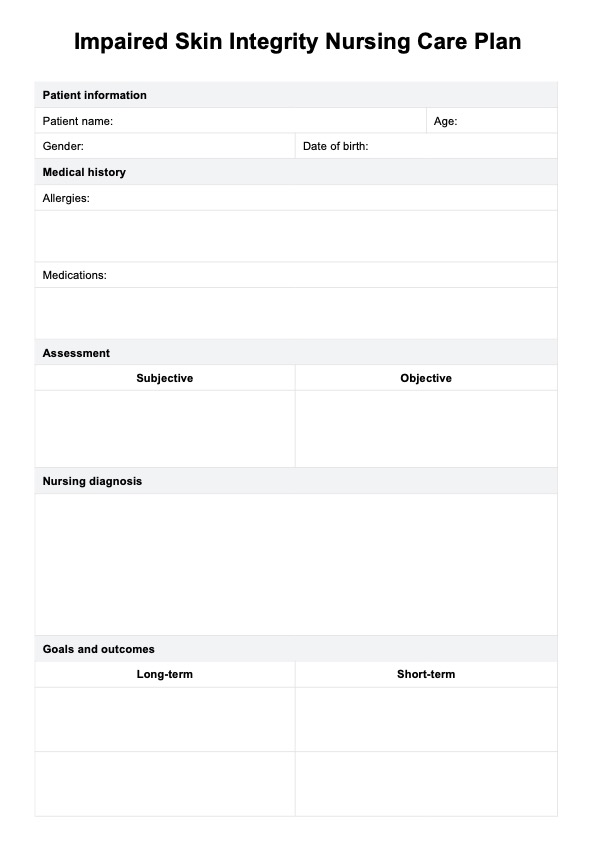




What is impaired skin integrity?
Impaired skin integrity refers to damage or alteration to the skin that disrupts its normal protective function, compromising its ability to act as an effective barrier. This condition involves epidermis and/or dermis alterations, leading to compromised skin structure and function. Various factors impair skin integrity, including external and internal factors promoting skin health.
Internal factors such as poor nutrition, edema, impaired circulation, neuropathy, and chronic conditions like diabetes can affect the healing process and contribute to acute and chronic wounds. External factors, including pressure injuries, friction, moisture, radiation, chemicals, and physical trauma from surgical procedures, also play a significant role in poor wound healing. These factors can exacerbate skin irritation, promote further skin damage, and impact wound healing, ultimately undermining the skin’s ability to maintain intact skin and promoting poor wound healing.
Signs and symptoms
Recognizing signs early is crucial for managing impaired skin integrity effectively, which includes treating the condition, promoting wound healing, and employing appropriate wound care strategies to treat impaired skin integrity and prevent further skin damage. The following indicators and manifestations may be present:
- Changes in skin color, such as redness, bruising, or blanching
- Open areas, wounds, or skin breakdown
- Pain, itching, or altered sensation in affected areas
- Warmth, swelling, or inflammation of the skin









