How to Use the Co-Parenting Agreement Template
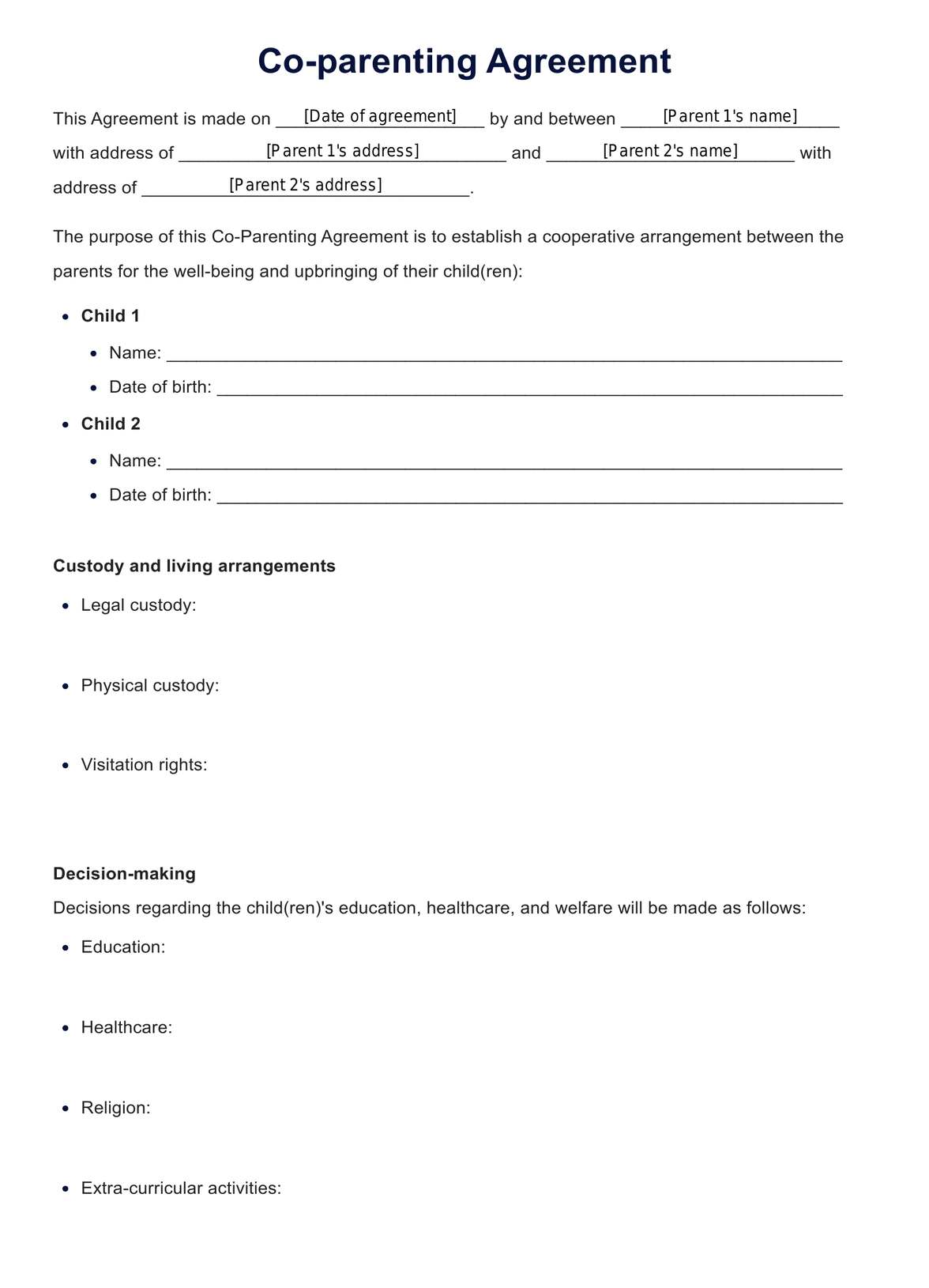
The Co-Parenting Agreement Template, whether it is this Co-Parenting Agreement Template or a parenting plan template, is designed to streamline the outlining of shared parenting responsibilities. Below are detailed steps on how to effectively utilize this resource:
Step 1: Download the template
Begin by downloading a printable co-parenting agreement template that meets your needs - whether it is this Co-Parenting Agreement Template, a Parenting Plan Template, or a Child Custody Agreement Template. Ensure the selected template covers all aspects of co-parenting and provides a comprehensive framework for your agreement.
Step 2: Fill in basic information
Start filling out the template by including essential details such as the names of both parents, their contact information, and specific details about the child[ren], like their date of birth, school, health conditions (if any), etc. This section provides a foundational overview of the family structure.
Step 3: Define custody arrangements
Next, detail the type of custody arrangement—whether joint physical custody (shared between both parents) or sole physical custody (only one parent has primary responsibility). Specifying the residential schedule for the child(ren), including the custody schedule for weekdays, weekends, holiday schedule, and special occasions is crucial. This ensures clarity and prevents potential disagreements regarding time sharing especially for the non-custodial parent.
Step 4: Outline parenting plans
This step involves discussing and agreeing upon plans for vital aspects of the child's life. These include education plans, healthcare provisions, extracurricular activities, religious upbringing, etc. The goal is to ensure both parents contribute to decision-making processes that impact the child's development and well-being.
Step 5: Set communication guidelines
Establishing clear communication rules is vital for smooth coordination between co-parents. Decide upon preferred modes of communication (e.g., email, text, calls), frequency, and guidelines for discussing sensitive topics. This can significantly reduce misunderstandings and foster a healthier co-parenting relationship.