How does this care plan for caregivers work?
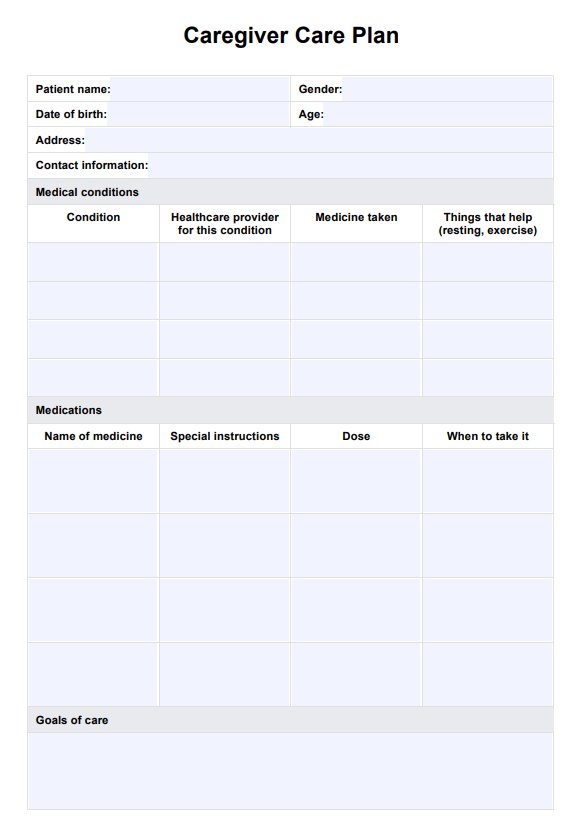
This Caregiver Care Plan Template is a practical tool that organizes and clarifies the caregiving process. When properly implemented, it creates a centralized information hub that all care team members can reference to reduce confusion and improve care coordination. Here's how you can use the template in the care planning process:
Step 1: Download the template
Click on "Download" to get a PDF copy of the template you can give to the patient's professional or family caregiver. You can also personalize the template by clicking "Use template" to edit it within the Carepatron platform.
Step 2: Complete basic information and medical details
Begin this caregiving plan by working with the patient, their primary caregiver or the patient's family members, to fill in the basic identifying information at the top of the form. List each medical condition along with the corresponding healthcare provider, medications taken, and non-pharmaceutical interventions that help manage symptoms. The medications section should be completed with particular attention to detail, including special instructions that might not appear on prescription labels.
Step 4: Plan goals of care and interventions
In this section, the care goals, either short-term or long-term, are set. Then, thoroughly document planned interventions and their rationale to help attain the set goals, and improve the patient's holistic health and quality of life.
Step 4: Document support network and healthcare connections
In the emergency contacts and healthcare providers sections, record all relevant people who may need to be reached regarding the patient's care, including family members who may be concerned about their loved one's health, other professional caregivers, community resources, or even legal professionals. This creates a quick reference guide during emergencies or when questions arise about specific aspects of care.
Step 5: Address advanced care planning and legal considerations
Document important legal and insurance information in the advanced care planning section. Include details about medical power of attorney, healthcare proxy arrangements, and the insurance provider.
Step 6: Personalize with specific instructions and regular updates
Use the instructions and important considerations section to document any personalized care approaches, preferences, daily tasks, routines, or specific warning signs that caregivers should watch for. This might include details about the patient's typical daily schedule, food preferences, communication methods if speech is impaired, or early signs that might indicate a worsening condition.