
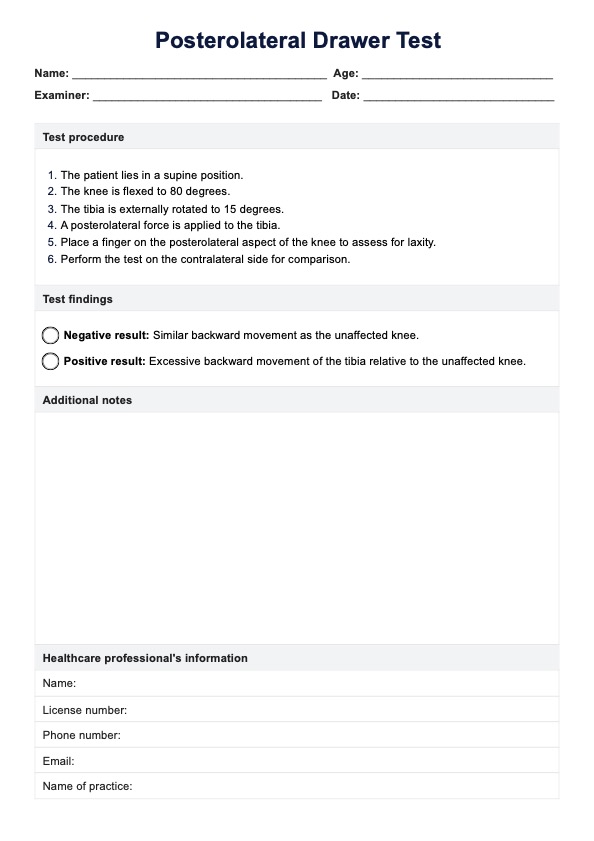




What is the Posterolateral Drawer Test?
The Posterolateral Drawer Test is a clinical examination used to evaluate the integrity of the knee's posterolateral structures, which include the popliteus tendon, lateral collateral ligament, and popliteofibular ligament. This test specifically assesses the stability of the posterolateral corner (PLC) of the knee, which is crucial for preventing excessive backward movement and rotation of the tibia. The test targets several anatomical parts of the knee, including the lateral collateral ligament complex, the popliteofibular ligament, and the lateral femoral condyle.
This test is primarily used for patients who have experienced knee trauma, particularly those involved in sports or activities that place significant stress on the knee. It helps diagnose injuries such as posterolateral corner injuries, which can lead to posterolateral rotatory instability.
Posterolateral rotatory instability is associated with complex knee injuries involving multiple ligaments, including the anterior cruciate ligament (ACL) and medial collateral ligament (MCL). Knee ligament instabilities, especially those in the lateral ligament compartment, can significantly impact a patient's mobility and stability.
The Posterolateral Drawer Test is critical for identifying any injury commonly missed during initial assessments. PLC injuries, if undiagnosed, can contribute to chronic knee pain and functional deficits.
Accurate diagnosis through the Posterolateral Drawer Test is essential for developing effective treatment plans, which may involve physical therapy, bracing, or surgical intervention.









