How to perform a patient assessment as an EMT
Conducting a patient assessment as an EMT involves a structured, systematic approach to evaluate the patient’s condition, provide timely interventions, and ensure optimal care. Here are the critical steps to follow:
Step 1: Scene size-up
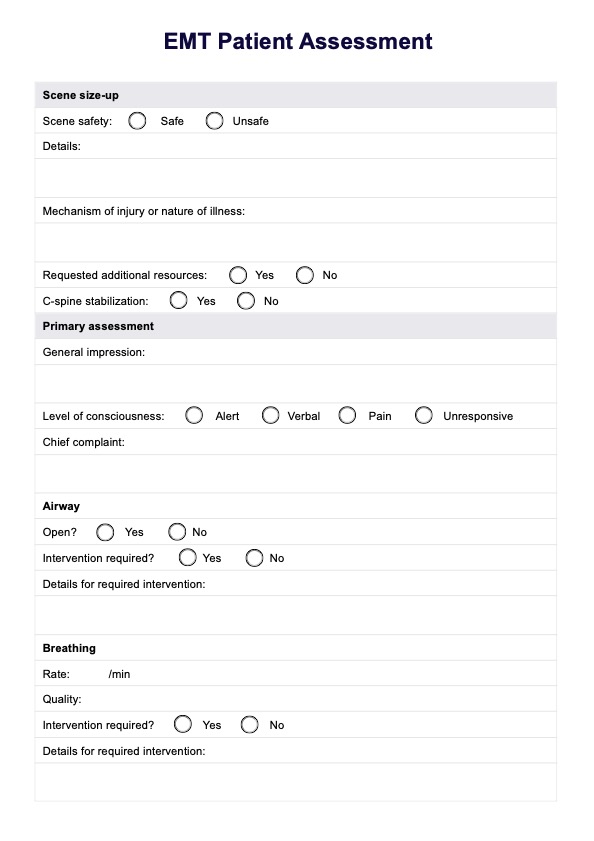
Begin by ensuring the scene is safe for yourself, your team, and the patient. Assess for hazards such as traffic, fire, unstable structures, or other dangers. Determine the number of patients and identify if multiple individuals require triage. If additional resources or specialized teams are needed, request them immediately. If the mechanism of injury suggests potential spinal trauma, prepare for cervical spine immobilization.
Step 2: Primary assessment
Perform a quick evaluation to identify and address any life-threatening conditions. Start with a general impression of the patient, focusing on their overall appearance and level of distress. Assess the patient’s level of consciousness using the AVPU scale (Alert, Verbal, Pain, Unresponsive) to determine their responsiveness. Identify the chief complaint or the primary reason for seeking medical attention.
Step 3: Assess airway, breathing, and circulation (ABCs)
Ensure the patient’s airway is open and clear. If it is obstructed, use appropriate techniques such as the head-tilt/chin-lift or jaw-thrust maneuver to clear it. Evaluate the patient’s breathing rate, depth, and effort. If breathing is inadequate, provide oxygen or ventilation support, such as a bag-valve mask. Check circulation by assessing the patient's pulse for rate and quality. Look for signs of shock, such as pale, cool, or clammy skin, and control any significant bleeding using direct pressure or a tourniquet if necessary.
Step 4: Obtain patient history
Gathering the patient’s history provides critical context for your assessment. Use the SAMPLE mnemonic to guide this process. Ask about the symptoms the patient is experiencing, any known allergies, current medications, past medical history, and when the patient last ate or drank. Additionally, inquire about the events leading up to the present condition to understand what might have triggered their symptoms.
Step 5: Secondary assessment and physical exam
Conduct a thorough physical examination, focusing on the patient’s head, neck, chest, abdomen, pelvis, extremities, and back. You may perform a focused or full-body assessment depending on the patient's condition. Look for visible injuries such as deformities, bleeding, swelling, or bruising. Palpate and auscultate as necessary to identify abnormalities. Reassess the patient’s vital signs, including blood pressure, pulse, respiratory rate, oxygen saturation, temperature, and blood glucose levels.
Step 6: Provide interventions and ongoing care
Based on your findings, initiate appropriate treatments. Administer medications, manage fractures, control bleeding, or apply bandages as required. Continuously monitor the patient’s response to your interventions, ensuring that any changes in condition are addressed promptly.
Step 7: Determine transport decision
Evaluate the severity of the patient’s condition to determine the urgency and method of transportation. High-priority patients requiring immediate care should be transported as quickly as possible. Decide on the appropriate mode of transport, whether by ground ambulance, air transport, or other means. Communicate effectively with your team and the receiving facility, providing all relevant information about the patient’s condition, history, and care administered.