
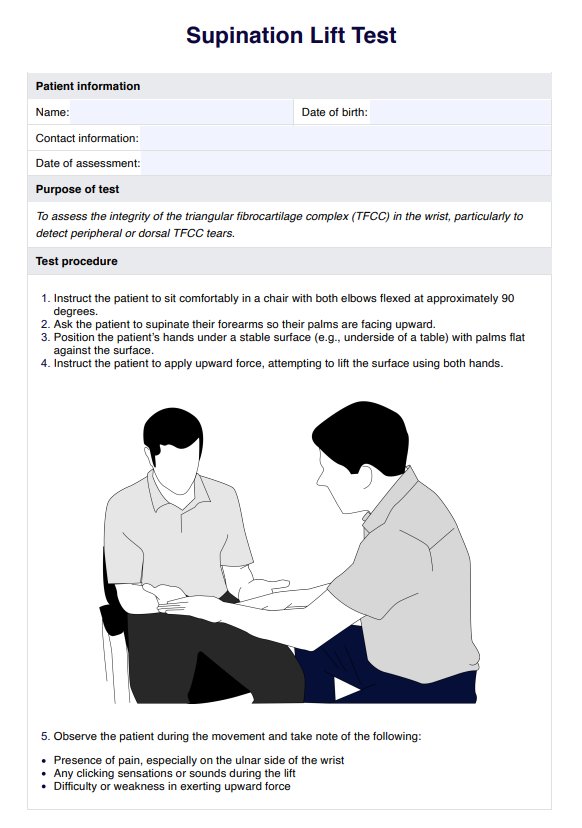




What is a triangular fibrocartilage complex injury (TFCC)?
A triangular fibrocartilage complex (TFCC) injury refers to damage to the cartilage, ligaments, and tendons located on the ulnar side of the wrist (Casadei & Kiel, 2020). This structure plays a crucial role in stabilizing the distal radioulnar joint and supporting load-bearing during rotational and gripping motions.
A TFCC injury typically results in ulnar sided wrist pain, especially with activities that involve pronation, supination, or axial loading. TFCC injuries are categorized as either traumatic (e.g., falls on an outstretched hand) or degenerative due to repetitive strain or age-related wear. Chronic degenerative injury may also be associated with conditions like gout or rheumatoid arthritis. Clinically, TFCC injuries can mimic other ulnar wrist pathologies such as ulnar styloid impingement syndrome, ulnar carpal impingement, and flexor muscle tendonitis.
Symptoms often include clicking, swelling, reduced grip strength, and instability. Diagnosis relies on imaging and physical assessment, often involving symptoms TFCC stress test to provoke pain and confirm the source of dysfunction (Jawed et. al., 2020).









