


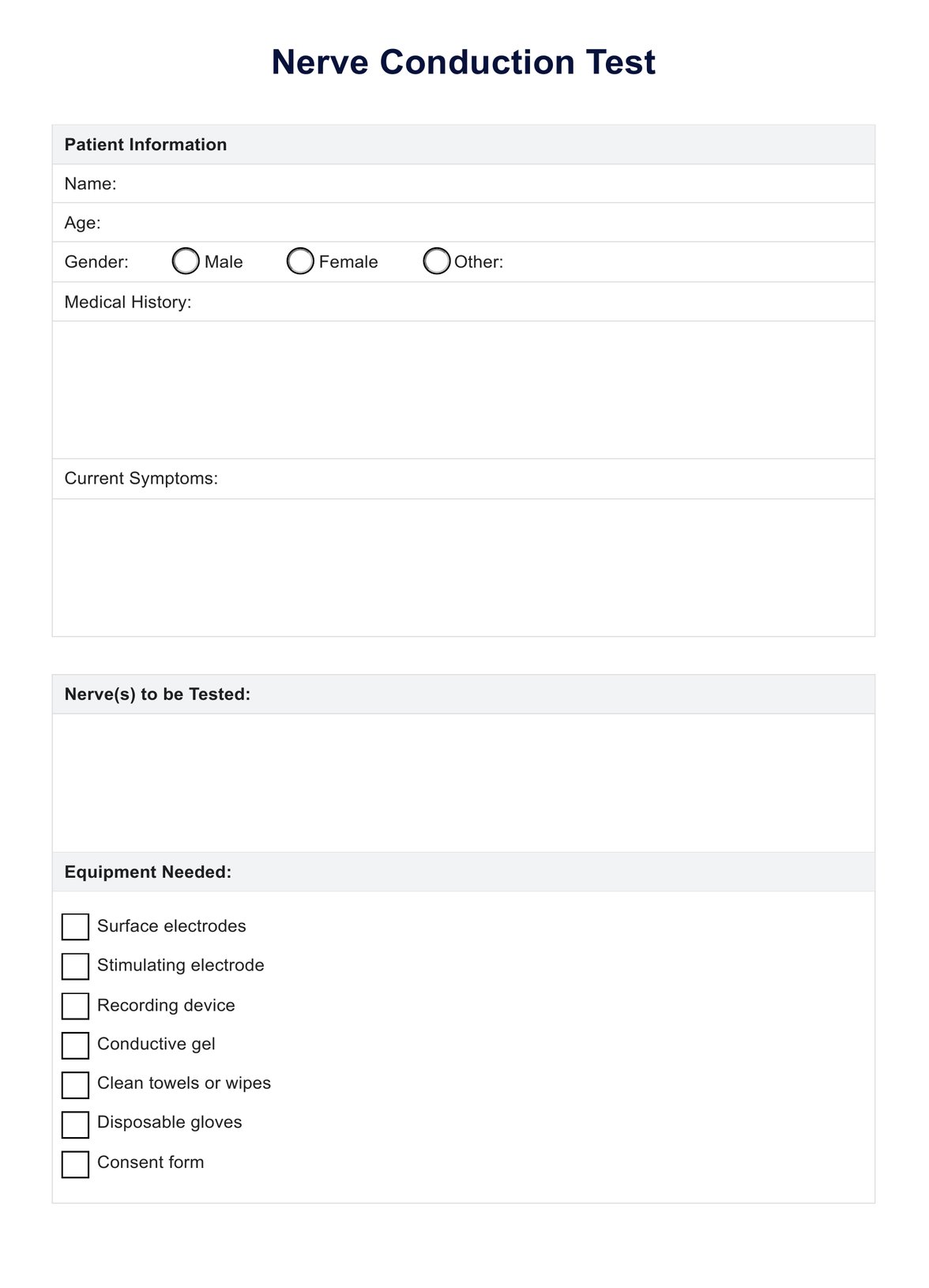




What is a Nerve Conduction Test?
A nerve conduction test (NCT), also known as nerve conduction study (NCS) or nerve conduction studies, is a diagnostic procedure that assesses the function and health of peripheral nerves, which extend from the brain and spinal cord to various parts of the body. It involves the measurement of electrical impulses along nerve pathways to evaluate nerve conduction velocity and identify potential nerve damage or disorders.
Small electrodes are placed on the skin over specific nerves during the test. A stimulating electrode delivers mild electrical impulses, causing the nerve to generate electrical signals recorded by surface or needle electrodes. The speed at which this gentle electrical impulse signals travel along the nerve, known as conduction velocity, is measured.
Nerve conduction tests are commonly performed to diagnose conditions such as carpal tunnel syndrome, peripheral neuropathy, Guillain-Barré syndrome, Charcot-Marie-Tooth disease, and nerve injuries. They can also help differentiate between muscle disorders and nerve disorders.
The procedure is generally safe and may cause only mild discomfort, such as a gentle tingling feeling, sensation, or muscle soreness, similar to what one might feel during electrical stimulation. It does not require anesthesia and is typically conducted in a healthcare provider's office or hospital setting.
Nerve conduction tests are valuable tools for healthcare providers, aiding in the accurate diagnosis and management of various neurological conditions. They provide essential information about the integrity of nerve cells in the nervous system, helping guide treatment decisions and improve patient outcomes.









